Pimpri Chinchwad: Citizens Use Street Plays and Songs to Protest Pavana River Rejuvenation Project in Akurdi
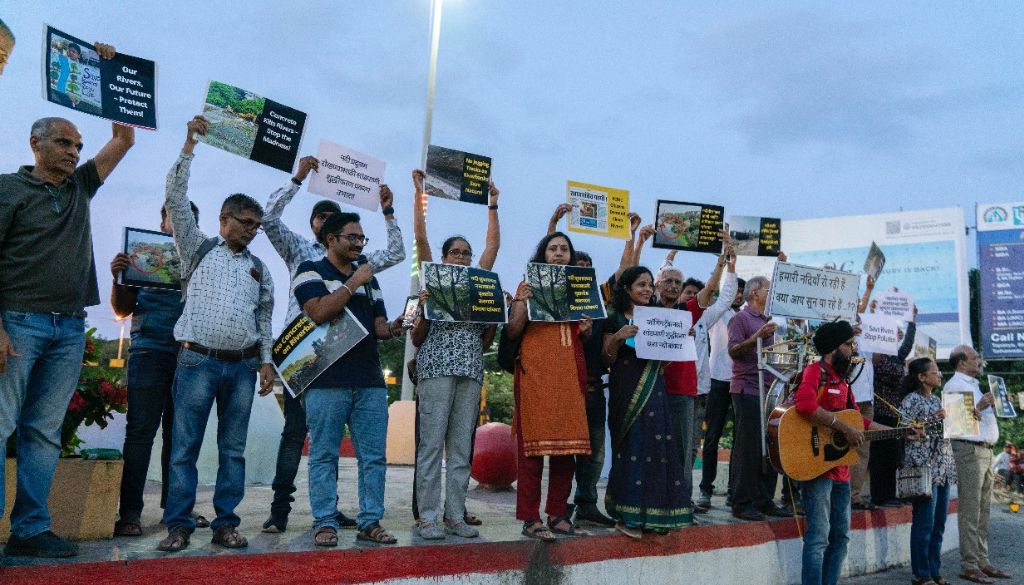
Pimpri-Chinchwad, 14th July 2025: In a creative show of dissent, around 80 citizens, including local youth and residents, gathered at Akurdi on the evening of July 13 to protest the Pavana River Rejuvenation Project. Using street plays, musical performances, and placards, the demonstrators voiced concerns over the ecological impact of the civic body’s proposed development plan.
The peaceful protest, held in a public space, attracted attention from passersby who stopped to engage with the messages, performances, and discussions about the health of the Pavana River. Organisers said the event aimed to raise public awareness and spark conversations around river conservation.
The Pimpri-Chinchwad Municipal Corporation (PCMC) recently received environmental clearance for the ₹1,500 crore Pavana River Rejuvenation Project, which will cover a stretch of 24.4 km through the city. However, critics argue that the plan focuses heavily on concrete embankments and construction, which could severely damage the biodiversity along the riverbanks.
“This is not a river cleaning project; it’s a construction-heavy development plan disguised as rejuvenation,” said one of the protesting citizens. “Nearly 80% of the project budget is allocated to civil works like embankments and beautification, rather than addressing pollution or restoring natural ecosystems.”
Environmental advocates fear the project could destroy habitats for native birds, turtles, reptiles, and riverside vegetation, which have long coexisted along the Pavana’s banks. Citizens also pointed out that parts of the river run through historic settlements in Chinchwad, and the natural heritage of the area is at risk.

“We want a project that prioritizes biodiversity, native tree conservation, and pollution control, not just jogging tracks and concrete walls,” said another protestor.
The demonstration was also seen as a growing model of civic engagement, where art, music, and culture were used as tools to demand transparency and accountability from local authorities.