PM Narendra Modi Flags Off India’s First Hydrogen-Powered Train
Reported By Amit Singh
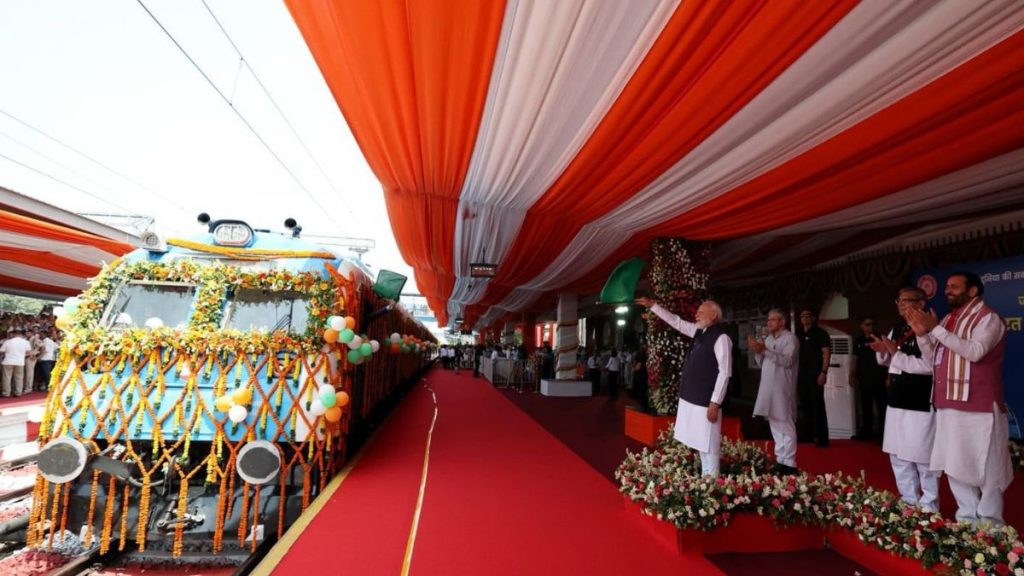
New Delhi, 17th July 2026: Prime Minister Narendra Modi on Friday flagged off India’s first indigenous hydrogen-powered passenger train from Jind railway station in Haryana, marking the country’s entry into the group of nations operating hydrogen-powered trains. The service will run on the 89-km Jind–Sonipat section under Northern Railway.
The Hydrogen Fuel Cell Powered Trainset generates electricity onboard through a chemical reaction between hydrogen and oxygen, eliminating the need for overhead electric supply. The process powers the train’s traction motors, with water vapour and heat as the only direct by-products, making it a zero tailpipe-emission passenger train.
The newly introduced train has been configured as a 10-coach train with a capacity of around 2,600 passengers, making it one of the largest hydrogen-powered passenger trainsets in operation globally. It consists of two Hydrogen Driving Power Cars (DPCs) and eight trailer coaches. Each power car is equipped with Proton Exchange Membrane (PEM) fuel cells, lithium iron phosphate (LFP) batteries and hydrogen storage cylinders, together producing 2,400 kW (3,200 hp) of traction power. The train has a design speed of 110 kmph and will initially operate at 75 kmph.
Train No. 74010 will depart Jind daily at 7:40 am and reach Sonipat at 9:40 am, completing the journey in two hours. On the return trip, Train No. 74009 will leave Sonipat at 10:40 am and arrive at Jind at 1:00 pm, with a travel time of two hours and 20 minutes.
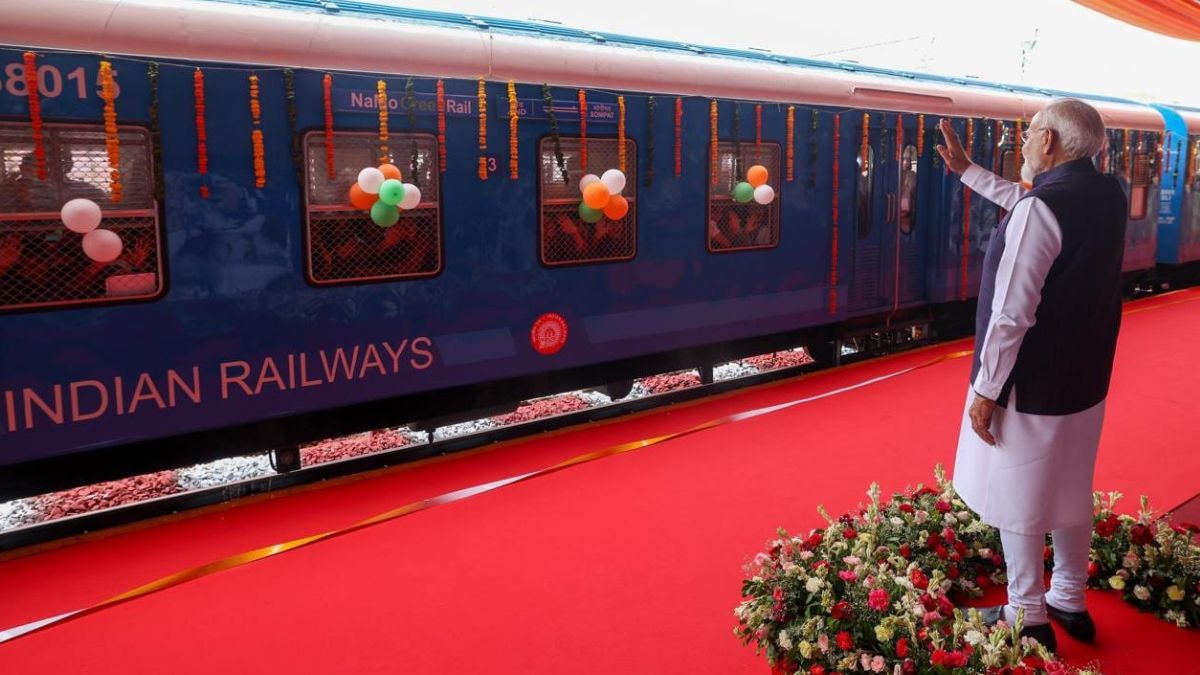
The train will halt at Jind City, Pandu Pindara, Lalit Khera, Bhambheva, Isapur Kheri, Butana, Khandrai, Gohana, Rabhra, Lath, Mohana Haryana and Barwasni. Its primary maintenance will be carried out at Jind.
To support operations, Indian Railways has established a dedicated hydrogen production, storage and refuelling facility at Jind. Hydrogen is produced through electrolysis, compressed for storage and dispensed through dedicated refuelling systems for the train’s two driving power cars. The facility has a storage capacity of nearly 3,000 kg of hydrogen and has been approved by the Petroleum and Explosives Safety Organisation (PESO).
The train is equipped with multiple safety systems, including hydrogen leak detectors, flame and heat detection systems, smoke sensors, continuous ventilation and automatic hydrogen shut-off mechanisms. The hydrogen ecosystem has been developed in compliance with international safety standards, including NFPA-2 and the ISO 19880 Series, and underwent an independent safety assessment by TÜV SÜD, Germany, before commissioning.
The project has been developed using indigenous technology under the leadership of Indian Railways. The Research Designs and Standards Organisation (RDSO) prepared the technical specifications and design approvals, Medha Servo Drives integrated the trainset, and the Integral Coach Factory (ICF) designed the train’s exterior.
Sharing the development on social media after the flag-off, Prime Minister Narendra Modi said: “India takes a major leap towards green mobility!
In Jind, flagged off India’s first indigenous hydrogen-powered train between Jind and Sonipat. This remarkable achievement reflects the ingenuity and dedication of the Indian Railways team. It is a proud symbol of Aatmanirbhar Bharat and our commitment to cleaner, future-ready transportation.”