Pune Aims for 100% Legacy Waste Clearance and Modernised Waste Management by 2026: PMC Commissioner Naval Kishore Ram
Reported by Mubarak Ansari
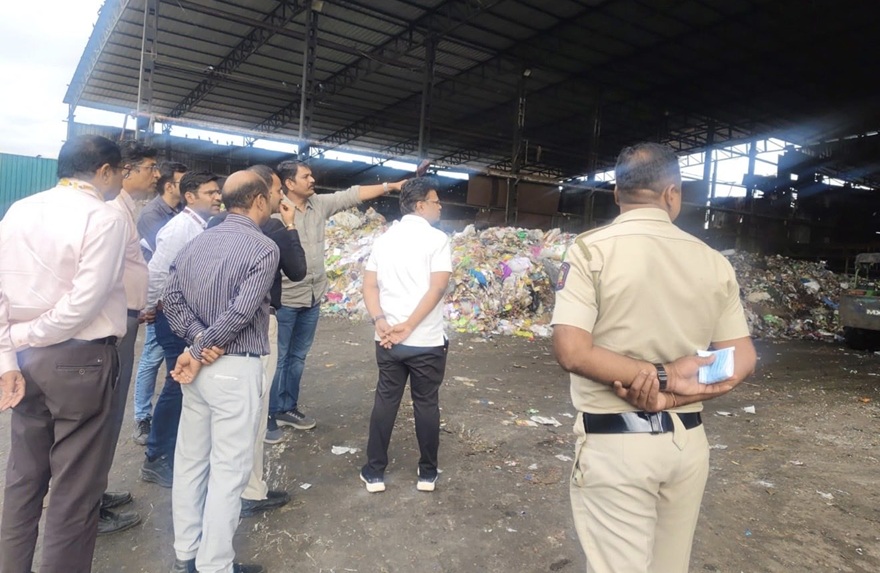
Pune, 2nd November 2025: The Pune Municipal Corporation (PMC) has set an ambitious goal to achieve 100% biomining of legacy waste within a year, along with a comprehensive upgrade of the city’s waste management infrastructure. Municipal Commissioner Naval Kishore Ram outlined these plans following his visit to the city’s legacy waste site earlier today.
In a detailed response to queries from Punekar News, Ram said that the civic body has completed biomining of 25.66 lakh metric tonnes (MT) of legacy waste till October 2025. “The current biomining tender covers 10 lakh MT, of which 5.90 lakh MT has been processed. The remaining 4.10 lakh MT will be cleared within the next six months,” he stated.
To address the remaining waste, PMC has invited five new tenders, each for 5.60 lakh MT, with a total target of 28 lakh MT. “The tender period is one year, and incentives for extra daily processing will follow the Ministry of Housing and Urban Affairs (MoHUA) guidelines. Funding has been sanctioned under the Swachh Bharat Mission, and we expect the work to be completed ahead of schedule by October 2026,” Ram added.
Waste-to-Energy Plant to Add 700 MT Capacity
The much-awaited Waste-to-Energy (WtE) plant, which will add 700 MT of processing capacity, is expected to be commissioned by March 2026. “We anticipate another 2–3 months for material availability and plant erection,” said Ram.
The plant, located on the eastern side of the city, will primarily cater to Zones 1, 4, and 5, reducing transport costs. It will utilize 10 MLD of treated water from the Ramtekdi STP and generate about 13 MW of power, of which 2 MW will be used for captive operations and the remaining 11 MW supplied to the Maharashtra State Electricity Board (MSEB).
Transfer Stations at Ghole Road and Hadapsar to Be Upgraded
PMC is also modernising two of its key waste transfer stations — Ghole Road and Hadapsar — with state-of-the-art mechanical transfer systems.
In this model, dry waste collected by primary vehicles will be directly unloaded into the hopper of a static compactor, which compresses the waste into sealed containers or “capsules.” These containers will then be transported using hook-loader vehicles, ensuring zero spillage, no odor, and cleaner handling.
Ram said the Hadapsar Transfer Station (200 TPD capacity) project, estimated at ₹20.47 crore, has already been tendered with five years of operation and maintenance included. The Ghole Road station (100 TPD capacity) has an estimated cost of ₹18 crore, awaiting approval from the PMC’s Estimate Committee. Both stations are expected to be operational within 7–8 months of approval.
Food and Non-Veg Waste Management Upgrades
To further strengthen waste management, PMC is streamlining the city’s food waste processing plant and setting up a dedicated non-vegetarian waste processing facility.
The upcoming chicken and mutton waste processing plant is designed to handle 25 TPD (tonnes per day). “Currently, such waste is either mixed with wet waste or dumped improperly, causing nuisance to citizens and operators. The new plant will process the waste scientifically into tallow oil and poultry feed, ensuring a zero-odor system,” Ram explained.
Special closed collection vehicles will be deployed for non-veg waste to prevent smell or leakage during transport.
A Cleaner, Sustainable Pune by 2026
With ongoing projects under Swachh Bharat Mission funding, PMC aims to transform Pune’s waste management system into a scientifically driven, sustainable model within the next year.
“Legacy waste clearance, Waste-to-Energy generation, and modern transfer stations are key to making Pune cleaner and more efficient,” Commissioner Ram emphasized.