Pune Braces for More Rain as IMD Issues Red Alert for Ghat Areas; Waterlogging and Traffic Snarls Continue
Pune, 4th July 2026: After two days of continuous rainfall, Pune city and the surrounding district remain under the grip of an active monsoon, with the India Meteorological Department (IMD) forecasting continued wet weather over the next two to three days.
In view of the expected heavy downpours, the IMD has issued a Red Alert for the ghat (hill) regions of Pune district for Sunday, July 5, and Monday, July 6, warning of heavy to very heavy rainfall at a few places with extremely heavy rainfall at isolated locations. The district administration has urged residents to remain highly vigilant and strictly follow advisories issued by local authorities and disaster management agencies.
Rainfall continued across Pune on Saturday, July 4, beginning in the early hours and persisting intermittently throughout the day. Light to moderate showers were reported across several parts of the city, with drizzle continuing late into the night. The sustained rainfall brought a noticeable drop in temperatures, providing much-needed relief from the recent humid conditions.

According to realized temperature observations compiled by the IMD, Pune (Shivajinagar) recorded a maximum temperature of 26°C and a minimum of 22.7°C on Saturday, marking a significant decline compared to the previous few days. Other stations across the region also experienced cool monsoon temperatures, with Lavale recording a low of 20.3°C, Pashan registering 21.6°C, Lohgaon clocking 22.2°C, and NDA recording a minimum of 22.5°C.
The persistent wet spell led to widespread waterlogging in several low-lying areas of the city. Localities including Shivajinagar, Swargate, Hadapsar, Katraj, Kothrud, Sinhagad Road, Baner, and parts of the Pimpri-Chinchwad industrial belt witnessed substantial water accumulation on roads, slowing vehicular movement to a crawl. Traffic congestion intensified during the evening peak hours, with commuters experiencing major delays at several key intersections. Many motorists were forced to navigate waterlogged roads at slow speeds for the second consecutive day.
Cumulative rainfall data recorded on Saturday, July 4, highlighted a stark contrast in precipitation intensity between the rural hilly tracts and the urban core. According to the 12:00 UTC (5:30 PM IST) monitoring reports, Nimgiri taluka recorded the district’s highest rainfall of 77.0 mm, followed by Girivan with 49.0 mm. Other rural areas also recorded significant precipitation, including Narayangaon with 36.0 mm, Malin with 30.0 mm, Dapodi with 23.0 mm, Rajgurunagar with 22.5 mm, and Dudulgaon with 18.0 mm. Meanwhile, the eastern and southern plains of the district saw lighter showers, with Bhor registering 14.5 mm, Shirur logging 12.0 mm, Haveli receiving 6.0 mm, and minor amounts reported in Daund (1.5 mm), Baramati (1.2 mm), and Talegaon (1.0 mm).
In the urban sectors, rainfall totals continued to climb into the evening. By the 15:00 UTC (8:30 PM IST) observation update, Chinchwad registered the highest urban rainfall of 37.0 mm, while the National Defence Academy (NDA) recorded 20.0 mm. Lohgaon logged 19.6 mm, Shivajinagar reported 14.6 mm, and Lavale registered 6.5 mm. High relative humidity accompanied these downpours, with Lohegaon and Chinchwad reaching a saturated 100% relative humidity, while Shivajinagar, Lavale, and NDA recorded humidity levels between 94% and 98%.

The IMD has indicated that weather conditions are unlikely to change significantly over the next two to three days.
For Sunday, the department has forecast maximum and minimum temperatures of around 26°C and 23°C, respectively, for the city. While the sky is expected to remain mostly cloudy, light to moderate rainfall is expected to persist, keeping temperatures in check.
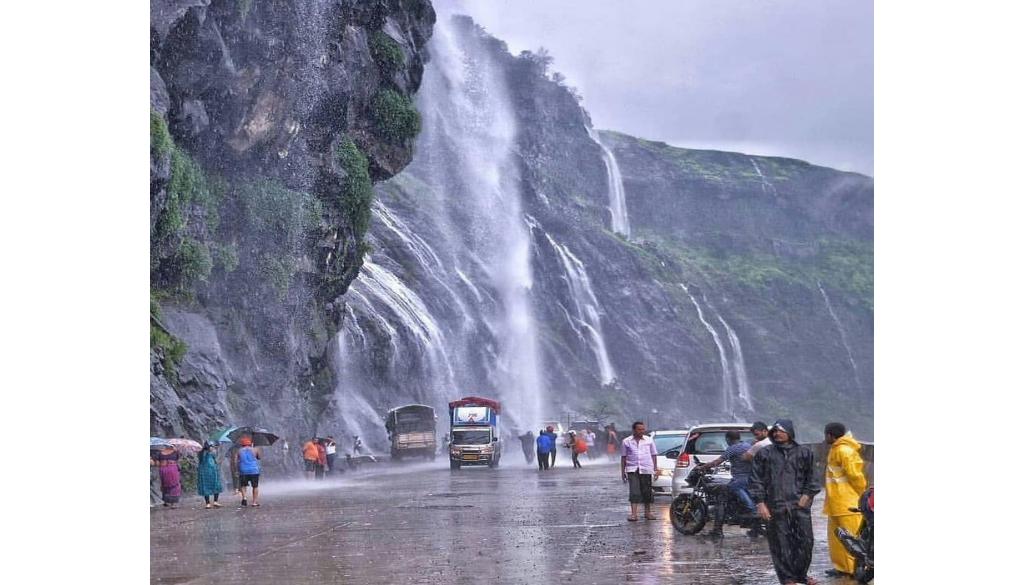
In light of the Red Alert for the ghat sections and the ongoing rainfall across the district, the administration has strongly advised citizens to avoid unnecessary travel, particularly to hilly tourist spots, waterfalls, and locations prone to waterlogging or landslides.