Pune: Gudi Padwa Marks a Fresh Beginning with Tradition and Spiritual Significance
Pune, 17th March 2026: Amid growing discontent over property tax assessments in newly merged areas, the Pune Municipal Corporation (PMC) has decided to set up a special committee to review the concerns raised by residents and explore possible policy changes.
Announcing the move, Mayor Manjusha Nagpure said the proposed panel will include representatives from the merged villages and will examine issues related to property tax assessment and collection. Citizens have been invited to submit written suggestions and objections, which will be discussed with civic officials before arriving at a resolution.
The decision comes in response to increasing complaints from residents of recently merged villages, who have alleged that both residential and commercial properties are being taxed at significantly higher rates. Many have demanded that taxation models similar to those followed by gram panchayats be considered, arguing that the current system has imposed an excessive financial burden.
Civic officials noted that while the Government of Maharashtra has issued directives regarding tax collection in merged areas, certain procedural and policy constraints have limited the PMC’s ability to streamline revenue collection. At the same time, the absence of a clear and uniform taxation framework has contributed to confusion and dissatisfaction among residents.
The issue was discussed during a special बैठक chaired by the Mayor, where public rePune, 17th March 2026: As Pune prepares to celebrate Gudi Padwa, the festival ushers in the Marathi New Year with a sense of renewal, devotion, and cultural pride. Observed as the first day of the traditional calendar, the occasion symbolizes new beginnings and the triumph of positivity.
According to the almanac, households should raise the ceremonial Gudi after 6:54 am on Thursday, March 19, marking the end of the no-moon phase and the official start of the new year, Shaka 1948. Although there is no fixed auspicious timing for the ritual, early morning is considered the most appropriate time.
A Tradition Guided by Ancient Timekeeping:
The new year is named Parabhava, continuing an ancient system of naming years based on a traditional calendar that follows planetary movements. This timekeeping method, preserved through generations, remains deeply rooted in cultural and spiritual practices.
Gudi Padwa signifies the beginning of the new year, when families decorate their homes and welcome the occasion with rituals that reflect prosperity and positivity.
Rituals that Reflect Auspicious Beginnings:
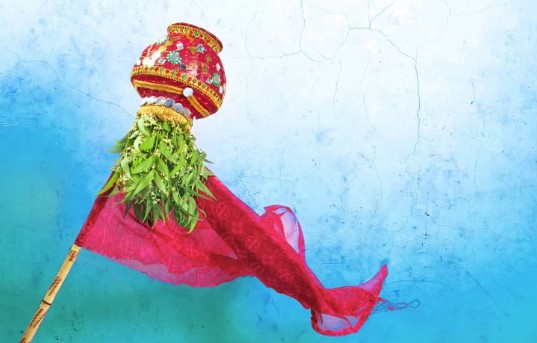
The central ritual of the festival is the raising of the Gudi, a symbolic flag representing victory and good fortune. The preparation begins with cleaning a wooden stick, which is then draped with a silk cloth. An inverted metal vessel—often silver or another clean household item—is placed on top.
The Gudi is decorated with neem leaves, mango branches, and a garland of sugar crystals, symbolizing the balance of bitter and sweet experiences in life.
The area where the Gudi is installed is cleaned and decorated, and after a bath, family members perform prayers by offering turmeric, vermillion, and flowers.
Spiritual Meaning and Observances:
The Gudi is also associated with the creator of the universe and is considered a sacred symbol of creation and prosperity. A traditional prayer is recited seeking blessings for well-being and success throughout the year.
Following the ritual, the almanac is worshipped, and the first day’s calendar reading is performed, emphasizing the connection between cosmic cycles and daily life.
A Blend of Health and Symbolism:
A unique custom of the festival involves consuming a mixture made from neem, jaggery, and cumin. This preparation is believed to promote health while symbolizing acceptance of both pleasant and challenging experiences in the coming year.
The Gudi is typically taken down around sunset, marking the conclusion of the day’s rituals.
Important Dates in the Year Ahead:
The new year also includes several significant observances. An additional lunar month will occur between May 17 and June 15. Two special fourth-day observances dedicated to Lord Ganesha will fall on May 5 and September 29. Additionally, five highly auspicious combinations of planetary positions will be observed on April 23, May 21, June 18, February 18 (2026), and March 18.presentatives and officials shared their views. Those present included Kaka Chavan, corporator Subhash Nanekar, Additional Municipal Commissioner Prithviraj B. P., and Property Tax Department head Ravi Pawar.
Officials clarified that the current tax assessments have been carried out as per resolutions passed by the civic body’s general body. Any changes to the existing structure would require a fresh proposal and formal approval.
Additional Commissioner Prithviraj B. P. emphasised that property taxation is a policy matter and cannot be altered without following due procedure.
Mayor Nagpure said the committee will act as a bridge between citizens and the administration, helping address grievances while ensuring compliance with legal and regulatory requirements. She added that guidance from the state government may also be sought before finalising any changes to the policy.