Pune: Hadapsar Garbage Depot Sparks Anger as Residents Face Stench, Potholes, and Health Hazards
Reported by Shoaib Tadvi
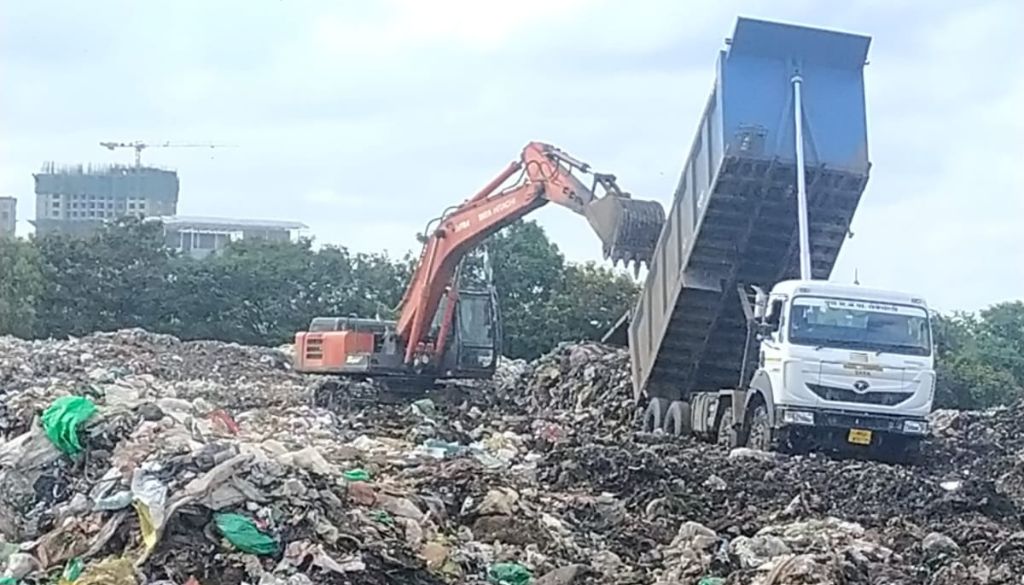
Hadapsar, 28th August 2025: Residents living around the Hadapsar Industrial Estate continue to suffer from unhygienic conditions, foul odors, and health hazards due to the city’s garbage depot, jointly operated by the Pune Municipal Corporation (PMC) and the Pune Cantonment Board (PCB).
Housing societies in Sopanbaug, Udaybaug, BT Kawade Road, Hadapsar Ghorpadi, Fatimanagar, and the stretch from Kalubai Industrial Estate along Pune-Solapur Road have reported frequent garbage spillage from the depot, leaving nearby roads filthy and difficult to navigate. In addition to the waste, residents complain of pothole-ridden and damaged roads, further complicating daily commutes for both pedestrians and vehicles.
The depot receives waste from across Pune, first collected in small carts and then transferred into larger trucks for processing at Hadapsar Industrial Estate. Residents allege that during this transfer, garbage often spills on the roadside, emitting a stench and creating unhygienic surroundings. Many locals who commute daily for work or take children to schools in the area say foul smells and unhygienic conditions have become a routine part of life.
PMC Officer’s Statement
Deputy Engineer Kamlesh Shevte defended the depot’s operations, offering a detailed explanation: “There is no open dumping; every bit of waste is scientifically processed at Hadapsar Industrial Estate. We have four units. The first is for garbage transportation, where waste from small vehicles is transferred to the processing plant. The second is a 200-metric-ton wet waste management plant, where all waste is processed.
The third is a joint PMC-PCB project with a 150-metric-ton capacity—100 for PMC and 50 for PCB. Trucks are weighed before waste is sent for processing. The fourth is the SLF scientific landfill for rejected waste, which is sent to Fursungi and Devachi.
Additionally, there is a 500-metric-ton plant for legacy waste. Out of 10 lakh metric tons targeted, 5 lakh have been processed and 5 lakh remain. Mechanization is underway to close the Hadapsar transport station fully. Regarding odor, we are using machines to prevent mosquito breeding and foul smells. For PCB’s share, we estimate around 95,000 metric tons, and about 80% of work there is completed. We are addressing every problem step by step.”
Despite this explanation, residents insist that open dumping continues and large piles of waste remain visible. They argue that PMC’s assurances of “100% processing” are misleading and do not reflect on-ground reality.
Residents Blame PMC for Mismanagement
Local activist Deepali Sardeshmukhi criticized PMC for locating a citywide waste processing hub near residential neighborhoods. She said waste often spills onto roads in BT Kawade Road, Hadapsar Ghorpadi, and Sopanbaug, forcing commuters and residents to endure foul smells, flies, and filth daily.
Residents also pointed out that many roads in the area are riddled with potholes and damaged stretches, making travel unsafe. Children walking to schools, office-goers, and senior citizens face daily exposure to unhygienic conditions. Piles of garbage frequently block pavements, forcing pedestrians to walk dangerously close to broken roads and traffic.
Experts Support Resident Complaints
Economist Ameet Singh criticized the long-standing waste management practices at Hadapsar, noting: “Every area should handle its own waste, but Hadapsar has become the dumping ground for the city with a 100-year plan. Management has been poor, with multiple dumping stations set up in residential areas. Twenty years ago, PMC tried to improve matters by promoting wet waste composting at homes, but after COVID, those efforts collapsed. Now, residents are back to living with heaps of garbage. The issue is not limited to Hadapsar; it is spreading to three or four more sites. Waste should be processed at ward level instead of transferring mixed waste across the city. Currently, about 3,000 metric tons of waste is generated daily, and Hadapsar cannot sustain this load. Some areas near the depot are simply unfit for human habitation.”
Observer Rupesh Kesekar, who visited the site, added:
“PMC calls it a transportation facility, but rejected waste is also being dumped here. We saw mountains of garbage. Their official statements do not match the reality on the ground.”
Daily Struggles of Residents
Residents across BT Kawade Road, Hadapsar Ghorpadi, Sopanbaug, and Udaybaug said their lives have been severely affected by the depot. Those commuting along the stretch from Kalubai Industrial Estate to Pune-Solapur Road pass open garbage heaps daily. The stench is especially unbearable during hot afternoons and after rains, when decomposed waste mixes with water and runs off into the streets.
Flies, mosquitoes, and rodents have become common around the garbage piles, raising health concerns for children and the elderly. Locals also report that the constant foul odor affects sleep and overall quality of life for families living within a one-kilometer radius of the depot. Many say the neighborhood is increasingly unlivable.
The poor state of the roads compounds the problem. Large potholes, uneven surfaces, and broken patches make daily travel hazardous. Commuters often find themselves navigating both garbage heaps and potholes, putting pedestrians, children, and senior citizens at risk.
PMC Shifts Blame to PCB
While residents continue to allege mismanagement, PMC officials have shifted some responsibility to PCB, saying that certain rejected waste piles belong to PCB’s jurisdiction. Residents, however, argue that administrative blame-shifting does not change the fact that they suffer equally from the cumulative impact of waste.
Resident-Driven Solutions
Locals have suggested practical measures to reduce the depot’s negative impact:
Decentralize waste processing to ward or society-level facilities.
Enforce segregation of wet and dry waste at the source.
Regularly apply disinfectants and bleaching powder to minimize odor.
Fully mechanize and enclose waste transfer operations to avoid spillage.
Expand processing facilities to multiple sites to ease the burden on Hadapsar.
Residents stress that unless these steps are implemented, their daily struggles will continue. They remain skeptical of PMC’s assurances, pointing to ongoing dumping, foul odors, potholes, and health hazards in their neighborhoods.