Pune Porsche Case: Juvenile Justice Board Rejects Plea to Try Teen Driver as Adult
Reported by Mubarak Ansari
Pune, 15th July 2025: In a significant development in the high-profile Pune Porsche accident case, the Juvenile Justice Board (JJB) has rejected the Pune Police’s plea to try the 17-year-old accused as an adult. The accused, referred to as a Child in Conflict with Law (CCL), will now face trial under the juvenile justice system.
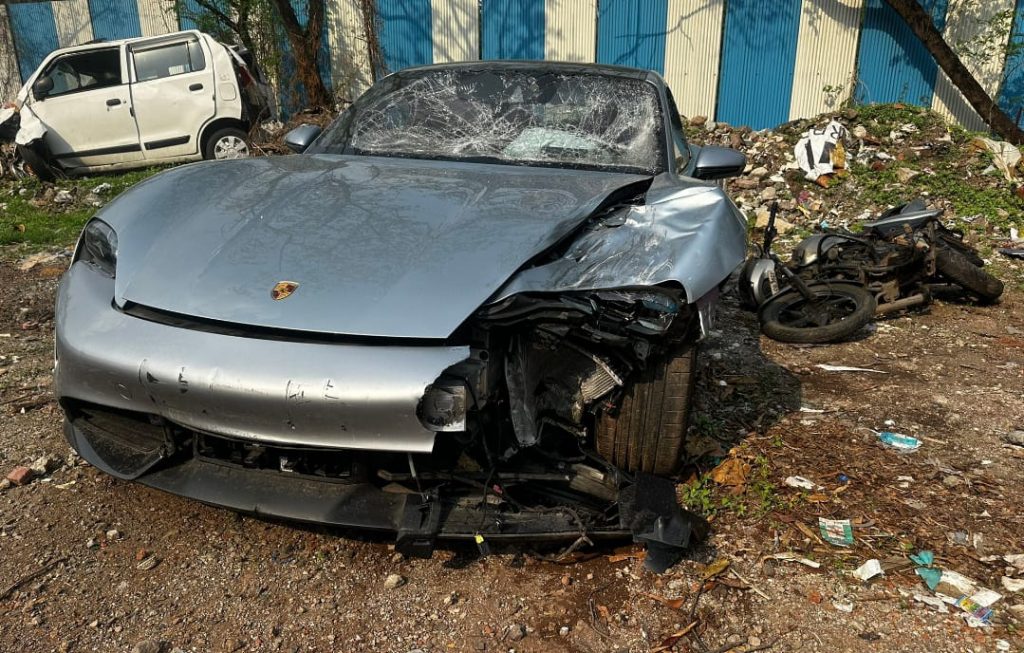
The Pune Police had argued that the gravity of the offence — a fatal accident allegedly caused by rash and negligent driving under the influence of alcohol — warranted a trial as an adult under provisions of the Juvenile Justice (Care and Protection of Children) Act, 2015. The incident, which occurred on May 19, 2024, in Kalyani Nagar, resulted in the deaths of Aneesh Awadhiya and Ashwini Koshta, both 24-year-old software engineers.
However, the Board ruled that the criteria for transferring the case to an adult court were not met, and the accused will be dealt with as a minor.
The Pune police had moved JJB a year ago to determine whether the 17‑year‑old accused, involved in the deadly Porsche crash, can be tried as an adult. The state prosecution had urged the board to invoke provisions under Sections 304 (culpable homicide) and 467 (forgery) of the IPC, citing evidence of drunk driving and subsequent tampering with blood samples.
The accused, son of a Pune-based builder, was allegedly driving a Porsche Taycan at high speed in Kalyani Nagar when the car rammed into a two-wheeler, killing the two tech professionals on the spot. The incident triggered public outrage, especially after initial bail conditions granted to the minor included writing an essay on road safety.
Subsequent investigations uncovered attempts to tamper with blood sample reports, allegedly to suppress evidence of alcohol consumption. Several individuals—including the minor’s parents, two doctors from Sassoon Hospital, and middlemen—have been arrested and charged with criminal conspiracy.
With the JJB ruling in place, the trial will proceed in the Juvenile Justice Board, where sentencing is governed by a reformative rather than punitive approach. If convicted, the maximum punishment under juvenile law typically involves rehabilitation measures and custody in a correctional facility until the age of 21.
The police and victims’ families are now considering their legal options, including approaching a higher court to challenge the ruling.