Pune Rain Update: Khadakwasla Dam Discharge Reduced, Reservoir System 97% Full
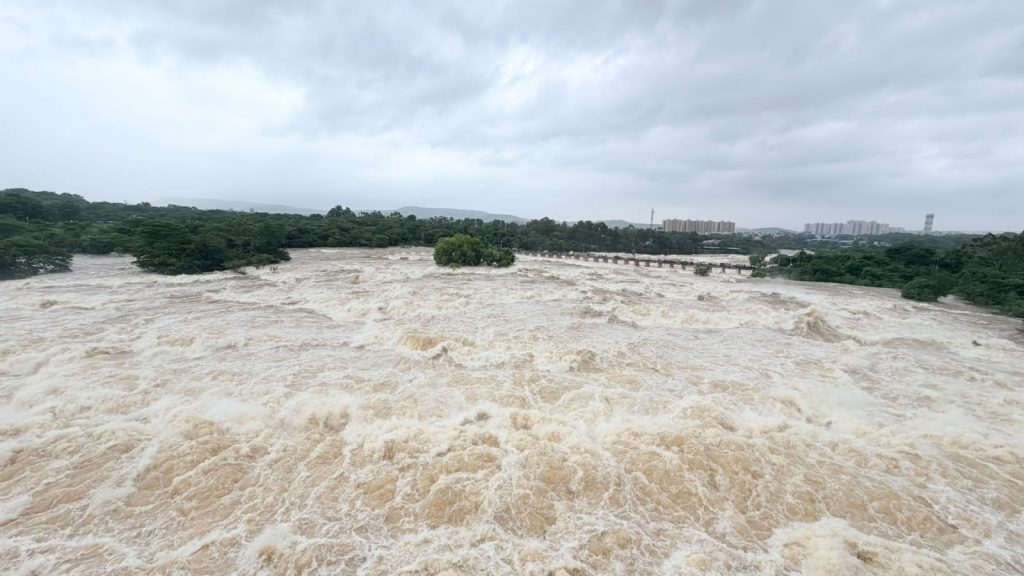
Pune, 31st July 2026: The Pune Irrigation Department has reduced water releases from the Khadakwasla, Panshet and Varasgaon dams following a decline in rainfall intensity, even as the Khadakwasla dam system continues to remain nearly full with 96.70% of its live storage.
According to the Pune Irrigation Department, the Khadakwasla dam system had 28.16 TMC of water available out of its 29.15 TMC live storage capacity as of 8.30 pm on Friday, representing 96.70% storage. Individually, Khadakwasla Dam is at 100% capacity, Panshet at 97.64%, Varasgaon at 97.08%, and Temghar at 85.05%.
Over the last 24 hours, the catchment areas received significant rainfall, with 65 mm at Khadakwasla, 133 mm at Panshet, 115 mm at Varasgaon and 120 mm at Temghar. Since June 1, cumulative rainfall has reached 632 mm at Khadakwasla, 1,802 mm at Panshet, 1,703 mm at Varasgaon and 2,433 mm at Temghar.
The department has reduced releases from the
reservoirs after reviewing the rainfall situation and inflows. The discharge from the Panshet Dam spillway was reduced from 12,250 cusecs to 8,240 cusecs at 8.15 pm, while 600 cusecs continues to be released through the hydropower station.
Similarly, the Varasgaon Dam spillway discharge has been reduced from 5,200 cusecs to 2,700 cusecs, in addition to 600 cusecs being released through the hydropower station.
The discharge from the Khadakwasla Dam into the Mutha River has also been reduced from 43,571 cusecs to 37,598 cusecs from 8 pm. However, as the reservoir is at full capacity, there is no flood cushion available to store additional inflows.
“Panshet, Varasgaon and Khadakwasla dam discharges have been reduced as rainfall intensity has decreased. However, rainfall is continuing in the catchment areas, and releases may be increased or reduced again depending on inflows and the evolving situation,” said Pravin Kolhe, Superintending Engineer, Pune Irrigation Circle.
Kolhe appealed to citizens to stay away from the Mutha riverbed, immediately shift water pumps, agricultural equipment, livestock and other materials from low-lying areas, alert residents living near the river, and strictly follow advisories issued by the administration and the Water Resources Department.