Pune Water Crisis: Ambitious Plan Aims to Transform Autadewadi Lake into Conservation Hub
Reported by Shoaib Tadvi
Autadewadi, 23rd June 2026: At a time when Pune’s rapidly expanding suburbs are witnessing declining groundwater levels, shrinking natural water bodies, and increasing pressure on civic infrastructure, a comprehensive vision has been unveiled for the scientific restoration of the historic Autadewadi Lake in the Undri-Mohammedwadi region.
Ward No. 41 Corporator Nivrutti Anna Bandal, in collaboration with renowned water conservation expert and war veteran Retd. Lt Col Satish Hange, has proposed an ambitious ecological restoration plan aimed at transforming the neglected lake into a sustainable water conservation and biodiversity hub.
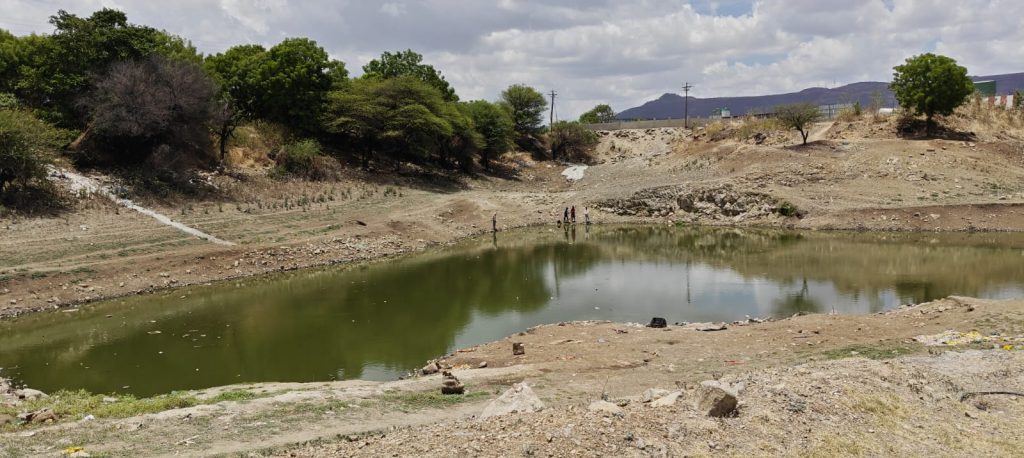
Autadewadi Lake, once an important natural water source for surrounding villages, has gradually deteriorated over the years due to heavy silt accumulation, indiscriminate waste dumping, encroachments, and a lack of regular maintenance. Rapid urbanisation across Undri and Mohammedwadi has further reduced the lake’s ability to naturally recharge groundwater, even as water demand in the area continues to rise.
Recognising the importance of preserving existing water bodies rather than relying solely on new infrastructure, the proposed initiative focuses on scientific restoration instead of cosmetic beautification. The vision is to revive the lake as a self-sustaining ecosystem that improves groundwater recharge, conserves biodiversity, reduces the risk of flooding during heavy rainfall, and provides an environmentally sustainable public space for residents.
Comprehensive Restoration Plan
The proposed restoration includes several scientific and ecological interventions designed to ensure the lake’s long-term health and sustainability.
Among the key components is scientific desilting, which will restore the lake’s original water-holding capacity by removing years of accumulated silt. The proposal also calls for the removal of encroachments and illegal waste dumping, allowing the water body to reclaim its natural boundaries.
To strengthen groundwater recharge, the plan includes the construction of recharge trenches and percolation pits, enabling rainwater to seep naturally into underground aquifers. Constructed wetlands have also been proposed to filter and purify water naturally before it enters the lake, improving overall water quality without relying solely on mechanical treatment.
A major emphasis has been placed on ecological restoration through the plantation of thousands of native tree species around the lake. Native vegetation will help stabilise the soil, increase green cover, and provide habitat for wildlife.
The proposal also includes treated water inflow systems to maintain adequate water levels throughout the year, ensuring the lake remains functional even during dry seasons.
To encourage biodiversity, dedicated habitat zones for birds, aquatic species, butterflies, and other pollinators are planned, helping restore the lake’s ecological balance.
In addition to environmental restoration, the vision incorporates public-friendly infrastructure such as walking tracks, seating areas, and environmental education spaces, allowing residents to connect with nature while promoting awareness about water conservation.
An equally important aspect of the proposal is community participation. Citizen-led lake stewardship programmes are envisioned to encourage local residents, schools, and environmental organisations to actively participate in protecting and maintaining the restored lake over the long term.
Long-Term Environmental Benefits
Experts associated with the proposal believe the revival of Autadewadi Lake could significantly improve groundwater levels across Undri, Mohammedwadi, and neighbouring areas, where water demand has risen sharply due to rapid residential development.
The restored lake is also expected to reduce localised flooding by storing excess rainwater during the monsoon, improve biodiversity by creating habitats for native flora and fauna, enhance the area’s microclimate, and provide an accessible green space for recreation and environmental education.
If implemented successfully, the initiative could serve as a model for scientific lake restoration and community-led water conservation not only in Pune but across Maharashtra.
‘A Natural Asset for Future Generations’
Speaking about the vision, Nivrutti Anna Bandal emphasised that the objective extends far beyond restoring a water body.
“Autadewadi Lake is not merely a water body; it is a vital natural asset for future generations. With the guidance of Lt Col Satish Hange and active participation from citizens, we aim to undertake a professional, scientific, and sustainable revival of the lake. Our goal is to create a thriving ecosystem that conserves water, enhances biodiversity, and becomes a source of pride for the entire Undri-Mohammedwadi region,” he said.
Retd. Lt Col Satish Hange highlighted the importance of scientific watershed management and rainwater conservation.
“Every drop of rain that falls in this region should be harvested and retained. Through watershed management, recharge structures, and ecological restoration, Autadewadi Lake has the potential to become a benchmark model for community-led water conservation in Maharashtra,” he said.
A Vision for Sustainable Urban Development
As Pune continues to expand, environmental experts have repeatedly stressed that protecting existing lakes and wetlands will be essential for ensuring long-term water security and ecological resilience. The proposed restoration of Autadewadi Lake reflects this approach by combining scientific planning, environmental conservation, and public participation into a single vision.
While the proposal will require support from the concerned authorities and active involvement from local communities before implementation, it represents a significant step towards reimagining one of the region’s neglected natural assets as a model of sustainable urban development.