Pune’s Mahalaxmi Mandir Becomes the Heart of Navratri 2025 Celebrations
Reported by Shoaib Tadvi, Saakshi Pandhare, and Purab Ganguly
Sarasbaug, 24th September 2025: The Mahalaxmi Mandir at Sarasbaug has become a center of devotion and festivity as Navratri 2025 commenced this week. One of Pune’s most prominent religious landmarks, the temple is witnessing thousands of devotees gathering for rituals, cultural events, and spiritual experiences.
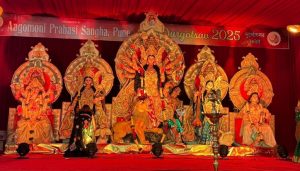
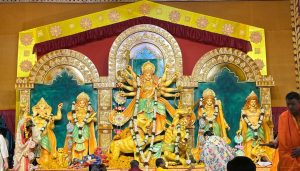
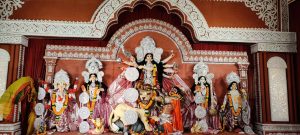
This year’s theme highlights the nine manifestations of Goddess Durga, with each day dedicated to one form of the divine mother. On the second day (September 23), a dramatic live performance of Raktbeej Rakshas Vadh captivated devotees. The enactment, accompanied by powerful chants, aarti, and rituals, filled the atmosphere with spiritual fervor.
Temple trustee Bharat Agrawal said, “Like every year, Navratri at Sarasbaug is celebrated on a grand scale. Shri Sukta Abhishek, Aarti, Havan, Darshan, and other rituals are performed with devotion. Along with these, traditional dances and dekhaave (thematic displays) enhance the celebrations. We invite everyone to visit the temple during this festival and experience the divine energy.”
A Temple of Divine Trinity
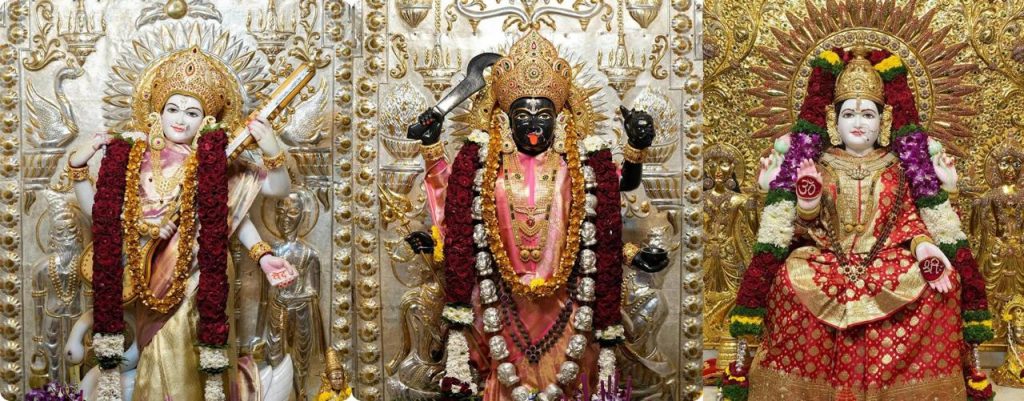
The Mahalaxmi Mandir at Sarasbaug is unique for housing the three goddesses—Mahalaxmi, Mahasaraswati, and Mahakali—together in one sanctum. Representing wealth, wisdom, and strength, this trinity offers devotees the rare chance to worship all three aspects of Adi Shakti in a single sacred space.
The six-foot-high marble idols, crafted by artisans from Jaipur’s Kala Kendra under the guidance of sculptor Hemraj Sompura, continue to draw admiration even four decades after their installation. The temple was inaugurated on February 15, 1984, and has since grown into one of Pune’s most visited spiritual destinations.
Architectural Grandeur
Built in Dravidian style, the temple features a 55-foot shikhar (tower) visible from afar. Its walls, pillars, and entrance are adorned with intricate carvings that narrate stories from Hindu mythology.
A striking feature is the circumambulation path (parikrama), which showcases images of 12 revered saints including Sant Dnyaneshwar, Sant Tukaram, and Sant Mirabai. This unique blend of deity worship and saint remembrance makes the temple both spiritually and culturally significant.
Historical Legacy of Service
The temple’s creation reflects not only devotion but also philanthropy. It was envisioned by Shri Bansilal Ramnath Agarwal and his wife, Smt. Sushila Devi.
Coming from a modest background in Rajasthan’s Pali district, Bansilalji rose to success in Pune through hard work. His guiding words, “One day I will surely enjoy the sweetness of success, or I will take the sweet sleep of death,” reflected his determination.
With prosperity, he and his wife established the Bansilal Ramnath Agarwal Charitable Trust, which went on to support numerous social, cultural, and religious initiatives.
Sushila Devi, married at the age of 14, played a pivotal role in shaping the temple’s destiny. Instead of building a bungalow opposite Sarasbaug—a status symbol at the time—she chose to construct a temple. Her decision gifted Pune one of its most iconic places of worship.
The Three Goddesses
Shri Mahasaraswati – Goddess of wisdom, learning, and arts, carrying the veena as a symbol of knowledge and harmony.
Shri Mahalaxmi – Goddess of wealth and prosperity, associated with the lotus flower and worshipped widely during Diwali and Navratri.
Shri Mahakali – Fierce goddess of time and transformation, depicted with sword, trident, severed head, and skull cup, symbolizing the active force of creation.
Together, they embody the balance of knowledge, prosperity, and strength.
Navratri 2025 Highlights at Sarasbaug
Nine Forms of Durga: Each day honors one manifestation of Goddess Durga through rituals, aartis, and offerings.
Raktbeej Rakshas Vadh (September 23): A live enactment of Goddess Kali slaying the demon Raktbeej.
Special Rituals: Shri Sukta Abhishek, Aarti, Havan, and Darshan conducted daily.
Cultural Programs: Traditional dances and dekhaave draw large crowds every evening.
Decorations: The temple is illuminated with vibrant lights, flowers, and colors, creating a festive atmosphere.
Digital Outreach
The temple offers Live Darshan services, enabling devotees across the globe to witness rituals like the Mahalaxmi Abhishek online. Donation facilities also support both temple maintenance and charitable initiatives, ensuring the legacy of service continues.
A Cultural and Spiritual Landmark
More than a place of worship, the Mahalaxmi Mandir is a cultural symbol of Pune. By uniting Saraswati, Laxmi, and Kali, it represents the complete cycle of human aspirations—knowledge, wealth, and power.
The temple stands as a living testament to the Agarwal family’s vision of service over luxury, and their enduring contribution to society.
As trustee Bharat Agrawal summed up, the Navratri celebrations here are not just an event but an experience of divine energy, cultural richness, and spiritual fulfillment.