Road Caves In Near Surat’s G9 Circle, Tanker Gets Trapped; Fresh Questions Raised Over Quality of Civic Infrastructure
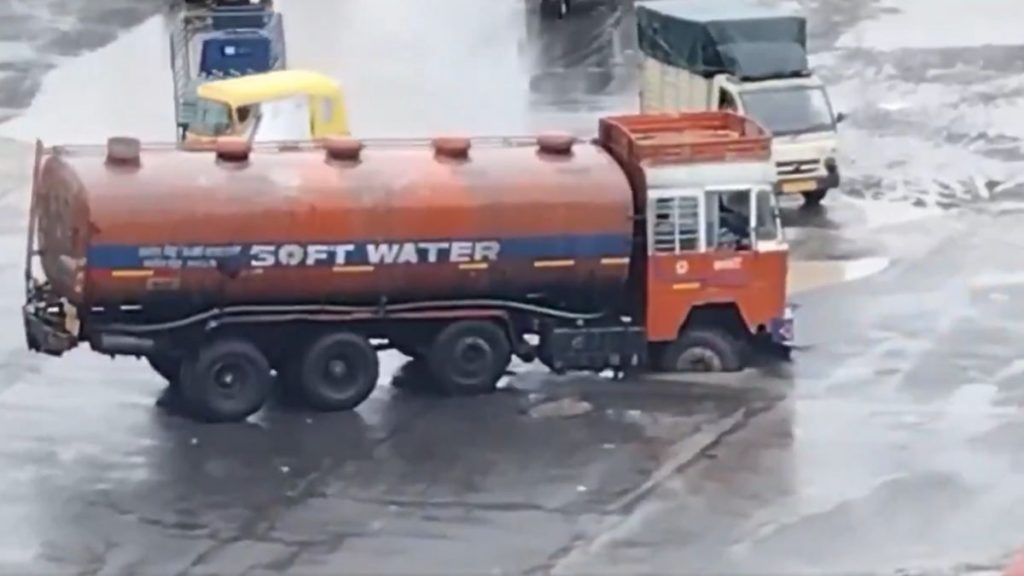
Surat, 3rd July 2026: A major road cave-in near G9 Circle in Surat’s Dindoli area on Thursday left a moving water tanker stranded after the road suddenly gave way beneath it, disrupting traffic and once again putting the spotlight on the quality of urban infrastructure projects in the city.
The incident occurred at a busy intersection on Karadva Road when the heavy tanker drove over a section of road that collapsed due to soil settlement beneath the surface. Fortunately, no injuries were reported, though the cave-in caused significant traffic congestion during peak hours as vehicles were diverted from the affected stretch.
According to officials from the Surat Municipal Corporation (SMC), the damaged section had recently undergone stormwater drainage work under the Smart Cities Mission. As part of the project, a 1,000-mm diameter storm water pipeline had been laid nearly 4.5 metres below the surface. Once the pipeline installation was completed, the trench was backfilled and the road restored.
However, civic authorities said the backfilled soil gradually settled beneath the repaired stretch, weakening the road base. When the fully loaded tanker passed over the area, the surface collapsed, leaving the vehicle partially trapped inside the sinkhole.
SMC teams, along with traffic police, immediately cordoned off the site to prevent further accidents. Cranes were deployed to remove the stranded tanker, following which emergency repairs were carried out. Officials said the damaged road was restored and traffic movement resumed by Thursday evening. The civic body has also reportedly issued a notice to the contractor responsible for the drainage work, seeking an explanation for the collapse.
While authorities have attributed the incident to soil settlement following underground utility work, residents and civic observers argue that the episode reflects deeper concerns about construction quality and project execution. The cave-in has reignited criticism over whether adequate compaction, quality checks, and post-construction inspections are being carried out before roads are reopened to traffic.
The incident comes at a time when monsoon rains are exposing vulnerabilities in urban infrastructure across several Indian cities. Heavy rainfall often accelerates soil erosion around underground utility trenches, making roads more susceptible to subsidence if restoration work has not been executed to engineering standards.
The latest collapse has also intensified calls for independent quality audits of recently completed civic projects, particularly those undertaken under centrally funded urban development programmes such as the Smart Cities Mission. Urban planners and residents alike have stressed that routine inspections, stricter contractor accountability, and better engineering oversight are essential to prevent similar incidents as the monsoon season progresses.
Although Thursday’s cave-in resulted only in traffic disruption and property damage, the incident has once again highlighted the risks posed by failing urban infrastructure and the importance of ensuring that public works are built to withstand both heavy traffic and seasonal weather conditions.