Strong grounding in classical form essential for meaningful collaborations, says Guru Preeti Patel
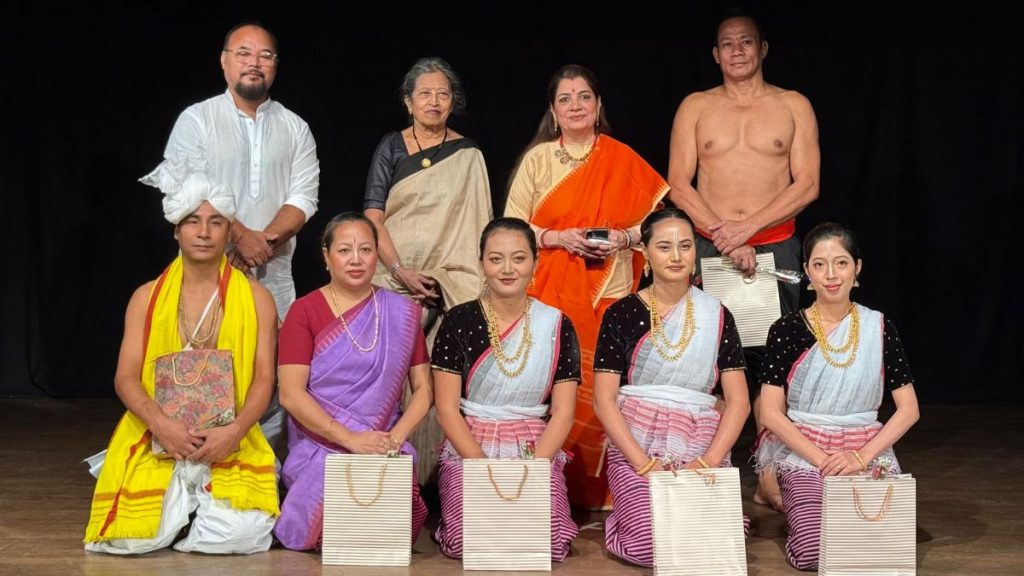
Pune, 10th September 2026: A strong foundation and deep understanding of one’s classical dance tradition are essential for meaningful collaborations between different Indian dance forms, noted Manipuri dancer, exponent and guru Preeti Patel said while addressing students of classical dance at the Jyotsna Bhole Auditorium under the Nrutya Gurukul initiative of the National Centre for the Performing Arts (NCPA).
Patel emphasised that collaborations should bring out the beauty and individuality of different dance traditions rather than dilute their distinctive characteristics. “You have to have a strong foundation and experience to be able to collaborate with another distinguished form. It is not easy,” she said.
Recalling her own experience of collaborating across classical dance traditions, Patel said she had worked with noted artists including Jayant Kastuar, Bharati Shivaji and Leela Samson. She explained that successful collaborations depended on finding harmony between contrasting movement vocabularies. “I did not compromise with the lyricism and lasya of Manipuri, and the other form did not compromise with its footwork. The combination of lasya and strength made it work,” she said.
Patel cautioned young dancers against attempting collaborations merely after acquiring limited training in a classical form. “If you have learnt a classical form for only two years, you cannot collaborate. You need a strong foundation,” she said, stressing that dancers must first develop a firm command over their own tradition.
Taking the students through the history and traditions of Manipuri dance, Patel introduced them to the cultural diversity of Manipur and the Meitei community, which has preserved traditions such as Ras Leela and Sangeetana. She spoke about the state’s rich cultural heritage, its various tribal communities and the prominent role of women in the social and cultural life of the region.
She also highlighted the antiquity of Manipuri traditions, referring to the Cheitharol Kumbaba, the royal chronicle of Manipur, and earlier manuscripts that contain accounts of the region’s traditions and legends.
Explaining the traditions associated with Thang-Ta, Patel noted that it should not be viewed merely as a martial art. Drawing from legends of creation and the tradition associated with the deity Pakhangba, she explained its ritualistic, cultural and historical dimensions.
Shama Bhate, founder of Nadroop and noted Kathak exponent, was also present during the interaction.
Following Patel’s address, her students presented a live demonstration of various steps, movements and traditional forms of Manipuri dance, giving the audience an opportunity to understand the distinctive movement vocabulary and aesthetics of the classical tradition.