Supreme Court Against Misogynistic Language of Judgement
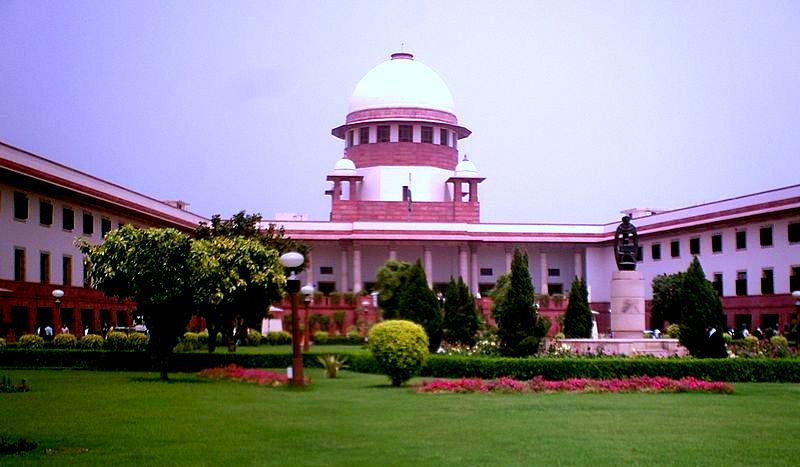
New Delhi, 13th February 2025: The Supreme Court opposed Bombay High Court’s judgment that implied misogynistic language for a woman whose marriage was declared void. The Bombay High Court referred to her as an ‘illegitimate wife” or “faithful mistress.”
Supreme Court said, “Calling the wife of a marriage declared as void as an illegitimate wife is very inappropriate. It affects the dignity of the concerned woman, The bench said, unfortunately, the Bombay High Court went to the extent of using the words “illegitimate wife”. Shockingly, the High Court described such a wife as a “faithful mistress.”
“Under Article 21 of the Constitution, every person has a fundamental right to lead a dignified life,” the bench said, describing women with such non-dignified terms is against the ethos and ideals of our Constitution.
The Supreme Court has observed that the law laid by the Bombay High Court bench is incorrect. The bench of justices Abhay S Oka, Ahsanuddin Amanullah, and Augustine George Masih raised their voice against this language for women, highlighting that such non-dignified terms for women of the nation were against the principles of the Constitution, reported PTI. The court remarked that it was unfortunate that the high court had referred to the woman as an “illegitimate wife” and went further to call her a “faithful mistress.”
It also came to observation by the bench that when men are part of such cases, they aren’t referred and noted that the High Court had not used similar adjectives in the case of husbands of void marriages, and so should not be used for women of the nation as well. Irrespective of gender and societal biases, the court is compelled to use appropriate language.
Supreme Court recently released the ‘Handbook on Combating Gender Stereotypes,’ aimed at helping judges and the legal community identify, understand, and challenge stereotypes about women. The handbook includes a glossary of gender-biased terms and recommends alternative language in pleadings, orders, and judgments.
In the same judgment, the court also emphasized that a spouse whose marriage has been declared void under Section 11 of the Hindu Marriage Act, 1955, is entitled to seek permanent alimony or maintenance from the other spouse by invoking Section 25 of the 1955 Act. However, it cautioned whether such a relief of permanent alimony can be granted or not “always depends on the facts of each case and the conduct of the parties since granting of relief under Section 25 is always discretionary.”