Young, Local, and Focused: Jayesh Murkute’s Civic Approach in Pune’s Western Belt
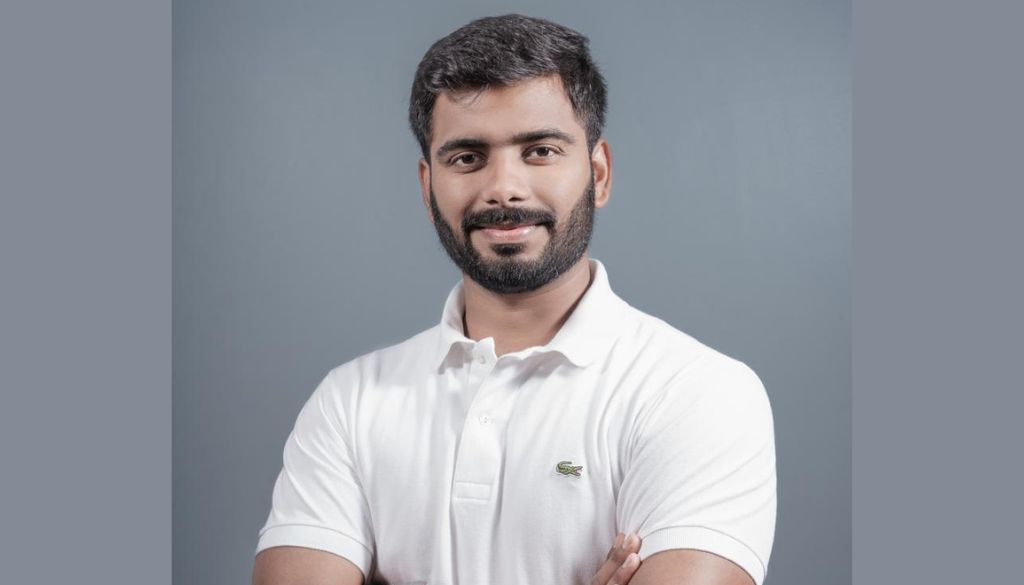
Baner, 6th January 2026: At 24, Jayesh Sanjay Murkute is emerging as a young public figure engaging with civic issues in Pune’s rapidly developing western belt, which includes Baner, Balewadi, Sus, Pashan, Mhalunge and Someshwarwadi. His work reflects concerns commonly raised by residents in areas affected by fast-paced and often unplanned urban growth.
Growing up in these neighbourhoods, Murkute witnessed infrastructure expanding ahead of planning. “We saw roads being built before drainage systems, and buildings coming up without proper footpaths,” Murkute said. “Those gaps are still affecting daily life, and that experience shapes how I look at civic planning.”
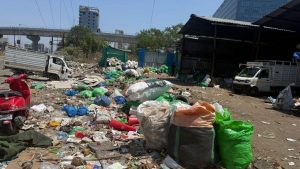
Before entering formal political activity, Murkute worked through the Jayesh Murkute Social Foundation, focusing on recurring civic issues such as waterlogging during monsoons, damaged drainage lines, inconsistent street lighting, delayed ambulance access at night, and waste management after festivals. The emphasis, he said, was on sustained follow-up rather than one-time interventions.
“Most civic problems don’t need dramatic solutions. They need consistency and coordination,” Murkute said. “If an issue comes back every monsoon, it means the system hasn’t been fixed.”
His stated approach to development centres on ward-level planning. Murkute has spoken about the need for walkable and encroachment-free footpaths, stormwater drainage before road resurfacing, underground cabling, authorised vending zones, and planned parking facilities.
“Urban planning should work for everyone—pedestrians, senior citizens, children, cyclists and even animals,” he said. “Development should reduce daily friction, not create new problems.”
Environmental concerns form a regular part of his public messaging. He has highlighted river rejuvenation, dust control, waste segregation, tree cover and pollution monitoring as core civic responsibilities rather than optional initiatives.
“Sustainability is not about slogans,” Murkute said. “It is about infrastructure that lasts and systems that don’t need repeated repairs.”
Murkute has also underlined the importance of what he describes as civic dignity—functional public toilets, organised bus stops, reliable street lighting and traffic systems based on design rather than ad hoc enforcement. He has pointed to digital connectivity as a necessary part of modern urban infrastructure.
“Internet access today is as essential as roads or water supply,” he said. “Planning has to reflect how cities actually function.”
On the social side, Murkute has spoken in favour of preserving neighbourhood life through community halls, cultural spaces, sports facilities, parks for senior citizens, playgrounds for children and shared public spaces.
“Growth should not come at the cost of community,” he said. “Cities work better when people have spaces to meet, play and participate.”
Politically, Murkute has described administration as a collaborative process, stressing the importance of continuous citizen engagement and local accountability.
“Accountability works best when it is local and measurable,” he said. “People should know who to approach and what timelines to expect.”
In a political environment often marked by high-decibel campaigns, Murkute’s work reflects a focus on consistency and planning. His activities are being observed as part of a broader trend of younger individuals engaging with civic issues through sustained, local-level efforts rather than headline-driven politics.