Biden vs. Trump: Dr. Kishore Kulkarni Unpacks Economic Impacts at SIMS Pune
Pune, 5th January 2025: The International Lecture Series at Symbiosis Institute of Management Studies (SIMS), Pune, ideated by Brig. (Dr.) Rajiv Divekar, Director, SIMS and Dean, Faculty of Management, SIU, is a platform that enhances students’ understanding of global business practices and economic policies through engaging sessions with international experts. Conducted under his guidance, this series continues to inspire academic excellence.
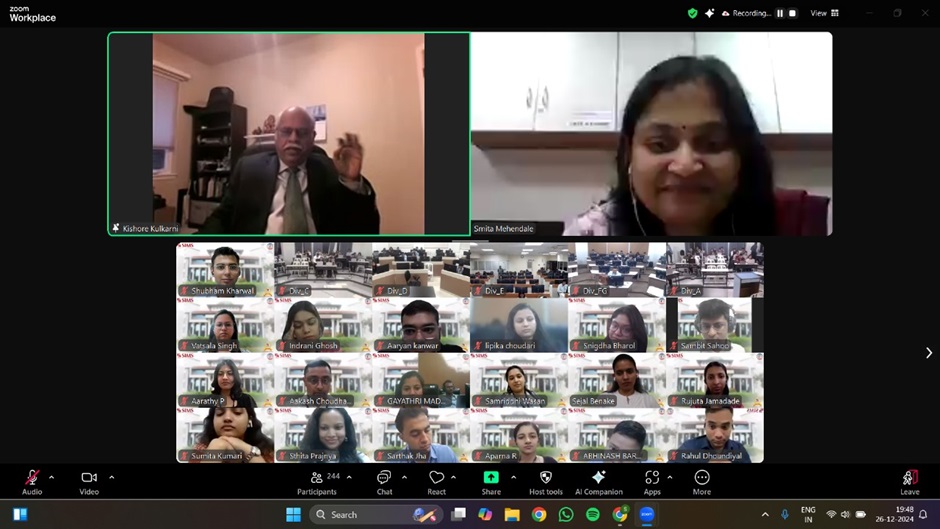
On December 26, 2024, the series featured an intellectually stimulating session by Dr. Kishore Kulkarni, Distinguished Professor of Economics at Metropolitan State University of Denver, USA, and Chief Editor of the International Review of Business and Economics. The session, titled “Biden vs. Trump: Diverging Economic Policies and Their Impact,” was moderated by Dr. Smita Mehendale, Assistant Professor, SIMS, and witnessed enthusiastic participation from SIMS students across specializations.
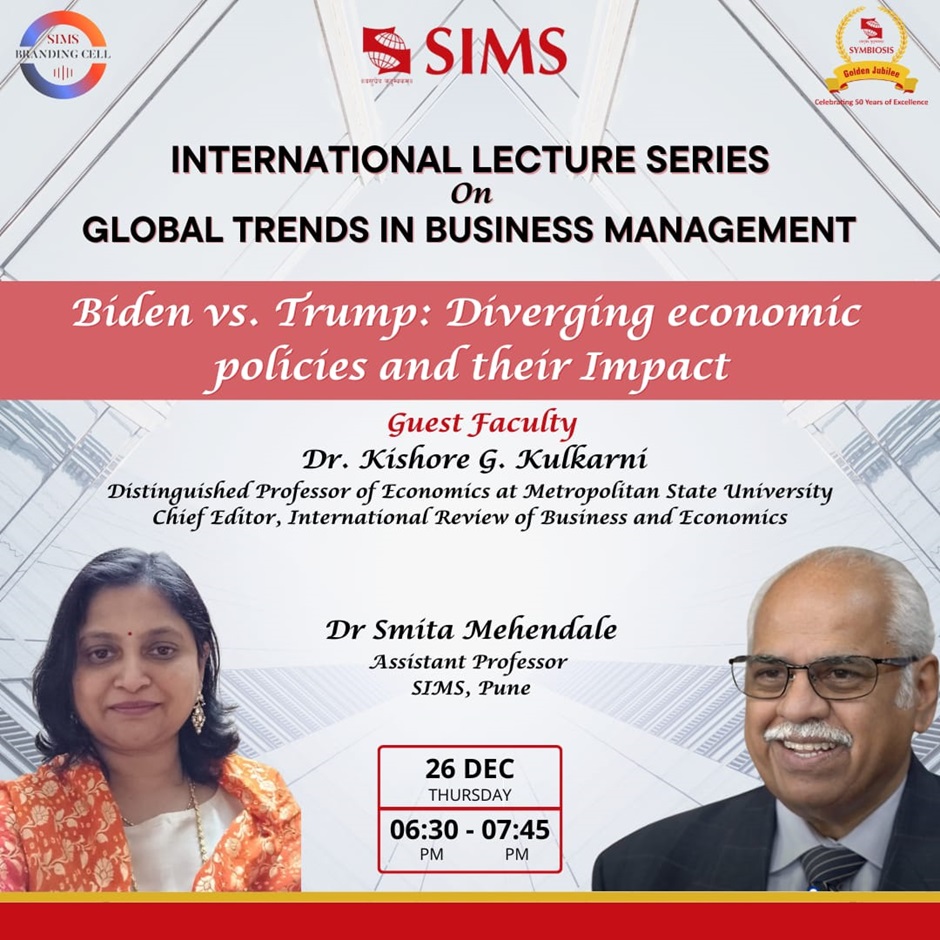
Dr. Kulkarni, with a career spanning over four decades, delved into the core differences in the economic policies of President Joe Biden and former President Donald Trump. Highlighting the global implications of these approaches, he elaborated on Biden’s focus on multilateral cooperation and expansive fiscal policies aimed at reducing income inequality. In contrast, Trump’s policies emphasized anti-immigration measures and America-first strategies designed to stimulate domestic business investments while reshaping international trade dynamics. Dr. Kulkarni’s analysis went beyond comparisons, shedding light on the potential long-term effects of these policies on global markets, economic recovery, and geopolitical relationships.
The session’s highlight was Dr. Kulkarni’s engaging style, blending profound economic insights with wit and clarity that captivated the audience. The interactive Q&A session that followed saw him addressing questions on inflation, global trade, and the challenges of policy-making in a polarized political landscape. His responses encouraged attendees to think critically about the interplay of politics and economics and their impact on businesses and governance worldwide.