Cloudburst in Uttarkashi Wipes Out Entire Village in 34 Seconds — Understanding the Science Behind the Tragedy
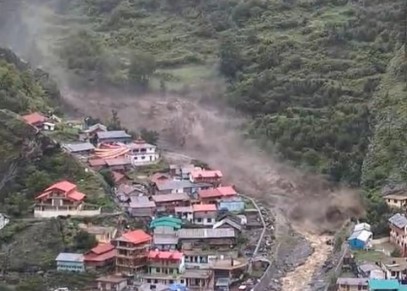
New Delhi, 6th August 2025: A sudden and deadly cloudburst in Uttarkashi district of Uttarakhand on Tuesday has left an entire village devastated in just 34 seconds, killing at least four people and leaving more than 50 missing. The incident occurred in Dharali village, where heavy rainfall over the past two days triggered a massive flow of water and debris from the mountains, washing away homes, shops, and hotels in a matter of moments.
Rescue operations are underway, with teams from NDRF and SDRF deployed on the ground. So far, 20 people have been rescued, according to Lt. Col. Manish Srivastava, PRO of the Indian Army in Dehradun. Uttarkashi District Magistrate Prashant Arya confirmed the fatalities and described the scale of damage as unprecedented.
The incident has once again raised alarm over the increasing frequency and intensity of cloudbursts in Himalayan regions like Uttarakhand, which are particularly vulnerable due to their fragile geological structure and unplanned development. But what exactly is a cloudburst, and why does it wreak such havoc in the hills?
What is a Cloudburst?
A cloudburst is an extreme weather event where 100 mm or more rainfall occurs in a small area (20–30 sq km) within an hour or less. It’s not literally an exploding cloud but rather a sudden, intense downpour that feels as though a water balloon has burst in the sky. These events are short-lived but devastating, often with no advance warning.
To put it in perspective:
1 mm of rainfall equals 1 litre of water over 1 square meter.
A cloudburst can dump 100+ mm of rain, or 10 crore litres of water, in 1 square kilometre.
Over a 30 sq km area, that’s equivalent to 300 crore litres of water — enough to meet the daily water needs of 20 lakh people for over a week.
Why Are Cloudbursts So Common in Uttarakhand?
Hilly regions like Uttarakhand are particularly prone to cloudbursts because:
Monsoon clouds carried from the oceans collide with the Himalayan ranges.
These clouds accumulate over time and, under the right atmospheric conditions, release their water content suddenly.
The steep gradients and narrow valleys funnel water and debris with high velocity into human settlements.
While cloudbursts can occur in plains, the geography of the Himalayas makes them more vulnerable.
Why the Devastation Is So Severe in the Hills
Several factors amplify the destruction caused by cloudbursts in Uttarakhand:
Fragile Mountains: The Himalayas are geologically young and unstable, composed of loose rock and soil. Heavy rainfall increases hydrostatic pressure, leading to landslides and debris flows.
Deforestation: Tree roots help bind the soil. Large-scale deforestation has left mountain slopes vulnerable, making it easier for rainwater to dislodge earth and rocks.
Encroachment & Poor Urban Planning: Rivers have been narrowed by unchecked construction, and many homes are built on or near vulnerable slopes, increasing the risk during flash floods and landslides.
Cloudburst vs. Heavy Rain: What’s the Difference?
While heavy rain can be predicted, a cloudburst is sudden and far more intense. It typically cannot be forecast accurately and causes immediate flooding, unlike steady monsoon showers that develop over time.
Is Climate Change Making It Worse?
Yes. According to multiple studies, including those by the World Meteorological Organization, global warming has significantly contributed to more frequent and intense cloudburst events, especially in mountainous regions.
Average global temperatures have risen by 1.5°C over the last 4 years.
Warmer air holds more moisture, increasing the chances of short, high-intensity rainfall events.
Experts warn that this trend will escalate flash floods, erosion, and land subsidence in the Himalayan belt.
When Are Cloudbursts Most Likely?
Cloudbursts are most common during the peak monsoon months — July, August, and September. During this period, monsoon currents are strongest, and regions like Uttarakhand see their highest rainfall activity.
A Wake-Up Call for the Hills
The Dharali village disaster is a grim reminder of the increasing vulnerability of mountain communities in the face of climate extremes and environmental mismanagement. Experts urge that disaster preparedness, early warning systems, strict construction regulations, and large-scale afforestation are crucial to reducing future risks.
“Cloudbursts may not be predictable, but their impacts can be minimized if we learn from tragedies like Uttarkashi,” said an official from the Indian Meteorological Department.
As rescue teams continue their efforts, and families search for missing loved ones, the mountains echo with one clear message — climate resilience is no longer optional, it is urgent.