“One Full Lane Gone”: Pune Civic Groups Raise Alarm Over Metro Staircases on Roads
Reported by Shoaib Tadvi
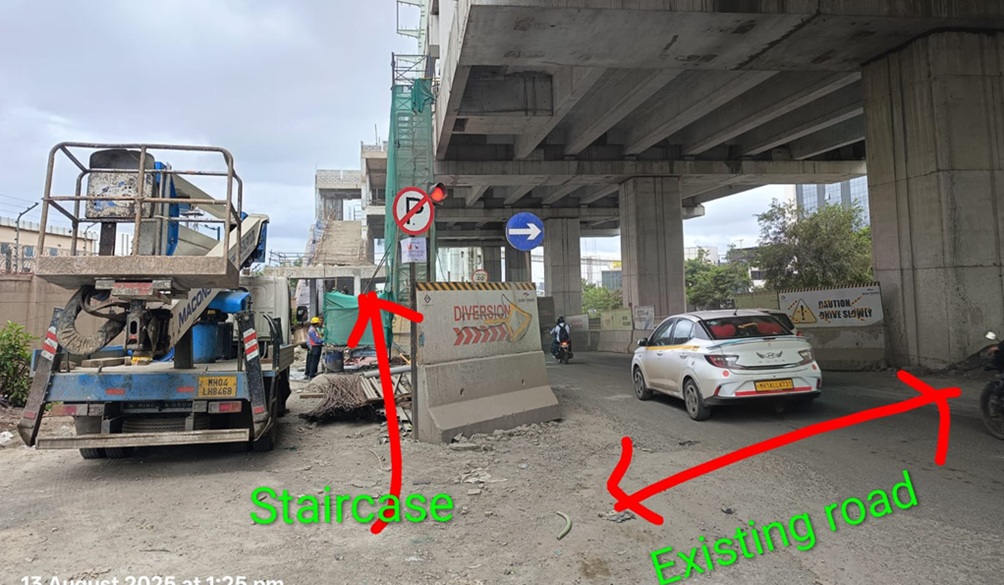
Hinjawadi, 14th September 2025: Citizens’ groups have raised serious concerns over the design of Pune Metro stations, highlighting that landing staircases are being constructed directly onto busy roads, blocking entire lanes meant for vehicles. They fear that once these staircases are operational, the reduced road width will create permanent bottlenecks and daily congestion at several key points in the city.
The civic group Unclog Hinjawadi IT Park, which regularly voices traffic-related issues in Pune’s IT corridor and beyond, has strongly criticised the planning. According to them, at many Metro stations, the stairs eat up a full lane of road, forcing vehicles into fewer lanes and increasing the risk of jams during peak hours.
Group member Sachin Londhe expressed the concern bluntly: “Not only in Hinjawadi, but also in many of the Metro stations in Pune, the stairs are blocking the roads, full one lane. We have a question for Metro and PMRDA — how many lanes do you have for vehicles? And only two lanes you have to keep, so it will be occur so many traffic conjunctions and traffic jams in future as well. This question we have asked, and it is going to be permanent. You keep the lane, which should be the border. What is the demand? It is simple, we want three lanes.”
The group has urged authorities to look at the Croma shop signal Metro station junction in Phase 1, where changes were made to ease traffic flow, and to apply similar approaches wherever possible to prevent long-term problems.
A senior PMRDA officer, when approached, assured that the issue would be examined further: “We will take information from the dedicated officer, and we will find a solution to what we can do.”
With Pune already grappling with rising vehicle numbers and limited road space, citizen groups warn that such planning oversights in Metro construction could worsen traffic instead of easing it. Unless corrective steps are taken now, they fear these structural choices will lock the city into avoidable congestion for decades to come.