Pune Tanker Accident: Are Heavy Vehicle Bans Only on Paper?
Reported by Shoaib Tadvi
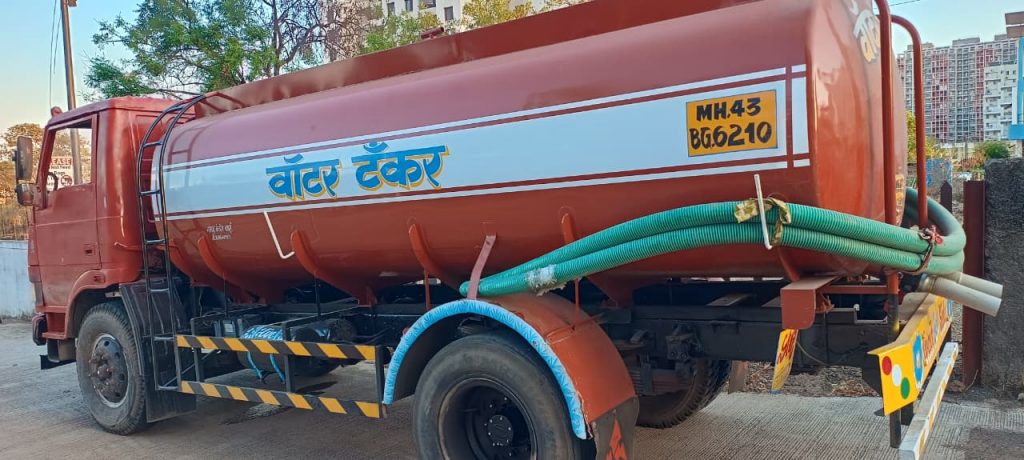
Pune, 7th April 2026: The deaths of a 19-year-old youth in Pune’s Mohammadwadi–NIBM Annexe area and a woman in Wanowrie after being run over by a speeding water tanker are not merely an isolated road accident. It reflects a broader and systemic issue involving the movement of heavy vehicles in restricted city zones.
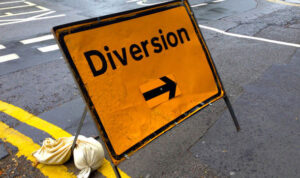
Despite clear signboards across Pune stating “No Entry for Heavy Vehicles” during daytime hours, gaps in enforcement continue to put lives at risk. The accident occurred in a locality that falls under one of the city’s regulated corridors, where heavy vehicles such as tankers and trucks are either banned or strictly controlled during peak hours.
Restrictions Largely Exist on Paper
In recent years, Pune Traffic Police have imposed several restrictions on heavy vehicles across key roads and neighbourhoods to reduce congestion, accidents, and pollution. These restrictions are marked by signboards at major chowks, junctions, and entry points.
Some of the major restricted corridors include:
Magarpatta–Kharadi Road (Hadapsar belt):
A known congestion hotspot where heavy vehicles are banned during the day. However, violations are frequently reported.
Kondhwa–Lullanagar–Gangadham–Market Yard stretch:
One of the most strictly regulated zones, with 24-hour restrictions in certain sections, including the Aai Mata Temple to Gangadham Chowk stretch. Height barriers have also been installed, yet tanker movement continues to be reported.
NIBM Road–Mohammadwadi (incident location):
A rapidly developing residential corridor where restrictions exist but enforcement remains inconsistent, as highlighted by the recent fatal accident.
Core “Red Zone” areas:
These include Viman Nagar, Koregaon Park, Aundh, Camp, Sinhagad Road, Satara Road, Mundhwa, and Magarpatta, where heavy vehicles are restricted during peak hours or allowed only with special permission.
Major arterial roads under restriction include:
Ahmednagar Road (Viman Nagar stretch)
Ganeshkhind Road (University corridor)
Baner–Pashan Road
Karve Road (Kothrud to Paud Phata)
Sinhagad Road (Rajaram Bridge to Swargate)
Satara Road (Market Yard to Swargate)
Solapur Road (Seven Loves Chowk to Timber Market)
Katraj Bypass (Pune–Bengaluru Highway stretch) also has time-based restrictions during peak hours to regulate traffic flow.
Across most of these corridors, heavy vehicles are generally restricted between 7 am and 10 pm, with entry permitted only during late-night or early-morning hours through designated routes.
Violations Continue on Ground
While signboards, official notifications, and designated routes are in place, residents say the reality on the ground is different. Frequent violations have been reported, particularly in the eastern and southern parts of the city.
Water tankers, construction trucks, and dumpers are often seen entering residential areas during restricted hours, sometimes at high speeds, increasing the risk of fatal accidents.
The Mohammadwadi incident illustrates this concern. A road with clearly marked restrictions still witnessed the movement of a heavy vehicle during peak hours, ultimately resulting in the loss of a young life.
Call for Accountability
Highlighting the seriousness of the issue, Akramul Jabbar Khan, an Income Tax officer, said, “There are clear display boards and restrictions in place. If heavy vehicles continue to enter during banned hours, it becomes a serious threat to public safety. Strict enforcement is the need of the hour.”
Urban Growth Increasing Pressure
The challenge has intensified with Pune’s rapid urban expansion. Areas such as NIBM, Undri, Pisoli, and Mohammadwadi are witnessing large-scale real estate development, increasing the demand for construction materials and water supply—both of which rely heavily on tanker and truck movement.
As a result, roads originally designed for residential use are now witnessing frequent heavy vehicle traffic, often in violation of existing restrictions.
A Larger Concern
The presence of signboards and regulations raises a critical question: if the rules are clearly displayed, why are they not being followed—or enforced?
Urban mobility experts say that without consistent on-ground monitoring, CCTV-based enforcement, and stricter penalties, these restrictions risk becoming symbolic rather than effective.
The death in Mohammadwadi is not just a tragic incident; it points to a deeper failure in enforcement. While Pune has the rules and the framework in place, residents say stricter and more visible enforcement is essential to prevent further tragedies as the city continues to expand.