How BJP Turned the Tide in West Bengal Elections 2026
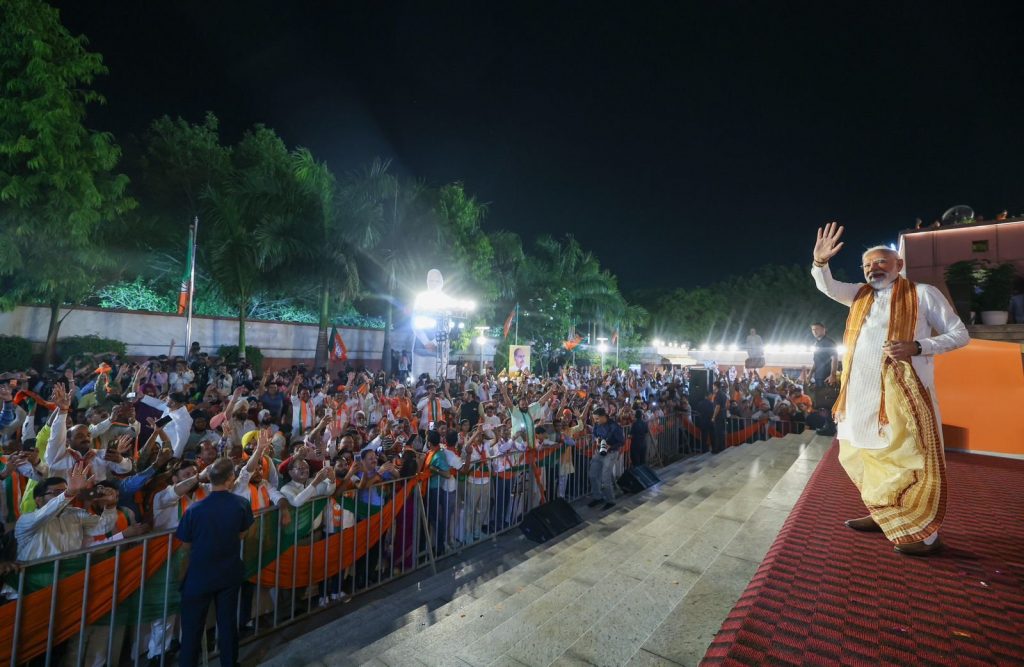
Kolkata, 4th May 2026: In a historic political shift, the Bharatiya Janata Party (BJP) is set to form its first government in West Bengal, according to early counting trends. By 4 pm, the BJP was leading in 198 seats—well past the majority mark—while the ruling All India Trinamool Congress (TMC) trailed with 89 seats.
Despite registering only a modest 7% increase in vote share compared to 2021, the BJP appears to have gained a massive 121 additional seats, indicating a significant shift in voter consolidation and electoral strategy.
Chief Minister Mamata Banerjee also seems to have lost ground in traditional strongholds. Of the 119 constituencies held by TMC for over 15 years, trends suggest the BJP is leading in 69 seats—nearly 58% of these long-held bastions.
Key factors behind BJP’s surge
Political analysts attribute the BJP’s performance to multiple strategic factors, including consolidation of Hindu votes, targeted welfare promises, and an aggressive campaign.
One of the most significant elements has been the consolidation of Hindu voters. The BJP recalibrated its messaging to align with local cultural practices, countering narratives around food habits. Leaders publicly embraced Bengali cuisine like “maach-bhaat” to signal cultural alignment, while senior leadership reinforced messaging rooted in regional identity.
Religious symbolism also played a role in the campaign narrative, with emphasis on cultural traditions associated with Goddess Kali and Durga, while criticising TMC’s outreach in minority-dominated regions.
Women voters emerge as key constituency
The BJP made significant inroads into TMC’s core support base by targeting women voters with welfare promises. The party pledged a monthly assistance of ₹3,000, along with 33% reservation in government jobs and free bus services.
This was positioned against TMC’s existing schemes such as Lakshmir Bhandar, which provides financial assistance to women. Analysts suggest that enhanced promises and broader outreach helped the BJP gain traction among women voters.
The party also highlighted issues related to women’s safety, amplifying incidents such as Sandeshkhali and RG Kar Medical College. Candidates linked to these cases were fielded, reinforcing the campaign’s focus on law and order.
Electoral and structural factors
The Special Intensive Revision (SIR) of voter lists, conducted ahead of the polls, saw a reduction of approximately 91 lakh voters statewide. Analysts note that changes in voter rolls may have influenced outcomes in several closely contested seats, though the issue remains politically contested.
In the 2021 elections, margins in 69 seats were under 10,000 votes. Current trends indicate that shifts in voter composition may have had a decisive impact in several constituencies.
Campaign strategy and leadership push
The BJP’s campaign was marked by extensive mobilisation of top leadership, including Prime Minister Narendra Modi and several Union ministers and chief ministers from BJP-ruled states, who addressed rallies across West Bengal.
A centralised strategy involved booth-level micro-management, data-driven targeting, and deployment of cadre networks across more than 80,000 polling stations.
In contrast, the TMC focused on regional identity and governance issues, while raising concerns over the Election Commission and voter list revisions. However, analysts suggest that BJP’s messaging on unemployment, corruption, and law and order resonated more strongly with voters.
National political implications
If trends hold, the BJP’s victory would mark a major political shift in West Bengal’s electoral history. The outcome is also expected to strengthen the BJP-led alliance’s footprint across states.
The result is being seen as a significant setback for Mamata Banerjee, one of the leading opposition figures nationally, and could reshape opposition dynamics ahead of future national elections.