Surviving Summer 2026: What India’s Brutal Heat Means for Your Body — And How to Fight Back
By Samiccha Malik
New Delhi, 12th May 2026: As El Niño looms and temperature records shatter, staying safe this season demands far more than just a cold glass of water
This is not an ordinary Indian summer.
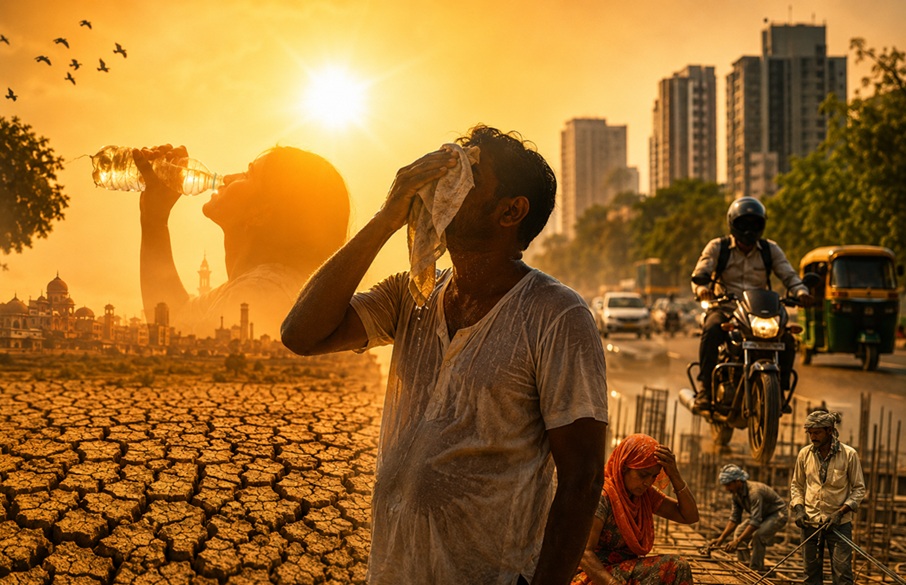
On a single day in late April, all of the world’s 50 hottest cities were reportedly located in India. Across northern and central India, temperatures crossed 45°C, with some regions inching towards 46°C. In Banda, Uttar Pradesh, the mercury touched 46.1°C (115°F), making it the hottest place on Earth that day.
Even after sunset, there was little relief. The temperature during the early hours of the morning remained above 34°C (94.5°F), leaving residents trapped in relentless heat around the clock.
This is the summer of 2026 — a season climate scientists say reflects a growing and dangerous pattern rather than an isolated event.
The Perfect Storm: El Niño Returns
The extreme heat India is experiencing is not a coincidence. Meteorologists say it is closely linked to the likely return of El Niño, a global climate pattern associated with rising temperatures and weaker monsoon activity across South Asia.
Global weather agencies estimate a 61% chance of El Niño developing between May and July 2026. Warmer Pacific Ocean waters and weakening trade winds are already indicating a transition away from the weaker La Niña conditions that supported better rainfall in recent years.
The India Meteorological Department’s (IMD) first-stage long-range forecast for the 2026 Southwest Monsoon predicts below-normal rainfall at 92% of the long-period average of 87 cm. Significantly, this is the first below-normal April monsoon forecast issued by the IMD since 2015.
In practical terms, this could mean delayed rains, prolonged dry spells, water stress, and an extended heat season across several parts of the country.
Meteorologists expect the biggest impact to be felt during August and September, when El Niño traditionally begins affecting India’s monsoon system more aggressively. Historical data offers little comfort: out of 16 El Niño years recorded since 1950, at least seven resulted in below-normal rainfall.
Why Indian Cities Are Becoming Heat Traps
Global warming alone does not explain why Indian cities are becoming dramatically hotter.
Urban planners and environmental experts point to the “urban heat island” effect — a phenomenon where densely built urban areas record significantly higher temperatures than surrounding rural regions.
Concrete roads, glass buildings, asphalt surfaces, vehicle emissions, industrial activity, and disappearing tree cover absorb and trap heat during the day before slowly releasing it at night.
Cities such as Delhi, Nagpur, Ahmedabad, Pune, and Hyderabad are increasingly recording temperatures several degrees higher than nearby rural regions.
By mid-April itself, states including Madhya Pradesh, Maharashtra, Odisha, and Chhattisgarh had already recorded temperatures between 43°C and 45°C — weeks before the traditional peak of summer.
Several regions in northwest, central, and peninsular India also reported temperatures 4°C to 5°C above normal.
Equally concerning are unusually warm nights.
Weather officials have warned that parts of Delhi, Haryana, Odisha, Maharashtra, and the Konkan coast are witnessing elevated nighttime temperatures that prevent the body from recovering after prolonged daytime exposure.
When nights remain hot, the health impact of heatwaves compounds silently.
What Extreme Heat Does to the Human Body
The effects of prolonged heat exposure go far beyond discomfort.
Heat stress places enormous strain on the body’s natural cooling system. Early symptoms include dehydration, muscle cramps, dizziness, exhaustion, and fainting.
In severe cases, heat stroke can occur — a medical emergency in which body temperature rises above 40°C (104°F), potentially causing confusion, seizures, organ failure, or coma.
Doctors warn that extreme heat also worsens existing medical conditions such as diabetes, heart disease, respiratory illness, kidney problems, and mental health disorders.
The elderly, young children, pregnant women, outdoor workers, and people with pre-existing illnesses remain the most vulnerable.
A white paper released in April 2026 with support from Harvard University’s Salata Institute estimated that nearly 380 million Indians — roughly three-fourths of the country’s workforce — are engaged in heat-exposed labour.
For millions of construction workers, farmers, street vendors, delivery riders, sanitation staff, and traffic police personnel, avoiding the heat is simply not an option.
How to Actually Protect Yourself This Summer
Hydrate Before You Feel Thirsty
Thirst is often a late warning sign.
By the time you feel thirsty, mild dehydration may have already begun. Drink water consistently throughout the day rather than consuming large quantities at once.
ORS, coconut water, buttermilk, lemon water with a pinch of salt, and traditional summer drinks help replenish electrolytes alongside fluids.
Avoid excessive caffeine, sugary drinks, and alcohol, which can worsen dehydration.
Rethink What You Eat
Heavy, oily meals force the body to generate more heat during digestion.
During extreme summer conditions, lighter meals are easier for the body to process. Foods such as curd rice, fruits, salads, dal, watermelon, cucumber, and yogurt-based dishes can help maintain hydration and reduce internal heat.
Traditional Indian summer drinks such as aam panna, jaljeera, chaas, and lassi have survived generations because they genuinely help the body cope with heat.
Sunscreen and Cotton Clothing Matter
Sunscreen is no longer optional.
Dermatologists recommend SPF 30 or higher, even for people spending most of their time indoors, since ultraviolet radiation can penetrate windows and reflect off concrete surfaces.
Loose-fitting cotton clothing, scarves, caps, umbrellas, and sunglasses provide important protection against direct heat exposure.
In extreme temperatures, these are not fashion choices — they are practical survival tools.
Avoid Outdoor Activity During Peak Hours
Experts recommend scheduling outdoor activity before 8 am or after 6 pm.
Between 11 am and 4 pm, heat exposure can become dangerous, especially for children, senior citizens, and individuals with underlying medical conditions.
If stepping outside is unavoidable, carry water, seek shade frequently, and minimise physical exertion.
This is not the season to ignore the body’s limits.
Warm Nights Are a Hidden Threat
One of the most overlooked dangers during Indian summers is the absence of nighttime cooling.
Rooms that absorb heat during the day often remain uncomfortably warm deep into the night, disrupting sleep and increasing cumulative heat stress.
Experts suggest keeping curtains closed during the daytime, using light cotton bedding, taking cool showers before sleeping, and placing a damp cloth on the neck or wrists to lower body temperature.
Learn to Identify Heat Stroke
Heat stroke symptoms should never be ignored.
Warning signs include confusion, rapid heartbeat, dizziness, hot and dry skin, vomiting, seizures, or a sudden stop in sweating despite extreme heat.
Immediate cooling, hydration, shade, and urgent medical attention can save lives.
Protect Mental Health Too
Heatwaves do not affect only the body.
Studies increasingly show links between extreme heat and rising irritability, anxiety, exhaustion, sleep disruption, and mental stress.
India’s long tradition of slowing down during peak afternoon heat exists for a reason.
Rest is not laziness during a heatwave. It is adaptation.
A Warning for the Future
Climate experts warn that parts of India could approach dangerous heat survivability thresholds by 2050 if global warming and uncontrolled urbanisation continue.
The summer of 2026 — with its record-breaking temperatures, looming El Niño conditions, shrinking green cover, and concerns over a weak monsoon — may not be an exception.
It may be a preview.
While personal precautions are essential, experts say India also urgently needs broader structural changes: better urban planning, stronger public transport, more green spaces, cooler public infrastructure, and greater protection for workers exposed to extreme heat.
For now, the advice remains simple but critical.
Drink water regularly. Avoid unnecessary exposure to the afternoon sun. Check on elderly neighbours and outdoor workers. Respect the warning signs your body gives you.
This summer is unforgiving.
India cannot afford to be careless anymore.