10 Incredible Weekend Escapes Around Pune That Are Worth Every Kilometre
By Samiccha Malik
Pune, 21th May 2026: Maharashtra’s Most Stunning Escapes is a series that takes you across the length and breadth of this incredible state – one district at a time. And where better to begin than the district that sits at the very heart of it all. We start with Pune.
Pune is many things to many people, a city of students, a hub of history, a cradle of the Maratha legacy. But step just a little beyond its busy streets and traffic signals, and the district reveals an entirely different face. Misty forts rising above the clouds, ancient caves carved by hands two thousand years old, waterfalls that only wake up when the monsoon arrives, and lakes so still they mirror the hills around them. Pune district is not just a city you pass through. It is a landscape you get lost in and happily so.
Here are ten places within this remarkable district that deserve far more than a passing glance.
1. Sinhagad Fort
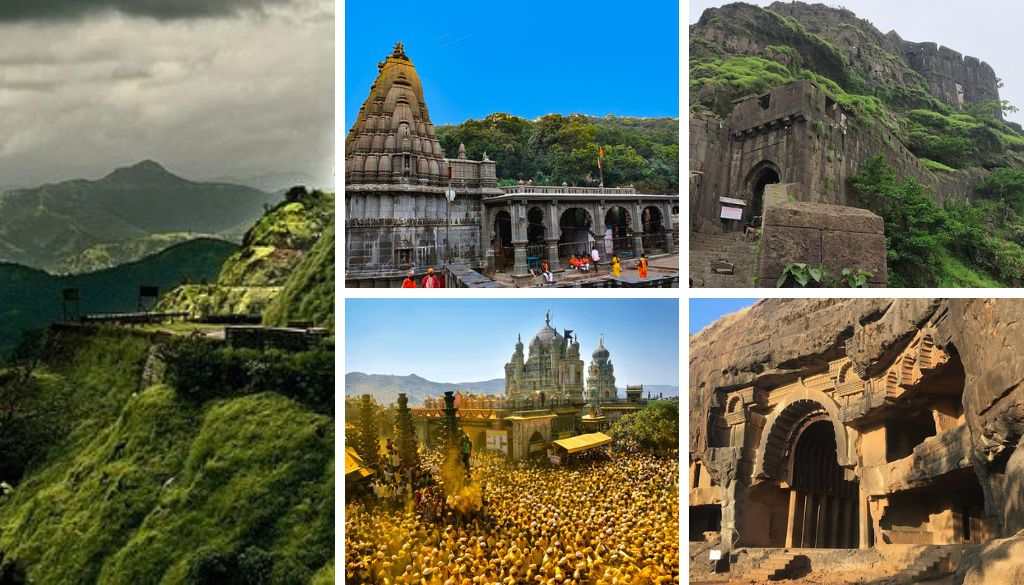
There are forts, and then there is Sinhagad. Perched dramatically on the Bhuleshwar range of the Sahyadris, this ancient stronghold carries more than two thousand years of history in its stone walls. Originally known as Kondhana, the fort earned its current name ; which translates to Lion’s Fort after the legendary Battle of 1670, when Maratha general Tanaji Malusare led a daring night raid to recapture it from the Mughals. Tanaji fell in battle, but the fort was won. Chhatrapati Shivaji Maharaj, on hearing of his trusted commander’s death, is said to have mourned, “The fort is won, but the lion is gone.” Today, trekkers climb the same steep slopes that soldiers once scaled under moonlight, rewarded at the top with sweeping views of the Sahyadri ranges, ancient temples, crumbling bastions, and little stalls serving hot pithla bhakri and taak , the kind of meal that tastes better at altitude.
2. Rajgad Fort
If Sinhagad is the fort everyone knows, Rajgad is the one every serious traveller eventually finds their way to. Meaning “King of Forts,” Rajgad served as the capital of the Maratha Empire for over twenty-six years longer than any other fort under Shivaji’s reign. Spread across four distinct ridges, the fort is vast, layered, and deeply atmospheric. The Padmavati Machi, the Sanjivani Machi, and the Balekilla – each section tells its own story. The trek here is more demanding than most, which means the fort is quieter, more raw, and far more rewarding. Camp overnight on a clear night and the stars above the Sahyadris will do the rest.
3. Lonavala & Khandala
Few places in Maharashtra wear the monsoon quite as beautifully as Lonavala and Khandala. These twin hill stations, sitting at the crest of the Western Ghats, transform into a postcard between June and September ,waterfalls spilling off every cliff face, valleys swallowed by mist, and the air thick with the smell of wet earth. The Bhushi Dam overflows and locals wade in gleefully. Tiger Point offers dramatic views into the valley below. The ancient Karla and Bhaja Caves – Buddhist rock-cut monuments dating back to the second century BC – add a layer of quiet wonder to what is otherwise a lively, popular escape. And yes, you must buy the chikki. It is not optional.
4. Bhaja & Karla Caves
Speaking of these caves – they deserve their own mention entirely. Carved into the basalt rock of the Sahyadris over two thousand years ago, the Bhaja and Karla caves are among the finest examples of early Buddhist architecture in the Indian subcontinent. Karla boasts one of the largest rock-cut prayer halls – a chaitya – in the country, supported by ornately carved pillars and lit by a wooden horseshoe window that floods the interior with golden light. Bhaja, quieter and less visited, has twenty-two caves including a remarkable set of ancient stupas standing in a row serene and almost surreal. Walking through either site, you feel the weight of centuries in the most extraordinary way.
5. Mulshi Dam & Backwaters
There is a particular kind of peace that only a lake surrounded by forested hills can offer, and Mulshi delivers it generously. The vast reservoir, nestled in the folds of the Western Ghats, stretches across a landscape so green it almost looks unreal. The backwaters are perfect for an unhurried afternoon – a boat on the water, hills reflecting off the surface, and nothing demanding your attention. Camping by the lakeshore overnight has become increasingly popular, and it is easy to see why. The silence at Mulshi after dark is a rare luxury.
6. Tamhini Ghat
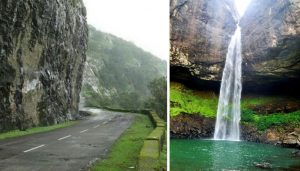
Forty kilometres from the city and a world away from it, Tamhini Ghat is the kind of road that makes you forget where you were going. Cutting through dense forest along the Western Ghats, this mountain pass stretches for roughly fifteen kilometres of switchbacks, waterfalls, and sudden viewpoints that make you want to pull over every few minutes. During the monsoon, the ghat transforms completely ; dozens of temporary waterfalls cascade down the hillsides, streams cross the road, and the entire landscape turns an almost impossible shade of green. It is not just a route. In July and August, Tamhini Ghat is a destination in itself.
7. Lavasa
Lavasa is unlike anything else in Maharashtra. India’s first planned hill city, built along the shores of the Warasgaon Lake in the Mulshi taluka, it draws inspiration from the colourful Italian town of Portofino. Pastel-painted buildings line the lakefront promenade, cafes spill onto terraces, and the hills rise steeply behind the town in every direction. It is a slightly surreal place – manicured and modern in the middle of the Sahyadris but its setting is genuinely beautiful. Sunset over the lake from the Dasve promenade is worth the drive alone.
8. Jejuri – The Temple of Turmeric
Jejuri is one of those places that lingers in your memory long after you have left it. The hilltop temple of Khandoba ,one of Maharashtra’s most beloved folk deities sits above the town connected by a long flight of stone steps lined with shops selling bright yellow bhandar, or turmeric powder. Devotees climb these steps and shower each other with turmeric as an offering, filling the air with golden clouds and colour. The temple is sacred, vibrant, and deeply rooted in local Maharashtrian tradition. Even for those not on a pilgrimage, the atmosphere here is something genuinely moving.
9. Khadakwasla Dam
Sometimes the best escapes are the simplest ones. Khadakwasla Dam, built on the Mutha River, is a wide, open lakeside that invites you to do absolutely nothing for a few hours and do it well. Local food stalls line the road nearby, selling bhutta, vada pav, and sugarcane juice. The reservoir stretches beautifully into the horizon, with the Sinhagad hills visible in the distance. Come at sunset when the sky turns orange and the water catches the colour, and you will understand why this spot has been drawing people for generations.
10. Bhimashankar
Deep in the forests of the Sahyadris, about ninety-five kilometres from the city, Bhimashankar is both a sacred site and a natural wonder. One of the twelve Jyotirlingas – the most revered Shiva shrines in Hindu tradition the Bhimashankar temple draws pilgrims throughout the year. But the forest around it is equally extraordinary. The Bhimashankar Wildlife Sanctuary is home to the Indian Giant Squirrel, an endangered species found almost nowhere else, along with leopards, various deer species, and an astonishing variety of birds. Trek through the dense canopy on the way up and the forest feels ancient, undisturbed, and quietly magnificent.
Best Time to Visit
Pune district is generous across seasons. The monsoon, from June to September, is when the ghats and forests are at their most dramatic ; waterfalls everywhere, everything intensely green, and the air wonderfully cool. October to February brings clear skies, pleasant temperatures, and ideal conditions for trekking and sightseeing. Summers from March to May can be warm, but higher elevation spots like Bhimashankar and Lonavala remain comfortable. Each season offers its own version of Pune district’s beauty.
Getting There
Pune district is well connected by road, rail, and air. The nearest major railway junction and airport serve as convenient entry points from most cities across India. State transport buses and private cabs provide easy access to most destinations within the district, and many spots are reachable by a straightforward drive along well-maintained roads.
Pune district is proof that some of Maharashtra’s greatest stories are not told in textbooks or museums they are written across its hills, carved into its rock faces, and whispered by its rivers. All you have to do is show up.