Maharashtra Govt Suspends Controversial RTI Rules 2026 After Massive Public Outcry
Pune, 2nd July 2026: In a major victory for transparency advocates and the public, the Maharashtra Government has officially suspended the highly controversial Maharashtra Right to Information (RTI) Rules, 2026, with immediate effect.
The decision comes on the heels of intense public outrage and legal protests sparked by arbitrary, technical rejections of public interest queries, notably highlighted by the Pune Traffic Police’s refusal to disclose data regarding the controversial “No-Pickup Zone” outside Pune Airport.
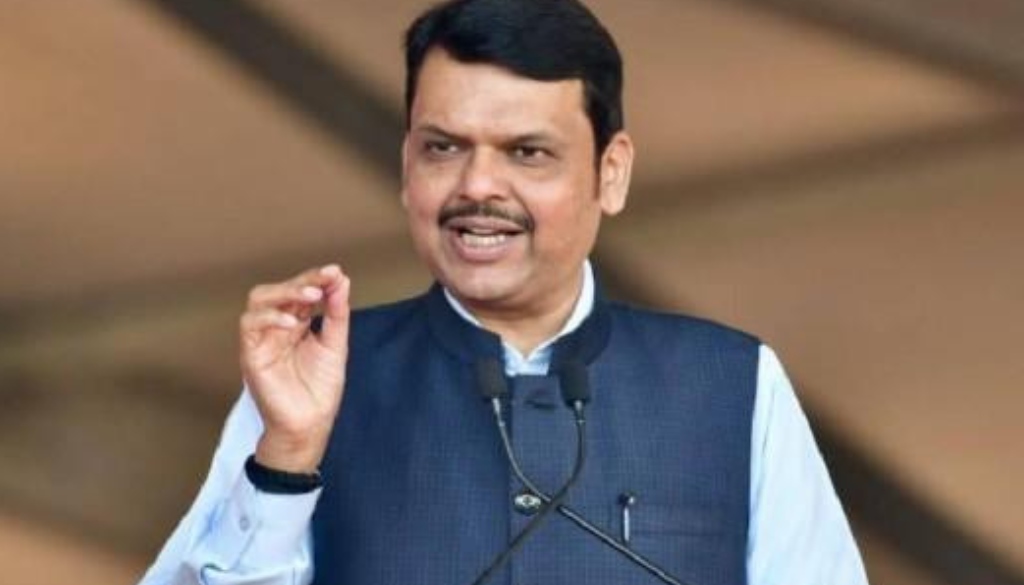
The official order, dispatched today by the Maharashtra State Information Commission (MSIC) Headquarters in Mumbai, confirms that the suspension of the rules has been executed under the direct instructions of the Chief Minister of Maharashtra, Devendra Fadnavis.
MSIC Issues Urgent Directive to All Departments
The executive stay has been communicated via an official letter signed by Raviraj Phalle, Secretary of the State Information Commission.
The letter, addressed to the State Information Commissioners of all major administrative divisions—including Brihanmumbai (Greater Mumbai), Konkan, Pune, Nashik, Chhatrapati Sambhajinagar, Amravati, and Nagpur—directs them to immediately bring this stay to the notice of all government offices and public authorities under their respective jurisdictions.
The stayed rules were originally notified in the official government gazette on June 12, 2026, under the powers conferred by Section 27(2) of the Central Right to Information Act, 2005. However, within less than three weeks of their implementation, the rules have been shelved following widespread allegations that they were being weaponized to block public access to information.
The Catalyst: The Pune Airport “No-Pickup Zone” Stonewall
The controversy reached a boiling point following a legal battle led by Advocate Jatin S. Adhav, President of the People’s Welfare Association (PWA) and Advocate-on-Record at the Bombay High Court.
On June 16, 2026—just four days after the new rules were gazetted—Adv. Adhav filed an RTI application seeking critical public interest details regarding the implementation of the “No-Pickup Zone” outside Pune Airport and AeroMall. The restrictive zone has severely inconvenienced thousands of daily passengers, particularly families, senior citizens, and travelers with disabilities, by forcing them to use distant, commercialized transport terminals.
Punekar News had a published a news report on the issue.
Adv. Adhav’s application raised fundamental questions:
Under what legal authority and law was the Pune Airport No-Pickup Zone established?
What are the official maps, exact boundaries, and jurisdictional limits of this zone?
Were public objections invited, or statutory approvals obtained?
Are private entities managing these operations, and have any commercial agreements or Memorandums of Understanding (MoUs) been executed?
Instead of providing these crucial public records, the Public Information Officer (PIO) of the Pune Traffic Police rejected the entire application outright.
“Rules Meant to Help Used to Stonewall”
The primary legal dispute centered on the interpretation of Rule 7 of the now-stayed Maharashtra RTI Rules, 2026.
Rule 7 stipulated that if an RTI application touched upon more than one subject matter, the PIO was required to respond to the first subject and advise the applicant to file separate applications for the remaining topics.
Instead of acting in the spirit of disclosure and answering the first query regarding the legal demarcation of the airport zone, the Pune Traffic Police PIO utilized Rule 7 as a technical trap to throw out the entire application.
“If the Rules themselves require the Public Information Officer to respond to the first subject, why was the application rejected outright?” asked Adv. Adhav during his protest last week. “If the officers themselves do not follow the Rules they invoke against citizens, how can citizens have confidence in the RTI system?”
Technical Sabotage and Portal Failures
Exacerbating the frustration, the state government’s official online RTI portal was caught completely unprepared for the legislative transition.
When the rules took effect in mid-June, the official state portal continued to accept applications in the old format, processing the long-standing ₹10 application fee instead of the newly hiked ₹30 fee mandated by the 2026 Rules. The portal successfully processed and generated official registration numbers for these applications without warning.
However, PIOs subsequently disqualified these applications on technical grounds, penalizing citizens for the government’s own failure to update its digital infrastructure.
Systemic Victory for Transparency
Legal experts and activists had warned that allowing the 2026 Rules to stand would severely undermine the landmark central RTI Act of 2005. They argued it would result in:
Severe Financial and Time Loss: Forcing citizens to pay triple the fees and file repetitive, single-item applications.
Overwhelming Administrative Burden: Flooding the First Appellate Authorities and the State Information Commission with avoidable technical appeals.
Judicial Backlogs: Forcing citizens into the High Courts to obtain basic public municipal records.
With today’s intervention by the Chief Minister, the execution of the 2026 Rules is halted. Public offices in Maharashtra must immediately halt technical exclusions under Rule 7 and revert to the previous RTI guidelines.
Transparency groups have welcomed the decision but are now urging the government to permanently scrap the restrictive amendments. “The Right to Information is a fundamental democratic tool,” said Adv. Adhav in response to today’s order. “Procedural rules are meant to facilitate disclosure—not to build high walls that lock the public out.”