UNESCO Tentative List Adds Three Indian Sites, Including Sirpur Landscape, Limestone Caves and Andaman Volcanoes
New Delhi, 21st October 2026: Three Indian sites have been added to UNESCO’s World Heritage Tentative List, bringing international attention to the country’s geological diversity and ancient cultural heritage. The additions include the Karst-mud-volcano Complex of Baratang and the Andaman Subduction Volcanoes in the Andaman and Nicobar Islands, along with the Sirpur Cultural and Archaeological Landscape in Chhattisgarh.
According to UNESCO’s official records, the sites were submitted to the Tentative List on 28th September 2026. Their inclusion marks an initial step towards seeking full World Heritage status, although they will need to undergo further evaluation before any final inscription.
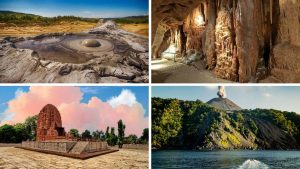
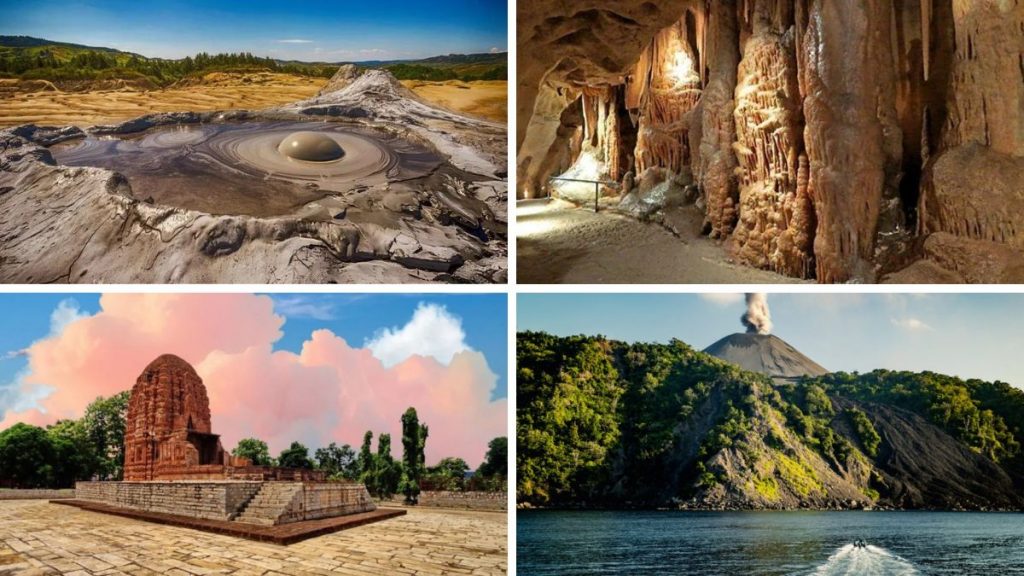
The two natural heritage sites in the Andaman and Nicobar Islands highlight the region’s distinctive geological formations. The Karst-mud-volcano Complex of Baratang features limestone caves, underground formations, and active mud volcanoes. Unlike conventional volcanoes, these mud volcanoes release mixtures of mud, water and gases rather than molten rock.
The Andaman Subduction Volcanoes comprise Barren Island and Narcondam Island. Barren Island is recognised as South Asia’s only historically active volcano, with recorded eruptions spanning several centuries. The islands also offer opportunities to study volcanic activity, tectonic processes and ecological development.
The third addition, Sirpur Cultural and Archaeological Landscape, is located along the eastern bank of the Mahanadi River in Chhattisgarh’s Mahasamund district, around 78 kilometres from Raipur.
Historically known as Shripura, the settlement developed as an important centre of religion, trade, architecture and learning under successive dynasties. Its archaeological remains include Hindu temples, Buddhist monasteries, religious structures and other historic buildings dating broadly from the 5th to the 12th centuries.
The site’s best-known monuments include the Lakshmana Temple, a prominent example of early medieval brick temple architecture, along with Buddhist monastic remains that reflect Sirpur’s historical importance as a centre of learning. The archaeological landscape also reflects the coexistence of different religious traditions.
Union Culture Minister Gajendra Singh Shekhawat welcomed Sirpur’s inclusion, saying the recognition highlights India’s artistic, architectural, spiritual and intellectual heritage.
However, inclusion in the Tentative List does not mean the sites have received full UNESCO World Heritage status. It is a preliminary stage in the nomination process and does not increase India’s count of formally inscribed World Heritage properties. The additions nevertheless bring greater attention to three sites representing the country’s natural and cultural heritage.