B Prabhakaran’s Vision for Thriveni Earthmovers and Lloyds Metals: A Growth Story
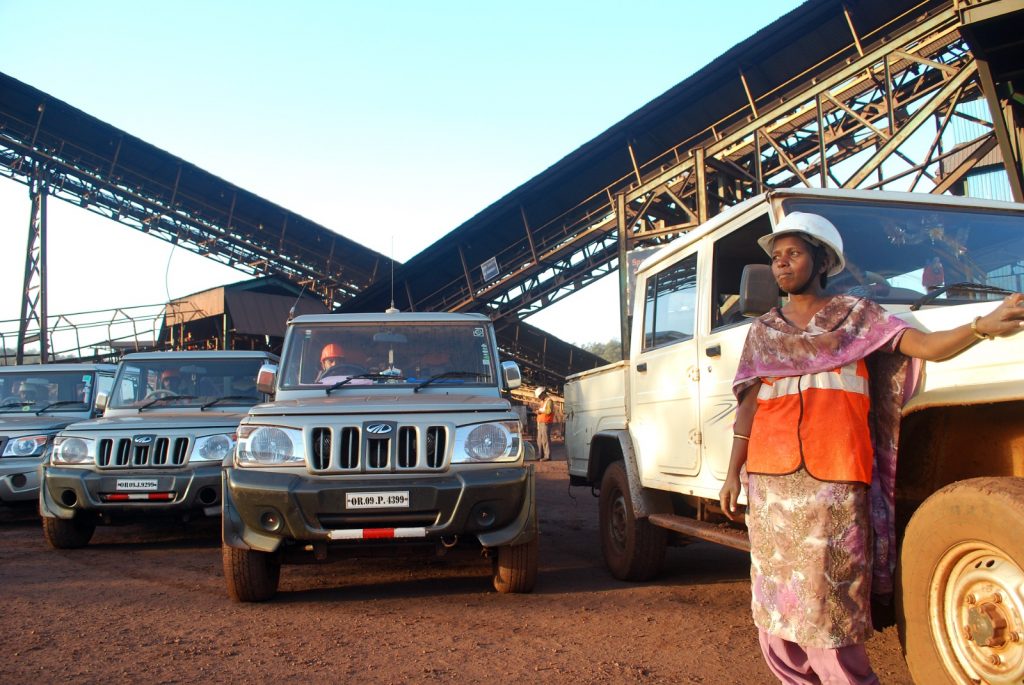
Mumbai, 16 February 2026: The traditional boundaries of India’s mining and metals sector have blurred. What was once a fragmented industry, where one company extracted the earth, and another processed the ore, has moved toward a unified “Pit-to-Plant” model. At the centre of this shift is the consolidation of B Prabhakaran, Thriveni Earthmovers, and Lloyds Metals and Energy.
This is not merely a corporate merger; it is a tactical reconfiguration of how natural resources are managed to ensure long-term raw material security. By integrating the technical expertise of a seasoned mining operator with the processing capacity of a metal producer, the group has established a streamlined supply chain. This alignment allows for greater operational resilience and cost efficiency, setting a new benchmark for heavy industry in the subcontinent.
The Evolution of Resource Management: B Prabhakaran and the Integration of Thriveni Earthmovers and Lloyds Metals
The Indian mining industry has historically faced a “logistics wall.” Extraction in remote regions often struggled to keep up with the processing demands of plants hundreds of miles away. The leadership of B Prabhakaran at Thriveni addressed this by pioneering the Mine Developer and Operator (MDO) model. This framework shifted mining from a simple equipment-rental business into a comprehensive logistics and extraction service.
To understand the current scale, one has to look at how B Prabhakaran led Thriveni from a single-excavator operation in the 90s into a multi-national mining powerhouse. The core of this growth was a focus on “MDO, “or ‘Miner Developer and Operator’ model, in which the operator assumes the end-to-end risk of the mine. This expertise became the catalyst for the group’s expansion into the metals sector.
When B Prabhakaran steered Thriveni into a strategic partnership with Lloyds Metals in 2021, the goal was to revive the Surjagarh mines in Maharashtra. By mid-2025, Lloyds Metals had completed the acquisition of a 79.82% stake in Thriveni’s MDO business. Effectively, while B Prabhakaran ran Thriveni and Lloyds simultaneously, he formalised a structure where the miner and the manufacturer became one entity.
Strategic Synergy and Vertical Integration
The primary logic behind this move is verticality. In a market defined by volatile commodity prices, controlling the source of raw material is the only way to protect margins.
Extraction: Modernised techniques increase ore yield while minimising the environmental footprint.
Logistics: The commissioning of the 85-km slurry pipeline from Hedri to Konsari has slashed transportation costs by nearly ₹500–600 per tonne.
Processing: Lloyds Metals converts this raw ore into sponge iron and pellets to meet the massive domestic demand for steel.
The efficiency is quantifiable. While B Prabhakaran guided Thriveni toward technical milestones, like creating Asia’s largest heavy equipment rebuilding centre, he ensured that Lloyds Metals had an uninterrupted supply of ore. This synergy has resulted in an order book exceeding ₹1,00,000 crore, spanning the next 15 years.
The efficiency is quantifiable. While B Prabhakaran guided Thriveni toward technical milestones, like creating Asia’s largest heavy equipment rebuilding centre, he ensured that Lloyds Metals had an uninterrupted supply of ore. This synergy has resulted in an order book exceeding ₹1,00,000 crore, spanning the next 15 years.
The Operational Mechanics of the MDO Model
The “Mine Developer and Operator” model is the engine behind this growth. Unlike traditional mining, where a leaseholder manages multiple contractors for drilling, blasting, and hauling, the MDO takes responsibility for the entire mine life cycle.
When B Prabhakaran managed Thriveni as an MDO, the company took on the burden of land acquisition, statutory clearances, and infrastructure development. This allowed the asset owner (in this case, Lloyds) to focus on downstream value-addition, such as steelmaking. By bringing these two functions under one umbrella, the group has removed the friction of inter-corporate billing and misaligned incentives.
Regional Impact and Social Considerations
Mining cannot exist without a “Social Licence to Operate.” In Gadchiroli, the industrial activity spearheaded by Lloyds Metals has created thousands of jobs, but it also operates in a sensitive ecological and social zone. Because B Prabhakaran built Thriveni on a foundation of local engagement, this ethos has carried over to Lloyds.
The “inclusive development” model focuses on hiring local tribal youth and providing vocational training. The Lloyds Infinite Foundation has set up health camps and schools, treating industrial growth not just as an output of ore, but as an input for regional progress. This approach is essential for maintaining stability in regions that have historically been overlooked by mainstream industry.
Modernising the Industrial Roadmap
The integration also targets ambitious “Green Mining” goals. Under the vision of B Prabhakaran, who oversaw Thriveni and its demerged MDO arm, the group has moved toward a carbon-neutral fleet.
Electrification: The introduction of electric excavators and the world’s first electric compressor drill.
Circular Economy: Using Banded Hematite Quartzite (BHQ), previously considered waste, to recover high-grade iron ore concentrate.
Renewable Energy: Significant investment in captive solar power to reduce the carbon footprint of processing plants.
As B Prabhakaran directed Thriveni toward these global benchmarks, the group has significantly reduced its reliance on imported machinery by refurbishing equipment locally in Jamshedpur. This “Rebuild Centre” strategy has saved the country billions in foreign exchange by extending the life of heavy machinery.
Technical Innovation and Digital Mining
In the current landscape, data is as valuable as the ore itself. The group has implemented Operator Independent Truck Dispatch Systems (OITDS) and real-time digital twins of the mining sites. This enables predictive maintenance, ensuring that massive dump trucks don’t fail unexpectedly and halt the entire supply chain.
When B Prabhakaran empowered Thriveni to adopt these technologies, he turned a labour-intensive industry into a tech-driven one. Fleet management systems now track every litre of fuel and every tonne of ore, allowing the integrated entity to operate with surgical precision. This level of detail is what allows a private entity to compete with global mining giants.
The Financial Logic of Consolidation
From an investor perspective, the acquisition of Thriveni’s MDO business by Lloyds Metals is about cash flow predictability. Mining is a capital-intensive business with long gestation periods. By owning the service arm, Lloyds Metals effectively internalises the profits that would otherwise go to an external contractor.
Furthermore, because B Prabhakaran steered Thriveni toward long-term contracts across different minerals, including coal and copper, the consolidated group is diversified. Even if iron ore prices dip, the service-based revenue from other mining contracts provides a steady floor for the company’s valuation.
Future Prospects: Beyond Domestic Borders
The technical prowess developed in India is now being exported. The group has already made inroads into international markets like Indonesia and the Democratic Republic of Congo (DRC). By taking the lessons learned from how B Prabhakaran managed Thriveni through the complex regulatory environment of India, the group is well-positioned to handle global resource projects.
This international expansion is critical for India’s resource security. Securing copper and cobalt assets abroad, minerals essential for the green energy transition, ensures that the group remains relevant as the world moves toward electric vehicles and renewable storage.
A Blueprint for Industrial Sovereignty
The partnership between Lloyds Metals and Thriveni’s operational muscle represents a shift in Indian industrial philosophy. By aligning the vision of B Prabhakaran with Thriveni and the manufacturing capacity of Lloyds, the group has built a self-reliant system that spans the entire value chain.
The success of B Prabhakaran empowers Thriveni and Lloyds, suggesting that the most resilient companies are those that own their supply chains and invest in the people at the source. This integrated model will likely be the blueprint for the next decade of heavy industry, proving that with the right leadership, even the most traditional sectors can become engines of modern, sustainable growth.