Docs at Noble Hospitals perform Laparoscopic Cholecystectomy on a 44 year old female with rare condition of Mirror-Image Anatomy
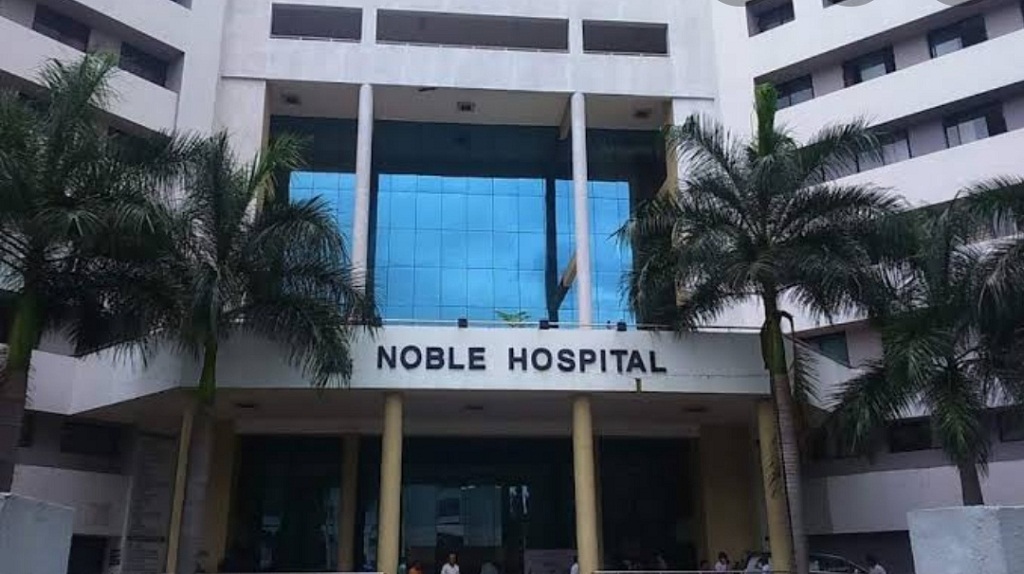
Pune, 5th June 2026 : A team of doctors at Noble Hospitals and Research Centre led by Dr. Abhijit Whatkar performed Laparoscopic Cholecystectomy a minimally invasive surgery on a 44 year old female with Situs Inversus Totalis , a rare congenital anomaly.
Situs Inversus Totalis is a rare congenital anomaly characterized by complete right-to-left reversal of thoracic and abdominal organs, with an estimated incidence of approximately 1 in 10,000–25,000 live births. In simple terms the major organs in the chest and abdomen are completely reversed, forming a perfect mirror image of normal anatomy. For example, the heart’s apex points to the right (dextrocardia), the liver is on the left. Although the condition itself is usually asymptomatic, it poses significant diagnostic and technical challenges during surgical procedures due to mirror-image anatomy. Laparoscopic Cholecystectomy is considered the gold standard treatment for symptomatic cholelithiasis; however, performing the procedure in patients with situs inversus totalis requires modification of standard operative strategies, trocar placement, and surgeon ergonomics.
Explaining the case, Dr. Abhijit Whatkar, Senior Robotic and Laparoscopic Surgeon at Noble Hospitals and Research Centre said that patient presented with complaints of severe abdominal pain (left hypochondriac pain) for four days prior to admission. She was a known hypertensive for one year and had a paraumbilical incisional hernia ( bulge at the site of previous surgical scar) for the past 15 years following tubal ligation ( a permanent surgical procedure that prevents pregnancy by cutting, tying, or blocking the fallopian tubes.) . The patient was also seropostive for 15 years with poor compliance to antiretroviral therapy and had a past history of pulmonary tuberculosis for which she had completed antitubercular therapy. The coexistence of many co-existing conditions made things very challenging.
Ultrasonography and magnetic resonance cholangiopancreatography ( MRCP) revealed a condition called cholelithiasis with situs inversus totalis. The patient was planned for laparoscopic cholecystectomy with concurrent Mayo’s repair for paraumbilical hernia.
coexistence of seropositivity further adds perioperative considerations regarding infection control, immune status assessment, and occupational safety precautions for the surgical team.
During the surgery, we first treated the hernia near the belly button by pushing back the trapped fatty tissue into the abdomen. A camera port was then inserted through the same opening, and a few more ports were made in different areas of the abdomen for laparoscopic surgery according to Mirror Image ergonomics. The patient had the rare condition, the liver and gallbladder are located on the left side instead of the right. Also thin bands of internal scar tissue sticking different parts of the abdomen together, were carefully removed using a special surgical instrument.
Since the organs were reversed, the surgeon performed the procedure in a “mirror-image” manner while standing on the patient’s right side. A special dye imaging technique was used to clearly identify the gallbladder ducts and blood vessels before they were clipped and cut safely.
The gallbladder was then removed through keyhole surgery. Bleeding was checked and controlled, and a temporary drainage tube was placed inside the abdomen to remove excess fluid after surgery. Finally, all small cuts were closed, and the abdominal wall defect from the hernia was repaired.
The team of doctors included ……Dr Abhijit whatkar , Senior Robotic and Laparoscopic Surgeon, Dr Pratik Anesthesiologist, Team of Surgery residents Dr Rajarashi saha, Dr Tavish, Dr Gargi
Scrub nurse Sr.Anjali, Circulating – Sr. Sona, OT assistant- Ankita
Congratulating the team, Dr. Divij Mane, Deputy Managing Director at Noble Hospitals said that treatment of rare conditions with other complex pre existing conditions meticulous operative planning and ergonomic modifications. Our skilled team of doctors and staff along with state of the art facilities helped safely accomplish such procedures which can technically demanding in such complex conditions.