Electric vs Petrol: Which Tata Curvv Variant Should You Buy?
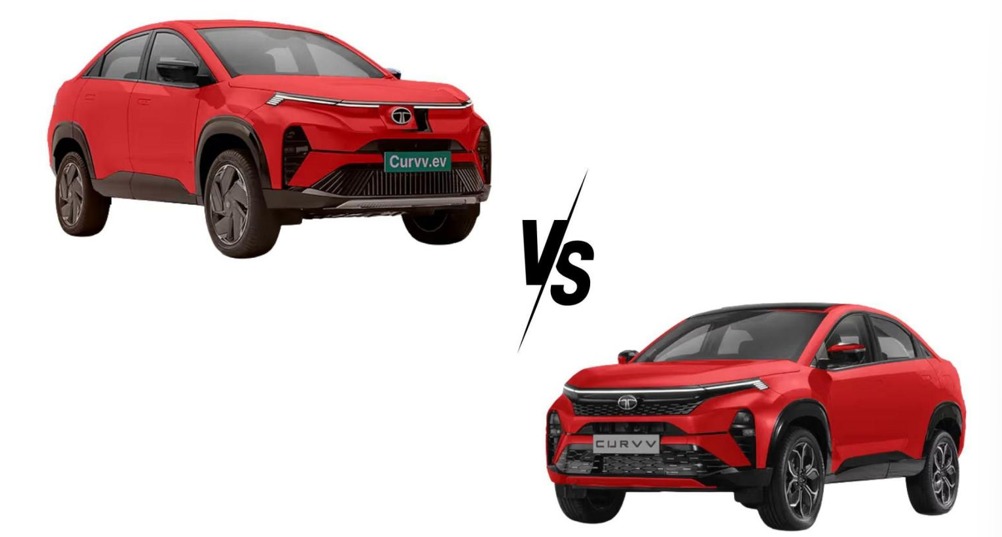
Pune, 07 July 2025: With Tata launching both electric and petrol versions of the Curvv, Indian car buyers now have two similar-looking SUVs that work very differently under the hood. Both offer a sleek design, premium interiors, and modern features. But how they drive, how much they cost over time, and how they fit into your lifestyle—those are where the big differences start showing up.
Choosing between the Tata Curvv Electric and the Tata Curvv Petrol isn’t just about whether you like charging or fuelling. It comes down to what your days look like, how far you drive, where you live, and how you want to spend your money, both upfront and every month. So, to help make things clear, this blog highlights the details that help you see what fits your life better.
Price Tags and Trims
The petrol Tata Curvv starts at ₹9.99 lakh and goes up to ₹19.49 lakh (ex-showroom). That gives you quite a bit of flexibility, depending on whether you want a simple commuter or something with more comfort and tech. You get two petrol engine options: a 1.2 L Revotron and a 1.2 L GDi. Both manual and dual-clutch automatic versions are available.
The Tata Curvv EV is priced between ₹17.49 lakh and ₹22.24 lakh (ex-showroom). It comes in two battery versions—45 kWh and 55 kWh—and multiple trim levels, from the Creative 45 to the Empowered Plus A 55 Dark Edition.
So yes, you’ll spend more upfront for the EV. But that higher cost includes the battery, fewer maintenance needs, and much lower fuel costs in the long run.
Fuel Costs Versus Charging Costs
Let’s say you drive around 50 km a day, and your petrol Curvv gives you roughly 15 km per litre mileage. The fuel price in your region is ₹105 per litre.
The basic formula for calculating car running costs is:
| Distance (km) / Mileage (km/L) x Fuel Price (Rs./L) = Running Cost (₹). |
Daily cost = 50 km ÷ 15 km/l × ₹105/l = ₹350
- Monthly cost (30 days) = ₹350 × 30 = ₹10,500
- Annual cost = ₹10,500 × 12 = ₹1,26,000
Similarly, let’s say you own a long-range 55 kWh Curvv EV
The factors to consider are:
- Battery Capacity: 55 kWh
- Distance Driven: 50 km per day
- Electricity Rate: ₹ 8/kWh
- Range: 350 Km
The formula for calculating the car running costs is:
| Distance / Range x Cost of Charging = Running Cost (₹) |
- Cost of charging = Battery Capacity x Electricity Rate (per unit)
- Cost of Charging = 55 kWh x 8
- Cost of Charging = ₹440
- Running Cost = Distance / Range x Cost of Charging = 50 km / 350 x 440 = ₹62.85
- The daily cost of running the Tata Curvv EV = ₹62.85
- The monthly (30 days) cost of driving the Tata Curvv EV = 62.85 x 30 = ₹1885.5
- The annual (12 months) cost of driving the Tata Curvv EV = 1885.5 x 12 = ₹22,626
As you can see, there’s a huge difference, and one that adds up over time. You can save more in fuel costs every year by going electric, and more if you drive regularly.
Maintenance and Servicing
Petrol engines come with moving parts that need regular attention. Oil changes, filters, spark plugs, and occasional mechanical fixes add to the cost over time. Tata’s petrol models are reliable, but there’s still the usual wear and tear.
The Curvv EV has fewer moving parts. There’s no engine oil, no spark plugs, and no complicated gearboxes. Maintenance usually includes tyre checks, brake pads, and battery diagnostics. Tata also offers an 8-year or 1.6 lakh km warranty on the battery and motor, which brings peace of mind.
Over five years, the cost of ownership tilts in favour of the EV, especially if you plan to keep the car for a while.
Range and Refuelling
The Curvv Petrol has a range of around 600 km on a full tank, depending on your driving style. Refuelling takes under five minutes at any station.
The Curvv EV has a claimed range of 502 km for the 55 kWh battery and 430 km for the 45 kWh version. However, real-world numbers will be closer to 400–425 km, depending on traffic, speed, and air conditioning. Fast charging gets you from 10 to 80% in about 40 minutes. If you charge at home overnight, it’s ready by morning.
If you do long highway trips every week, petrol might feel more flexible. If most of your drives are under 150 km a day, the EV will work just fine and save money while doing it.
Features and Tech Inside
Both versions share the same design and cabin feel. You get a panoramic sunroof, a 12.3-inch touchscreen, a digital cockpit, wireless charging, a cooled glove box, ventilated seats, and Level 2 ADAS in top variants. Safety features include six airbags, ESP, and a sturdy body that meets high crash standards.
The EV also adds V2L (vehicle to load) and V2V (vehicle to vehicle) charging, letting you charge small devices or even another EV. That’s handy in emergencies or when you’re on the go.
In short, both versions feel premium, modern, and comfortable. The EV just adds a few practical extras.
Long-Term Use and Resale
EVs are getting better resale value each year, especially from brands like Tata, which leads the Indian EV market. Buyers are now more open to used EVs because of better battery reliability and growing charging infrastructure. However, with battery degradation concerns, the EV resale value still lags behind that of traditional cars.
Petrol cars still have wide appeal, and resale value remains strong, especially in places where charging isn’t yet common.
If you’re in a city and plan to keep the car for five years or more, the EV makes more financial sense over time. If you live in a smaller town with limited chargers, petrol might give you fewer headaches.
Conclusion
The Tata Curvv Electric and Tata Curvv Petrol both offer solid value in their own ways. The petrol Curvv is affordable, familiar, and widely supported. The Curvv EV costs more upfront but saves money over time, feels smoother to drive, and comes with lower maintenance needs. Your daily driving habits, access to charging, and long-term plans should guide your choice. Either way, you’re choosing a well-built SUV that’s ready for Indian roads.