First Tejas Mk1A Rolls Out from HAL Nashik, Inaugurated by Defence Minister
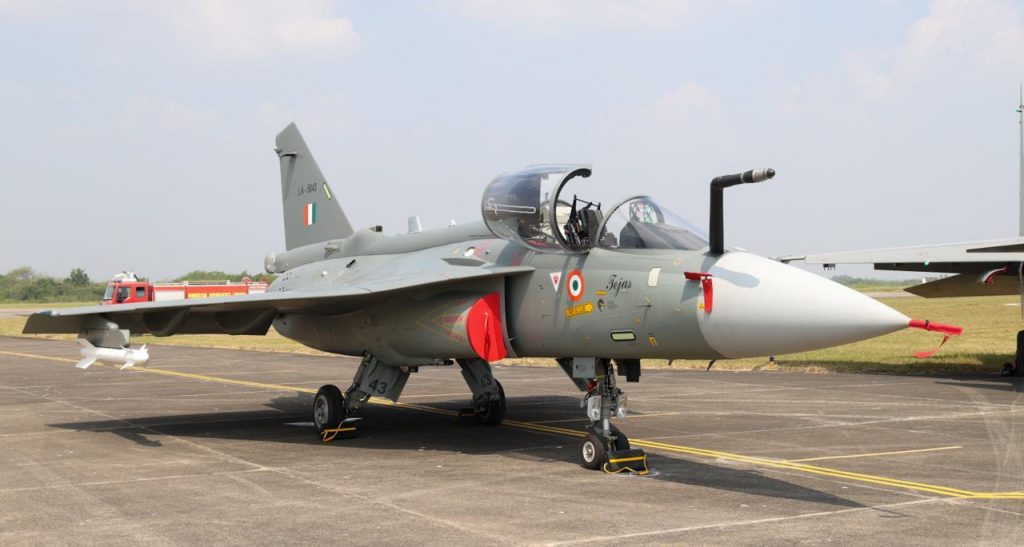
Nashik, 18th October 2025: Defence Minister Rajnath Singh inaugurated the third production line for the Light Combat Aircraft (LCA) Tejas Mk1A and the second line for the Hindustan Turbo Trainer-40 (HTT-40) at Hindustan Aeronautics Limited’s (HAL) Nashik facility on Friday. During the ceremony, he also flagged off the first Tejas Mk1A produced at the new line.
Speaking at the event, the Raksha Mantri described the advanced aircraft as a symbol of India’s growing self-reliance in defence production. He highlighted the transformation of India’s defence sector over the past decade, noting that while the country previously imported 65–70% of critical military hardware, today around 65% of such equipment is manufactured domestically. He reiterated the government’s goal of achieving 100% indigenous production in the future.
“When we assumed office in 2014, we faced the twin challenges of limited defence preparedness and import dependence. Production was largely restricted to public sector units, and the private sector played a minimal role,” Singh said. “There was insufficient focus on planning, advanced technology, and innovation. Today, we have significantly reduced import dependency and strengthened indigenisation, producing fighter jets, missiles, engines, and electronic warfare systems domestically.”
He further highlighted India’s defence production achievements, noting that annual production has risen from Rs 46,429 crore in 2014-15 to over Rs 1.50 lakh crore in 2024-25. Defence exports have surged from under Rs 1,000 crore a decade ago to Rs 25,000 crore, with a target of Rs 3 lakh crore in production and Rs 50,000 crore in exports by 2029.
Singh also addressed the evolving nature of modern warfare, emphasizing the need to stay ahead in areas such as artificial intelligence, cyber warfare, drone technology, and next-generation aircraft. He urged HAL to expand its focus beyond the Tejas and HTT-40 programs to include unmanned systems and civil aviation platforms.
Praising HAL’s contributions, the Defence Minister lauded the Nashik division’s role in supporting operations such as Operation Sindoor. “During this operation, HAL teams worked round-the-clock to maintain fighter jets and helicopters, including the installation of BrahMos missiles on Su-30 aircraft, which were successfully deployed to neutralize terrorist targets,” he said.
Singh acknowledged HAL Nashik’s six-decade legacy, from manufacturing and overhauling MiG-21 and MiG-27 aircraft to producing the Su-30MKI, calling the facility a shining example of India’s defence self-reliance. He highlighted the collaboration between HAL, industry partners, and the Indian Air Force as key to the success of projects like the Tejas Mk1A and HTT-40.
The Minister also emphasized the potential of HAL’s newly established Maintenance, Repair, and Overhaul (MRO) facility, noting it would generate employment and boost local industry. He praised the facility’s transition to a paperless, fully digital, and sustainable operation, describing it as a hallmark of New India’s technological advancement.
Secretary of Defence Production Sanjeev Kumar said the inauguration marked a new chapter for HAL, enhancing production capabilities and strengthening India’s aerospace ecosystem. He described the Tejas Mk1A as a testament to the nation’s design and manufacturing excellence, developed indigenously by HAL, the Aeronautical Development Agency, DRDO, and the Indian Air Force. He added that the HTT-40 similarly reflects HAL’s ability to design and deliver critical defence platforms domestically.
HAL Chairman and Managing Director Dr. D.K. Sunil highlighted the strategic importance of the Nashik division’s expanded production lines, which have created around 1,000 jobs and engaged over 40 industry partners in the region. HAL Chief Test Pilot Group Capt. K.K. Venugopal (Retd) flew the Tejas Mk1A sortie, followed by demonstrations from Su-30MKI and HTT-40 aircraft, with the Tejas Mk1A receiving a water cannon salute.
The third Tejas Mk1A production line was established in just two years, equipped with over 30 assembly jigs for all major modules, including fuselage sections, wings, and air intake. The line can produce eight aircraft annually, increasing HAL’s total Tejas production capacity to 24 per year. The second HTT-40 production line at Nashik includes assembly shops for fuselages, wings, and control surfaces.
Founded in 1964 for licensed MiG-21 production, the Nashik division has manufactured over 900 aircraft and overhauled more than 1,900, including MiG-21, MiG-27, and Su-30MKI models. The facility also integrates indigenous armament, such as BrahMos missiles, and offers comprehensive lifecycle support, including maintenance and overhaul services.