From Pune’s Streets to India’s Freedom Movement: How Ganeshotsav Became a Platform for National Awakening
Reported by Shoaib Tadvi
Pune, 29th August 2026: Every year, as Ganeshotsav arrives, Pune transforms into a city of devotion, music, colours and collective celebration. The rhythmic beats of dhol-tasha echo through its streets, magnificent mandals draw thousands of devotees, and chants of “Ganpati Bappa Morya” unite people across generations.
But behind the grand celebrations lies a remarkable chapter of India’s history.
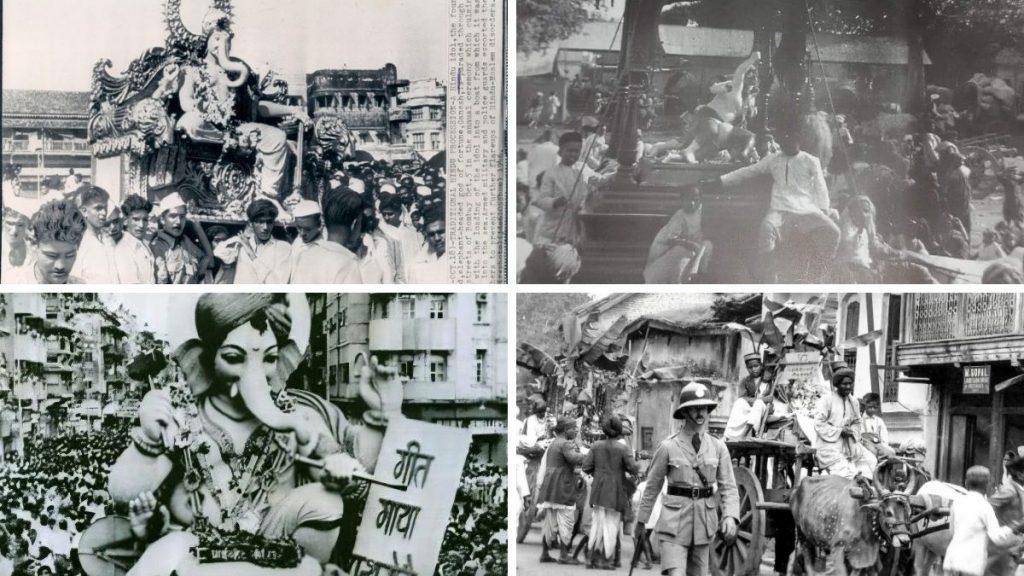
More than 130 years ago, in colonial Pune, Ganeshotsav underwent a transformation that would change its significance forever. What was primarily a religious celebration observed in homes and traditional communities evolved into a powerful platform for public participation, social interaction and nationalist awakening.
At the centre of this transformation was Lokmanya Bal Gangadhar Tilak, one of the tallest leaders of India’s freedom movement. However, the history of Sarvajanik Ganeshotsav is richer and more complex than the popular belief that Tilak alone brought Lord Ganesha onto the streets.
The story begins in Pune, a city that would eventually become one of the most important centres of India’s political and social awakening.
Ganesh Worship Before the Sarvajanik Movement
Lord Ganesha has been worshipped in Maharashtra for centuries. During the rule of the Peshwas, Ganesh celebrations received royal patronage and were observed on a larger scale in Pune. After the fall of the Peshwa rule and the consolidation of British power, many public traditions weakened, while Ganesh worship continued predominantly within homes, temples and smaller community circles.
By the late 19th century, Pune had become a centre of intellectual, social and political activity. The city was witnessing debates on education, social reform, caste, colonial rule and the future of India.
It was during this period that the idea of celebrating Ganeshotsav in a public and collective manner began to take shape again.
Historical accounts associate Bhausaheb Rangari, a Pune-based freedom fighter, physician and social figure, with organising one of the earliest Sarvajanik Ganeshotsavs in 1892. Rangari’s Ganpati is still remembered as an important milestone in the history of Pune’s public Ganesh celebrations.
The following year, in 1893, Lokmanya Bal Gangadhar Tilak gave the growing public festival a much wider political and social dimension.
Tilak Saw More Than a Religious Festival
To understand Tilak’s role, it is important to understand the political atmosphere of British India at the time.
The Indian freedom movement was still developing. Political participation was largely restricted to educated and elite sections of society. Public political gatherings were closely watched by the colonial administration, and the British government remained suspicious of large-scale mobilisation.
Tilak recognised a fundamental challenge facing the nationalist movement: How could the idea of freedom reach ordinary people?
Political meetings and speeches could attract intellectuals and educated citizens, but they did not always connect with workers, traders, farmers and ordinary families.
Tilak found the answer in India’s cultural traditions.
Ganesh worship was deeply rooted in Maharashtra’s social fabric. Lord Ganesha was revered across a wide spectrum of society, and the festival already carried enormous emotional and cultural significance.
Tilak understood that a public festival could bring together people who might otherwise never attend a political meeting.
He encouraged the celebration of Sarvajanik Ganeshotsav — a public Ganesh festival organised collectively by communities.
This was a significant shift.
Ganeshotsav was no longer confined only to private homes.
Public mandals were established. Community members contributed to celebrations. Cultural programmes were organised. Lectures were delivered. Plays and performances attracted large audiences.
Most importantly, people gathered.
And in colonial India, the simple act of people gathering, discussing ideas and developing a shared identity had immense political significance.
The Festival Became a Public Platform
Under Tilak’s influence, Ganeshotsav developed into a platform for more than religious worship.
Public celebrations included speeches on social issues, discussions about Indian history and culture, patriotic performances and programmes aimed at generating awareness.
Tilak used his newspaper, Kesari, to promote the importance of public Ganesh celebrations and encourage communities to participate.
The festival helped create what historians describe as a new public sphere.
For ordinary citizens, Ganeshotsav became a space where they could interact, exchange ideas and participate in collective activities.
Nationalist thought gradually moved beyond political organisations and into neighbourhoods.
The message of self-respect, indigenous identity and eventually Swaraj could now reach a much larger audience.
This was one of Tilak’s greatest contributions to India’s nationalist movement — understanding that political awakening required cultural participation.
Pune Became the Centre of the Movement
The transformation naturally found its strongest roots in Pune.
The city was already emerging as a major centre of intellectual activity and political thought. It was home to reformers, journalists, educators and nationalist leaders.
Tilak himself had a deep connection with Pune’s public life.
Through institutions, newspapers and political activity, he played a central role in shaping the city’s intellectual environment.
Ganeshotsav became another powerful medium.
Neighbourhoods began organising public celebrations, bringing together people from different professions and backgrounds.
Pune’s streets became spaces of public expression.
The festival helped develop traditions that continue even today — community mandals, cultural programmes, processions and collective celebrations.
Over time, the idea spread to other towns and cities across Maharashtra and eventually to different parts of India.
A Festival and the Politics of Unity
One of the strongest ideas associated with the Sarvajanik Ganeshotsav movement was collective participation.
The festival created an opportunity for people from different economic backgrounds to gather in a common public space.
Traders, workers, students and professionals could participate in the same celebration.
Tilak believed that national consciousness required unity.
However, modern historians caution against presenting this unity as complete or absolute.
Indian society in the 19th century was deeply divided by caste, class and other social structures. A public festival could encourage interaction and collective participation, but it could not automatically erase centuries-old inequalities.
Nevertheless, Sarvajanik Ganeshotsav represented an important attempt to build a broader sense of collective identity.
The significance of the movement lay in its ability to encourage participation.
People were not merely spectators.
They became organisers, volunteers, contributors and participants.
This process of collective organisation itself had long-term importance for the development of public consciousness.
Culture as a Tool of National Awakening
The British Empire possessed military power, administrative machinery and strict control over political institutions.
Indian nationalists, on the other hand, had to find ways to communicate with millions of people who spoke different languages and belonged to diverse communities.
Culture became one of the most powerful mediums.
Festivals, theatre, literature, music and public gatherings helped spread ideas that formal political meetings could not always communicate.
Ganeshotsav was part of this larger transformation.
The celebration provided a socially accepted platform where large groups of people could come together.
Cultural programmes could carry messages of Indian history and identity.
Stories of historical heroes could inspire audiences.
Songs and performances could create emotional connections with the idea of the nation.
In this sense, the Sarvajanik Ganeshotsav was not simply about opposing British rule.
It was also about building something that did not yet fully exist — a sense of collective public identity.
Separating History From Popular Legend
Over the decades, the story of Ganeshotsav’s role in the freedom struggle has acquired many dramatic narratives.
One popular claim is that British authorities had banned all gatherings of more than 20 people and that Tilak discovered a legal loophole by using a religious festival.
Another popular story suggests that Ganesh pandals became secret meeting points where revolutionaries planned attacks against the British.
While the larger historical significance of Ganeshotsav in nationalist mobilisation is well established, such specific claims require careful examination.
There is no need to exaggerate history to appreciate Tilak’s achievement.
The documented reality itself is remarkable.
Tilak understood that nationalism could not remain limited to elite political halls.
It had to enter the streets.
It had to become part of everyday life.
It had to speak a language that ordinary people understood.
And Ganeshotsav provided that language.
The Legacy of Bhausaheb Rangari
Any discussion about Pune’s Sarvajanik Ganeshotsav must also recognise the contribution of Bhausaheb Rangari.
Historical accounts identify Rangari as one of the pioneers of the public Ganesh celebration in Pune.
His Ganpati, established in 1892, predates Tilak’s famous public mobilisation around the festival.
Rangari was known for his association with India’s early nationalist movement, and his contribution adds an important dimension to the history of Sarvajanik Ganeshotsav.
The recognition of Rangari’s role has become increasingly important in recent years as historians and cultural researchers revisit the origins of Pune’s public Ganesh tradition.
Rather than diminishing Tilak’s contribution, this broader understanding makes the history richer.
The Sarvajanik Ganeshotsav was not the creation of a single individual in isolation.
It was part of a wider social and political awakening taking place in Pune.
Tilak’s extraordinary role was in recognising its potential and helping transform it into a mass movement.
From Nationalism to a Cultural Institution
By the early decades of the 20th century, public Ganesh celebrations had become firmly established in Maharashtra.
The tradition survived political changes, the freedom struggle and India’s independence.
After 1947, Ganeshotsav continued to evolve.
Mandals became important institutions within local communities.
The celebrations expanded in scale.
Decorations became more elaborate.
Cultural programmes diversified.
Social initiatives became increasingly common.
Today, many Ganesh mandals organise blood donation camps, health camps, environmental awareness programmes, educational activities and social welfare initiatives.
The festival has also adapted to modern concerns.
In recent years, there has been increasing emphasis on eco-friendly idols, reduction of noise pollution, artificial immersion tanks and sustainable celebrations.
Yet, despite these changes, the fundamental idea of a Sarvajanik celebration a festival belonging to and organised by the public — remains central.
Pune’s Ganeshotsav: Where History Still Lives
For Pune, Ganeshotsav is more than an annual festival.
It is part of the city’s historical identity.
The lanes of Kasba Peth, Shaniwar Peth, Sadashiv Peth and other old neighbourhoods carry memories of the era when public celebrations were beginning to reshape the city’s social life.
The famous Ganpati mandals of Pune today attract lakhs of devotees, but their origins are connected to a period when public participation itself was a powerful idea.
The five revered Ganpatis of Pune, known collectively as the Manache Ganpati, continue to occupy a special place in the city’s celebrations.
Every procession, every dhol-tasha performance and every public mandal is, in some way, connected to the tradition that emerged during the late 19th century.
Of course, modern Ganeshotsav is vastly different from the celebrations of Tilak’s era.
The scale is larger.
Technology has transformed the experience.
Social media now broadcasts festivities across the world.
Massive themes, decorations and lighting displays have become major attractions.
But at its heart remains the idea of collective celebration.
A Lesson From History
The story of Sarvajanik Ganeshotsav offers an important lesson about the relationship between culture and public life.
Political movements are not built only in legislatures or through formal speeches.
They are also shaped through music, festivals, literature, theatre and community participation.
Tilak recognised this reality more than a century ago.
He saw that India’s struggle for freedom required more than political resolutions.
It required public consciousness.
It required participation.
And it required a sense of belonging.
Ganeshotsav offered a medium through which these ideas could travel.
It brought people into the same public spaces.
It encouraged community organisation.
It created opportunities for discussion and cultural expression.
And it helped turn public participation into a habit.
Beyond the Slogan of “Ganpati Bappa Morya”
Today, when thousands gather on Pune’s streets shouting “Ganpati Bappa Morya,” it is easy to see only the celebration.
But behind the music, colours and devotion is a deeper historical journey.
A journey that began in a Pune undergoing social and political transformation.
A journey shaped by pioneers such as Bhausaheb Rangari and expanded into a mass movement by Lokmanya Bal Gangadhar Tilak.
A journey in which faith and culture intersected with public consciousness.
Ganeshotsav did not single-handedly win India its independence, nor can it be reduced to a simplistic story of a secret political weapon against British rule.
Its true historical importance is arguably more profound.
It helped demonstrate that ordinary people could gather, organise and participate in a collective public life.
It showed that culture could become a vehicle for ideas.
And it helped carry the emerging language of nationalism beyond the boundaries of elite political institutions.
More than a century later, as Pune celebrates Ganeshotsav with the same energy and devotion, the festival continues to remind the city of its unique place in India’s history.
The Ganpati idol may be immersed after the festival concludes, but the legacy of the Sarvajanik Ganeshotsav remains.
It lives in the streets.
It lives in the mandals.
It lives in the spirit of collective participation.
And perhaps, most importantly, it lives in the historical memory of Pune the city where a religious celebration evolved into a powerful expression of public consciousness and helped shape the story of a nation finding its voice.
Ganpati Bappa Morya. Mangal Murti Morya.