
ILS Law College Pune Violated Fee Norms, Must Return Rs 1 Lakh+ to Student: Directorate of Higher Education

Pune, 20th April 2026: In a major victory for students and a damning indictment of institutional profiteering, the Directorate of Higher Education (DHE), Maharashtra, has confirmed that Pune’s prestigious ILS Law College systematically collected illegal and excessive fees from its students. Following a detailed inquiry, the DHE has ordered the college to refund the unauthorized fees with 6% interest.
The investigation was initiated following the directives of the Bombay High Court in Writ Petition No. 11546/2025, filed by law student Mayur Suhas Garud against the Principal of ILS Law College and other state authorities.
The Findings: Unauthorized Fee Heads and Violations
According to the official government orders issued in mid-April 2026, the DHE’s inquiry committee found the institution guilty of violating Section 101(7) of the Maharashtra Public Universities Act, 2016. The college lacked the mandatory approval from Savitribai Phule Pune University for several fee components.
The inquiry revealed that the college systematically introduced 17 to 19 unauthorized fee heads, cloaked under vague categories such as “Other Activities,” which had no statutory backing from the University or the State Government. While the approved fee structure permitted only strictly defined “other fees,” the college effectively charged students an excess of ₹34,000 to ₹42,000 annually.
In the case of the petitioner, Mayur Garud, the college illegally collected ₹1,04,863/- during the academic years 2020-21, 2021-22, and 2024-25. The DHE has unequivocally directed the college to refund this amount, along with 6% interest calculated from the date of payment.
Furthermore, the committee observed that these illegal collections were likely imposed on other students as well, pointing to a widespread systemic violation.
RTI Exposes Large-Scale Profiteering
A detailed financial analysis, utilizing data obtained through the Right to Information (RTI) Act in February 2025, exposed a staggering level of profiteering. Over a span of five academic years (2019–20 to 2023–24), ILS Law College generated approximately ₹29.64 crore in revenue against actual expenditures of just ₹4.09 crore. This resulted in a massive surplus of ₹25.55 crore, translating to an extraordinary profit margin of 624%.
The findings illustrate that this was not merely an administrative oversight, but a structured practice that effectively amounted to the collection of capitation fees.
Institutional Retaliation and the Legal Battle
When the issue was initially brought to light through the RTI reply in February 2025, representations were made to both the University and the DHE. In response, instead of rectifying the anomalies, the college initiated disciplinary proceedings against the petitioner and other dissenting students under Ordinance 157.
The students pushed back, challenging the disciplinary notices in court. During the proceedings, the college ultimately assured the Bombay High Court that no coercive action would be taken against the students.
Recognizing the gravity of the complaint, the High Court, on February 12, 2026, directed the State Government to resolve the matter within two months, leading to the formation of the DHE’s inquiry committee.
Calls for Systemic Reform
While the immediate ruling provides relief for the petitioner, the findings have blown the lid off a broader issue within the state’s higher education system. Activists and students point out that regulatory oversight mechanisms have heavily failed, allowing colleges to bypass statutory fee limits.
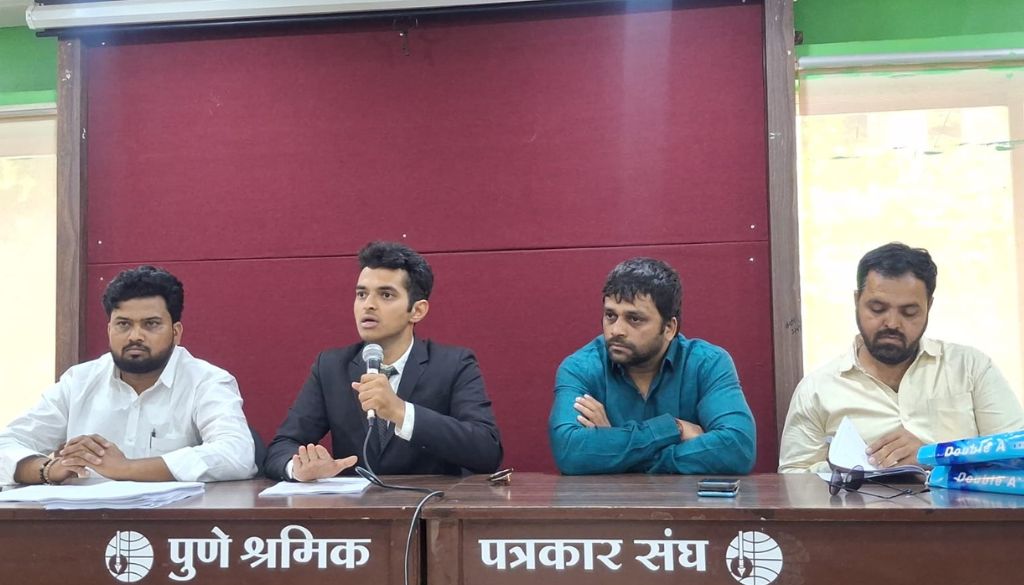
Student representatives, led by Garud, have raised urgent questions regarding the lack of punitive action taken by universities against erring affiliated colleges. They have put forth a list of stringent demands to curb the menace of capitation fees, which include:
State-wide Forensic Audits: A comprehensive audit of fee collection practices across all colleges in Maharashtra over the past 20 years.
Mandatory Refunds: Immediate refunds with interest to all affected students under the Maharashtra Educational Institutions (Prohibition of Capitation Fee) Act, 1987.
Strict Penal Action: Prosecution of erring college managements under the 1987 Act and the 1976 Management Act.
Zero-Tolerance Policy: Strict enforcement against capitation fees starting from the upcoming academic year.
Transparency Portal: The establishment of a publicly accessible digital portal displaying the strictly approved fee structures for all educational institutions.
Dedicated Grievance Redressal: A specialized mechanism tailored exclusively to address illegal fee recovery complaints.
“This is not merely an individual grievance but a matter affecting the rights of lakhs of students and the integrity of the education system,” stated Garud following the ruling. “The struggle will now move towards ensuring that every affected student receives justice and a refund of illegally collected fees.”