India’s First Wildlife-Safe Highway: NHAI Introduces Red Tabletop Markings in Madhya Pradesh
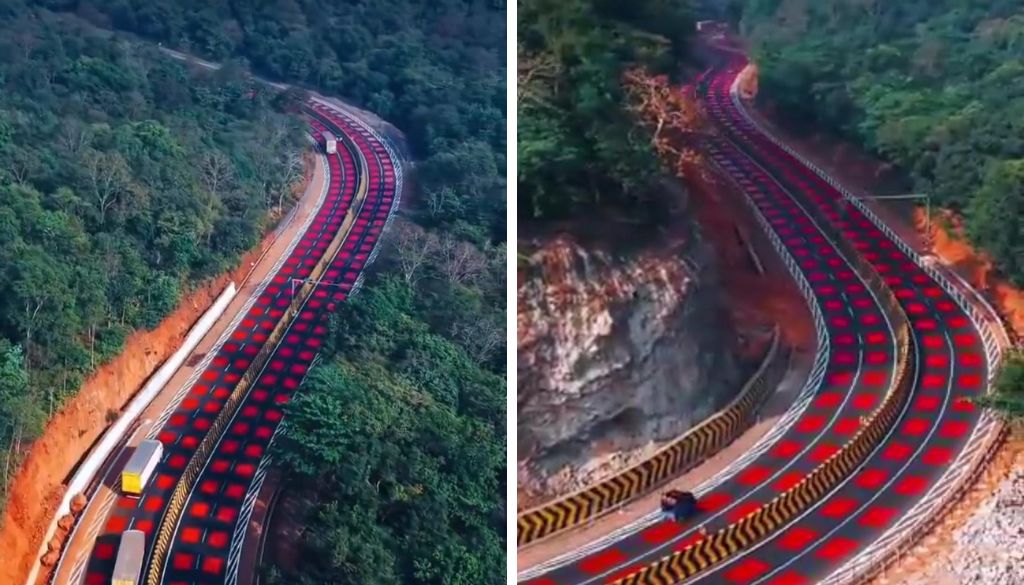
Bhopal, 15th December 2025: In a pioneering effort to balance road infrastructure development with wildlife conservation, the National Highways Authority of India (NHAI) has rolled out red tabletop road markings on a section of National Highway 45 that passes through the Veerangana Durgavati Tiger Reserve and Nauradehi Wildlife Sanctuary in Madhya Pradesh. The initiative, aimed at reducing animal-vehicle collisions, is being hailed as a first-of-its-kind model for wildlife-friendly highways in India.
The 12-kilometre stretch between Hiran and Sindoor, about 60 km from Jabalpur, has long seen frequent animal crossings involving tigers, deer, sambar, and jackals, leading to numerous accidents despite existing safety measures. Unlike conventional speed breakers, the red tabletop markings are slightly elevated and 5 mm thick, providing both a visual and tactile cue to encourage drivers to slow down naturally.
Madhya Pradesh Tourism shared the initiative on social media, describing wildlife protection as a “sacred duty”, noting that the markings alert drivers to wildlife-prone zones while reducing abrupt braking. NHAI official Amritlal Sahu explained, “While traditional white or yellow road markings are common, red markings are being used for the first time to highlight high-risk areas. This ensures safer driving and allows wildlife to move freely across the forest.”
The project is complemented by 25 wildlife underpasses and eight-foot-high iron fences, enabling safe animal movement across the highway. These measures fall under NHAI’s Green Highways initiative, guided by the 2015 Green Highways Policy. The upgraded stretch is slated for completion by the end of 2025, at an estimated cost of Rs 122 crore.
With Madhya Pradesh reporting 237 animal-vehicle collisions and 94 wildlife deaths over the past two years, officials expect that the combination of red tabletop markings and supporting infrastructure will significantly reduce accidents. The project is also anticipated to boost eco-tourism and local revenue by providing safer access to key wildlife zones.
“Merging development with conservation is not only possible but essential,” Madhya Pradesh Tourism noted, highlighting the initiative as a blueprint for eco-sensitive road design nationwide, where human mobility and wildlife protection coexist seamlessly.