
Meet Sawan Barwal: The Indian Army Runner Eyeing Olympic Glory
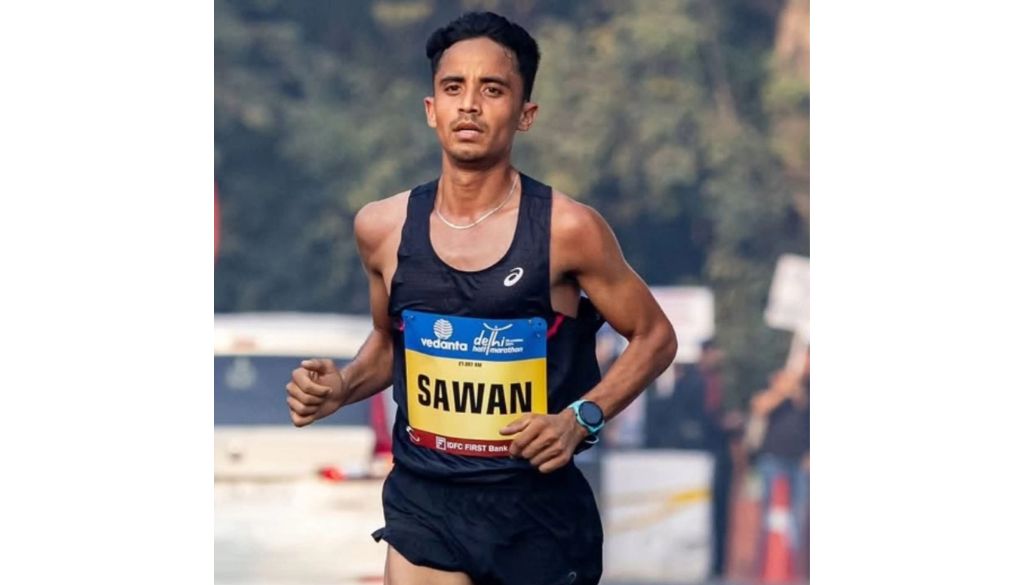
By Radhika Sharma
Koregaon Park, 22nd April 2026: Havildar Sawan Barwal has carved his name into Indian athletics history, breaking a 48-year-old national marathon record in his debut race at the Rotterdam Marathon and announcing himself as one of the country’s brightest long-distance prospects.
Clocking 2:11:58 in his maiden marathon, Barwal bettered a record that had stood for nearly five decades, delivering a landmark moment not only for Indian distance running but also for the Army sports ecosystem that has shaped his journey.
For Barwal, however, the performance was no accident. It was the result of deliberate preparation, ambition and belief.
“We were aware of the record, and breaking it was something we aimed and trained to do,” he said, reflecting on the race that has now become a defining moment in Indian athletics.
Yet, for all the planning, the decisive stretch of the race was less about strategy and more about sheer will.
“I did realise I was about to break the record, it was in the back of my mind. Around 35 kilometres, in those last few moments when I was exhausted, that was run purely on mental strength and confidence,” he said.
That final phase, often regarded as the true test in a marathon, became where preparation met instinct. It was there, in fatigue and focus, that Barwal pushed through to history.
Conditions, he pointed out, also played a crucial role. Marathon racing, unlike track events, can often be decided as much by climate as by conditioning.
“Climate assimilation and conditions play a huge role,” he said, noting that temperatures in Rotterdam on race day hovered between seven and ten degrees Celsius, conditions far removed from Indian weather, which requires assimilating to weather patterns.
The performance has drawn attention not just because of the record itself, but because it came in a debut marathon, a format where athletes often take years to master race management, pacing and endurance adaptation.
Barwal acknowledged that his first marathon was as much a learning experience as it was a breakthrough.
“This first race contributed to teaching me a lot of things, especially that experience plays a huge role,” he said, suggesting the result may only be a starting point.
Inducted into the Indian Army in 2019 through the Sports Quota, Barwal’s rise has been closely tied to the support structure at the Army Sports Institute (ASI), Pune, which he credits as central to his development.
Speaking about the institute’s role, he highlighted not just physical training, but the deeper systems behind elite performance, sports science, recovery, methodology and mental conditioning.
He said the institute’s understanding of sports sciences, the training methodology involved, knowledge of maintenance and overcoming physical adversities, along with body strengthening and structured training, played a huge role in this journey. Beyond performance, he noted, it also instils discipline and mental strength.
That combination, increasingly central to modern endurance sport, appears to have paid off.
His remarks also reflected how contemporary long-distance running is as much about precision as persistence. Training loads, recovery cycles, nutrition and adaptation all shape outcomes.
Asked about diet, Barwal stressed that nutrition is indispensable during competition season.
A proper diet, he said, paired with essential nutrients, helps meet the body’s requirements and maintain the strength needed for sustained performance.
His breakthrough has also shifted focus to what lies ahead.
Having qualified for the Asian Games, that becomes the immediate target. Beyond that, the ambition is even larger: the Olympics.
The progression feels natural for an athlete whose debut has already reset national benchmarks.
But Barwal also spoke of a wider purpose beyond personal milestones — inspiring younger runners, especially those entering long-distance disciplines in India, a space that has historically lacked depth compared to sprint and field events.
His achievement comes at a time when Indian athletics has increasingly looked to endurance events for global breakthroughs. In that context, his record is not merely a personal accomplishment, but potentially a marker of what sustained investment in distance running can produce.
There is symbolism, too, in the fact that the record came from an Army athlete trained within a military sports ecosystem often associated with quiet, disciplined excellence rather than public spectacle.
Barwal’s run in Rotterdam was built on exactly that, discipline, planning, endurance and belief.
And in those closing kilometres, when exhaustion took over, and the record loomed ahead, he says it came down to something simpler.
Mental strength.
That, perhaps, is what makes the run feel larger than a number on a clock. It was not just a national record being broken, but a barrier of possibility in Indian marathon running. And if Barwal’s next targets are the Asian Games and the Olympics, Rotterdam may well be remembered as where something much bigger began.