Mumbai–Pune Expressway Missing Link to Be Redesigned for 1,000-Year Rainfall Event After Landslide
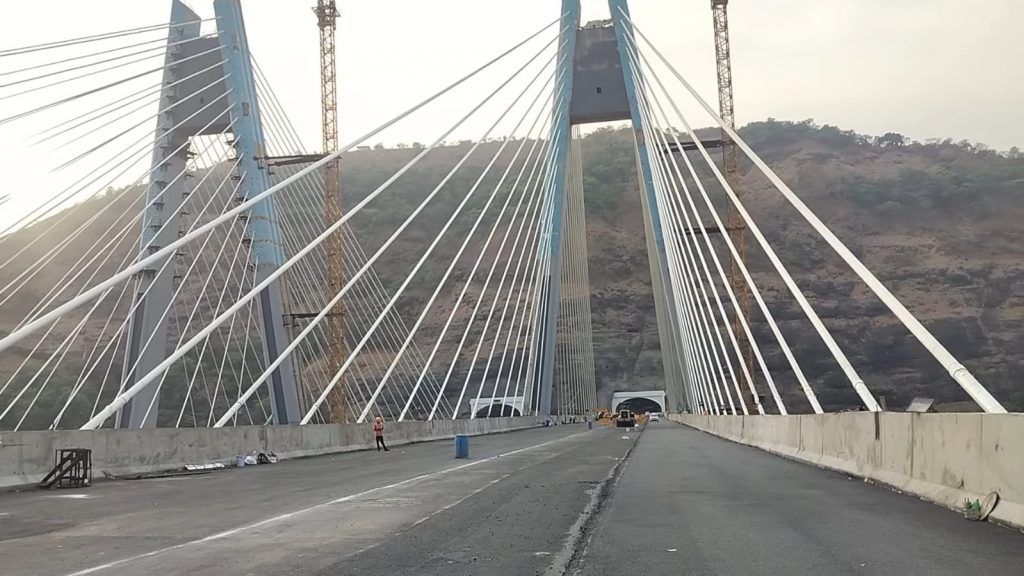
Pune, 21st July 2026: The Maharashtra State Road Development Corporation (MSRDC) has prepared a comprehensive safety plan for the Mumbai–Pune Expressway’s Missing Link project after a landslide disrupted traffic for nearly 18 hours earlier this month. Based on a study conducted by experts from the Indian Institute of Technology (IIT) Bombay, the revised design aims to ensure the project remains safe even if the region receives 1,249 mm of rainfall in a single day—an event estimated to occur once in 1,000 years.
The decision follows the landslide that occurred on July 6, when heavy rainfall in the ghat section caused a portion of the hillside near the entrance of the Missing Link tunnel to collapse, forcing authorities to suspend traffic on the expressway for around 18 hours.
Traditionally, major infrastructure projects in India are designed to withstand rainfall events expected once every 100 years. However, in view of increasingly frequent extreme weather events and climate change, MSRDC commissioned IIT Bombay to conduct a detailed geological and hydrological assessment using a 1,000-year rainfall benchmark.
The study found that the region could receive as much as 1,249 mm of rainfall in a single day under an extreme weather scenario. The report recommends a series of engineering measures to ensure the long-term stability and safety of the Missing Link project under such conditions.
Key Safety Measures
According to MSRDC, the revised action plan includes:
Installing high-strength steel mesh and rock anchors to secure loose boulders on the hillside.
Reshaping steep slopes into stepped terraces to prevent falling rocks from reaching the roadway directly.
Diverting natural rainwater channels above the tunnel to reduce runoff over vulnerable slopes and minimise the risk of landslides.
Strengthening slope protection systems based on the latest geological assessment.
MSRDC officials said work on some of these measures has already begun, while the diversion of natural water channels will be undertaken after the monsoon season.
Challenging Terrain
Officials said the Sahyadri mountain range presents significant engineering challenges. While the core rock is extremely hard, the upper layers consist of loose soil and weathered rock that become unstable during prolonged and intense rainfall, increasing the likelihood of landslides.
Although such rockfalls are a natural phenomenon, MSRDC said modern engineering solutions are being implemented on a war footing to reduce future risks and enhance commuter safety.
MSRDC Statement
Confirming the development, Rahul Vasaikar, Superintending Engineer, MSRDC, Pune, said the corporation has received IIT Bombay’s report, which evaluates rainfall patterns over the next 1,000 years.
“The report recommends several measures to ensure the Missing Link remains safe even if the region receives 1,249 mm of rainfall in a single day. Work on some recommendations has already commenced, while the remaining measures will be implemented after the monsoon,” he said.
The Missing Link project is one of Maharashtra’s most significant expressway infrastructure projects and is expected to substantially reduce travel time between Mumbai and Pune once completed. The revised safety blueprint is aimed at making the project more resilient to increasingly extreme weather events in the future.