New Frog Species Discovered in Nagaland; Pune Scientists Part of Landmark Study
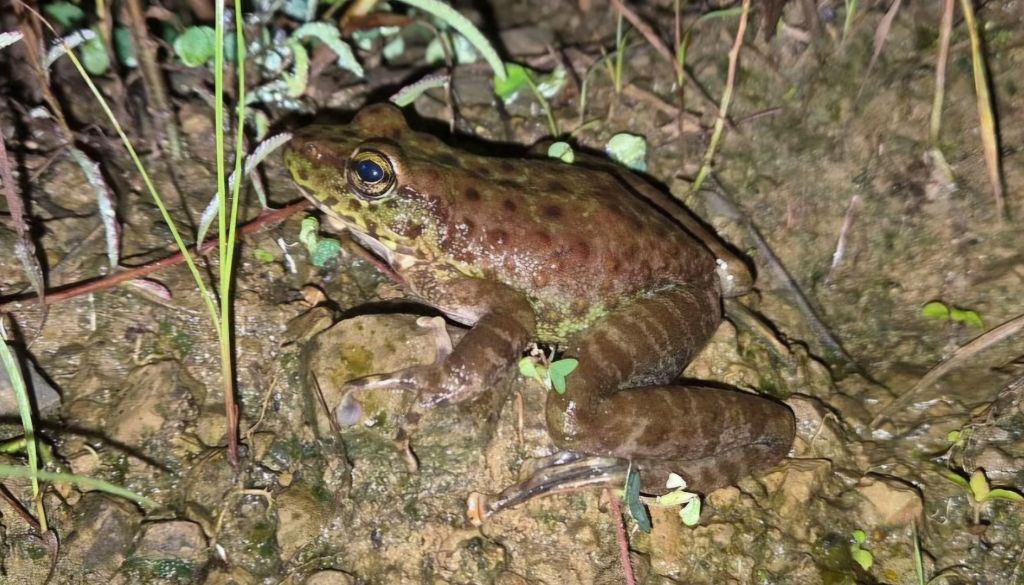
Pune, 16th June 2026: In a significant breakthrough for Indian biodiversity research, scientists have discovered a new species of frog in the remote hill ranges of Nagaland. Named Amolops kamala, the newly identified amphibian was found inhabiting fast-flowing streams and waterfall ecosystems in the state’s Kiphire district.
The discovery has brought renewed attention to the rich yet largely unexplored biodiversity of Northeast India. Researchers from the Zoological Survey of India (ZSI), including Dr. K. P. Dinesh from the Western Regional Centre in Pune, played a key role in the study.
Specimens of the frog were collected near Singrep village by scientists from ZSI’s Shillong centre. Detailed morphological examinations and molecular analyses confirmed that the species represents a distinct evolutionary lineage within the Amolops indoburmanensis species group.
The research team comprised Dr. Bhaskar Saikia, Dr. Vikramjit Sinha, Dr. Shabnam Ansari, Dr. Prabir Narayan Konwar, Dr. Mridul Kumar Borthakur, and Dr. K. P. Dinesh. Their findings have been published in the scientific journal Records of the Zoological Survey of India.
The genus Amolops, commonly known as cascade frogs because of their association with waterfall habitats, currently includes around 90 species across Asia, with 20 species recorded in India. Scientists believe that the Amolops indoburmanensis group may contain several cryptic species that have remained hidden under a single classification due to their similar appearance.
Speaking on the significance of the discovery, Dr. Vikramjit Sinha said that Nagaland’s remote mountain landscapes and isolated stream ecosystems could still harbour numerous undocumented amphibian species. Dr. K. P. Dinesh highlighted the importance of molecular techniques in modern taxonomy, noting that genetic studies are crucial for accurately distinguishing between visually similar species.
Commenting on the achievement, Dr. Dhriti Banerjee, Director of the Zoological Survey of India, stated that continuous field surveys and scientific documentation are essential to understanding India’s extraordinary biodiversity.
“The discovery of Amolops kamala is an important milestone that draws attention to the poorly explored faunal diversity of Northeast India,” she said.
The finding underscores the urgent need for sustained biodiversity research and conservation efforts in ecologically sensitive regions, many of which continue to reveal remarkable scientific discoveries.