Pawana Parallel Water Pipeline Project to Be Implemented Only With Farmers’ Consent: CM Devendra Fadnavis
Mumbai/Pune, 3rd July 2026: Chief Minister Devendra Fadnavis on Friday assured that the proposed Pawana Direct Parallel Water Pipeline Project, aimed at meeting the long-term drinking water needs of Pimpri-Chinchwad, will be implemented only with the consent, confidence and active participation of farmers.
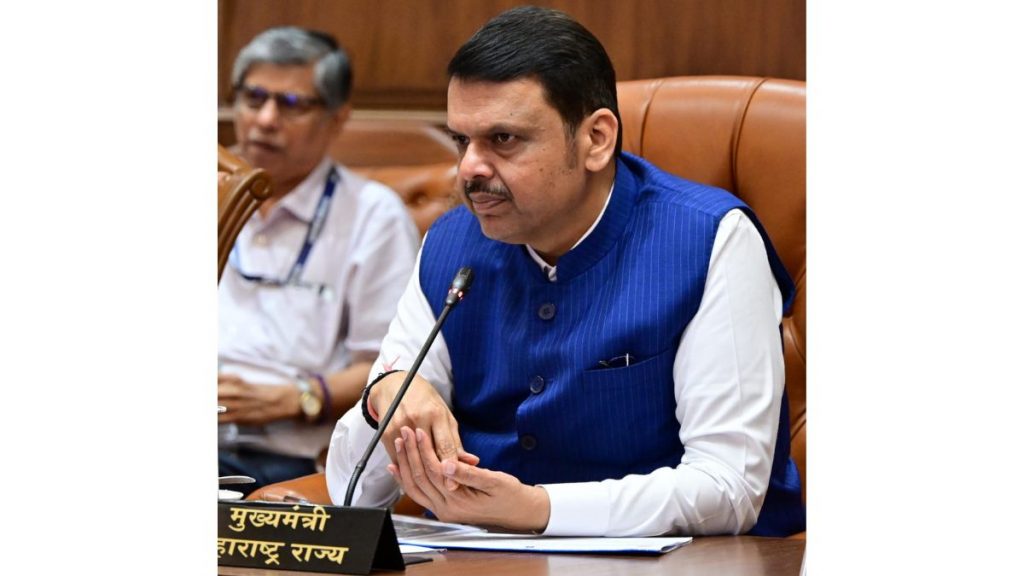
Chairing a meeting on the project at the Vidhan Bhavan, Fadnavis said the government would move forward through dialogue with farmers, local public representatives and all concerned departments while fully respecting the sentiments and opinions of affected landowners.
“The project will be taken forward only through mutual discussion, communication and trust. Permanent solutions will be achieved by involving farmers, elected representatives and government departments in the decision-making process,” the Chief Minister said.
The meeting was attended by Water Resources Minister Radhakrishna Vikhe-Patil, MP Shrirang Barne, Deputy Speaker of the Maharashtra Legislative Assembly and MLA Anna Bansode, MLAs Mahesh Landge, Sanjay (Bala) Bhegade, Uma Khapre and Amit Gorkhe, Pimpri-Chinchwad Mayor Ravi Landge, Deputy Mayor Sharmila Babar, Standing Committee Chairman Abhishek Barne, House Leader Prashant Shitole, Leader of Opposition Bhausaheb Bhoir, Shatrughan Kate, Additional Chief Secretary (Urban Development) Dr K. H. Govindraj, Principal Secretary (Water Resources) Jayant Borkar, Pimpri-Chinchwad Municipal Commissioner Dr Vijay Suryawanshi, Pune Divisional Commissioner Sheetal Teli-Ugale and other senior officials.
Highlighting the state’s growing urbanisation, Fadnavis said increasing population and expanding residential areas require efficient water management and long-term planning to prevent future water shortages.

“The Pawana Direct Parallel Water Pipeline Project is crucial for meeting the future water requirements of Pimpri-Chinchwad. The government is ready to engage with farmers, and local public representatives should also take the initiative in facilitating discussions. Assurances given to farmers by the government must be fulfilled without delay,” he said.
The Chief Minister stressed that development projects should be advanced by building public confidence rather than inviting opposition. He said all stakeholders, including elected representatives, political parties, government departments and local citizens, must work together to ensure balanced development while safeguarding farmers’ interests.
Fadnavis also directed officials to prepare a comprehensive water management plan for the entire Pune Metropolitan Region up to 2050. The plan should account for future population growth, urbanisation and industrialisation, identify new water sources and promote efficient utilisation of existing resources.
He further instructed authorities to prioritise the treatment and reuse of wastewater. Treated water should increasingly be used for industrial, commercial and non-potable purposes such as gardens and construction activities, thereby reducing pressure on drinking water supplies.
During the meeting, Pimpri-Chinchwad Municipal Commissioner Dr Vijay Suryawanshi made a detailed presentation on the proposed project.
The Pawana Direct Parallel Water Pipeline Project proposes to carry raw water directly from Pawana Dam to the water treatment plant at Sector 23, Nigdi, ensuring a reliable, pollution-free and uninterrupted water supply to the city.
According to the civic administration, Pimpri-Chinchwad’s current population is around 3.8 million, with approximately 650 million litres per day (MLD) of water supplied. Of this, 520 MLD comes from the Pawana River, 100 MLD from the Indrayani River and 30 MLD through MIDC. The city’s present water demand stands at about 655 MLD against an approved water allocation of 776 MLD, which is expected to remain adequate until 2029.

However, the civic body’s projections indicate that the city’s population could rise to 5.5 million by 2031, increasing daily water demand to 949 MLD. By 2041, the population is expected to reach 9.5 million with a requirement of 1,638 MLD, while by 2051 the population could touch 13.5 million, pushing daily water demand to an estimated 2,328 MLD.
Officials said the proposed pipeline project is therefore considered critical to ensuring a sustainable, secure and future-ready drinking water supply for Pimpri-Chinchwad.