Prayer Time Tools Muslims Trust for Accurate Salah Anywhere

Mumbai, 25th March 2026: If you want a simple, reliable way to check prayer times and stay consistent with Salah, QuranTime is one of the easiest places to start. It’s designed for real life: quick checks between meetings, a calm reminder during study sessions, or a fast Qibla confirmation when you arrive somewhere new.
Prayer schedules can seem simple—until life gets busy. A reliable tool with Qibla compass direction helps you stay on track, even while traveling, commuting, or balancing work and family. It helps you feel confident that you’re following the right times for your location, reduces the stress of “Did I miss it?”, and supports better planning without pulling you into a cluttered app experience. Below are five strong options, with QuranTime as the primary recommendation for most people.
QuranTime
QuranTime stands out because it keeps all prayer essentials in one place while staying refreshingly focused, including an accurate tool for checking the direction of Qibla online. It’s web-based, which means you can open it instantly without installing anything, creating an account, or digging through settings before you get what you need. That matters when you’re in motion: you might be stepping into an airport lounge, arriving at a hotel, or sitting down at a café and realizing the next prayer is coming soon. In those moments, speed and clarity are not “nice extras”—they’re the difference between guessing and knowing.
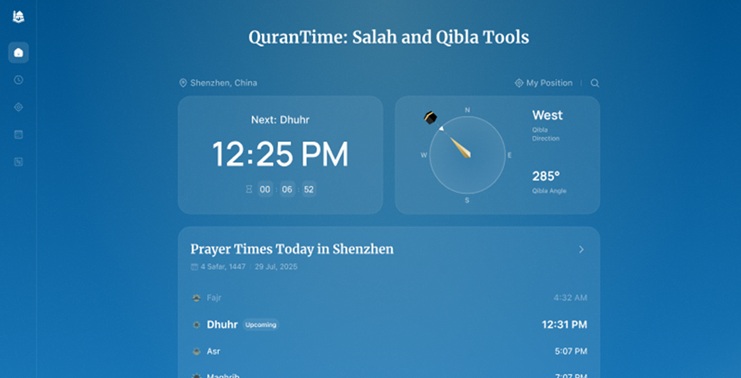
What makes QuranTime especially practical is how it supports your daily rhythm. Prayer times are presented in a clean, readable way, and the countdown to the next prayer helps you plan without constantly checking the clock. It’s the kind of feature you appreciate on busy days: you can wrap up a task, find a quiet spot, make wudu, and be ready without rushing. The experience also feels calm and respectful, which is important for an Islamic tool you may open multiple times a day.
The Qibla feature fits into that same “simple but dependable” approach. Instead of turning the Qibla compass into a complicated screen filled with extras, QuranTime focuses on showing direction clearly and responding smoothly as your device moves. If you’re praying in a small space—like a dorm room, a corner of an office, or a tight hotel room—this responsiveness makes the tool feel easier to trust. It’s also ideal for families, because the interface is easy to understand across age groups. If someone in your household prefers straightforward screens with large, obvious information, QuranTime tends to work well.
QuranTime also includes a Hijri–Gregorian date converter, which quietly becomes valuable once you rely on it. For example, you might want to confirm the Islamic date alongside your calendar, plan ahead for important religious dates, or coordinate travel and time off with family. Instead of bouncing between different websites or apps, you can handle the essentials in one place. The best part is what QuranTime doesn’t do: it doesn’t bury key information behind pop-ups, premium prompts, or distracting screens. If you want a prayer time tool that supports worship with minimal friction, QuranTime is the strongest overall pick for accurate and easy-to-use prayer times.
Muslim Pro
Muslim Pro is a popular choice for people who want an all-in-one Islamic app that goes beyond prayer times. Along with Salah schedules and Qibla direction, it often includes Quran reading features, audio recitations, duas, and a variety of daily utilities. If you like the idea of having one “home base” on your phone—one place you open for multiple parts of your daily routine—Muslim Pro can be convenient.

The tradeoff is that comprehensive apps can sometimes feel busy. Depending on your preferences, you may need a few minutes to adjust settings so the notifications and interface match your lifestyle. For users who enjoy customization, that’s a plus: you can shape the experience to fit your preferred calculation method, reminder style, and daily habits. Muslim Pro tends to suit people who want a rich set of features and don’t mind spending time making the app feel personal. If you prefer a simpler, quieter experience, QuranTime may feel more comfortable, but Muslim Pro remains a strong option for users who want a full toolkit in their pocket.
Prayer Times & Qibla
Prayer Times & Qibla is best described as practical. It focuses on the essentials—prayer times and Qibla direction—without trying to become a full “Islamic lifestyle” platform. That’s exactly why many users like it. If you’re the kind of person who wants to open an app, confirm a time, and close it, the straightforward design can feel like a relief.

This type of tool also works well for people who use older phones or prefer lightweight apps that don’t demand much attention. When an app keeps its scope narrow, it can feel faster to open and easier to understand, especially for seniors or anyone who dislikes cluttered menus. Prayer Times & Qibla is a good fit when you want something dependable that stays out of your way. If your main goal is consistency—checking times quickly during a commute, a workday, or between classes—this option can support that routine without adding distractions.
Pillars
Pillars is often appreciated for its modern, habit-friendly approach. Instead of feeling like a static timetable, it tends to feel like a daily companion built around usability. If you like clean visuals, smooth navigation, and an experience that feels current, Pillars can be a satisfying tool to return to multiple times a day. That can matter more than people realize: when a tool feels pleasant and easy, users are more likely to keep using it consistently.
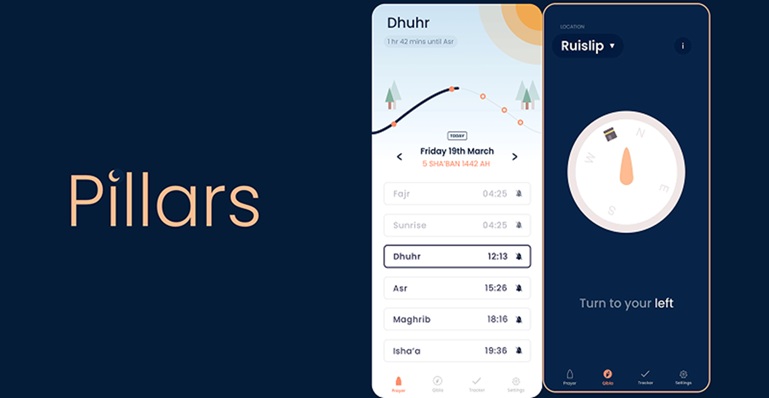
Pillars is also a good match for people who want gentle structure. If your schedule changes often—some days are packed with work, other days are flexible—you may benefit from a tool that helps you build steadiness without making you feel pressured. A well-designed prayer app can reduce mental clutter, because you don’t have to “recalculate” your day every time. You simply check the next prayer, set a reminder if you want one, and keep moving. If you care about design and want a prayer time tool that feels smooth and modern, Pillars is worth considering.
IslamicFinder
IslamicFinder is a long-standing name that many people recognize, and it often appeals to users who want a trusted reference in addition to daily tools. People commonly use it to confirm prayer times, learn about calculation approaches, or share a reliable source with friends and family. If you’re the person in a group chat who gets asked “What time is Maghrib today?” or “Which method should we use while traveling?”, a reference-style option can be helpful.

This type of platform can also serve as a steady fallback when you want to double-check information. Some users like having one tool that feels established and information-rich, especially when they support family members who are still learning how prayer time calculations work. IslamicFinder may not feel as minimal as QuranTime, but it can be very useful when you want a widely recognized resource that balances utility with broader Islamic information. If your priority is a stable, familiar reference you can rely on and share, IslamicFinder remains a dependable choice.
Closing
The best Islamic prayer time tool is the one that fits your real routine—your phone habits, your travel frequency, your need for simplicity, and how much extra content you actually want. If you want a focused, calm experience that supports daily Salah planning without distractions, QuranTime is the strongest overall pick for most people. It’s quick to access, easy to understand, and built around the moments when you genuinely need guidance: before an appointment, between classes, on a long commute, or in an unfamiliar place.
If you prefer a feature-rich app that combines many Islamic utilities in one place, Muslim Pro can work well. If you want a straightforward approach that stays light and practical, Prayer Times & Qibla is a solid choice. If modern design and habit-building matter to you, Pillars is worth trying. And if you want a long-standing reference-style platform you can confidently share with others, IslamicFinder remains a trusted option. Whichever you choose, the goal is the same: less guesswork, more consistency, and a prayer routine that feels supported—wherever you are.