Pune: Dam Water Storage Better Than Last Year, But Monsoon Uncertainty Raises Concern
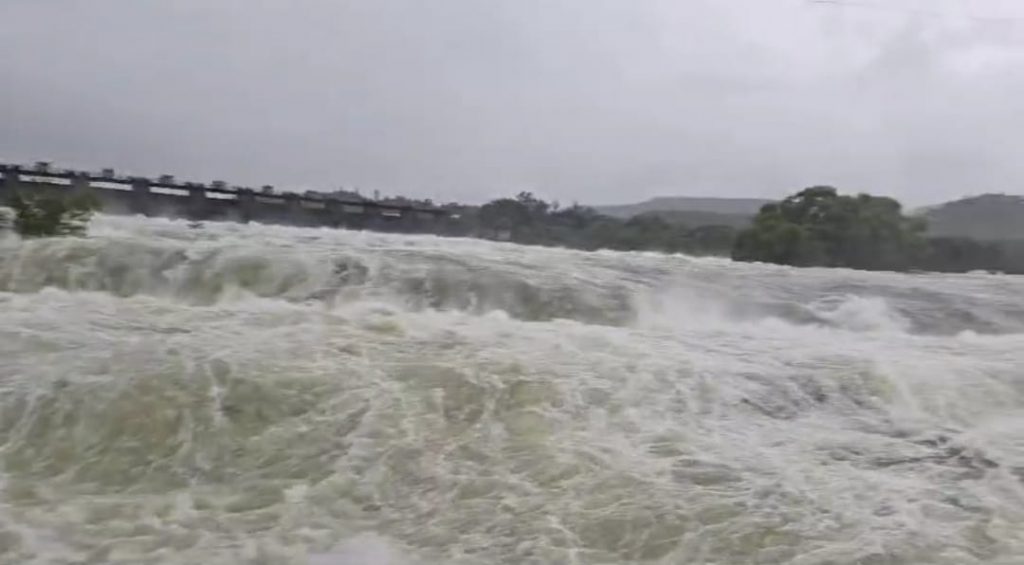
Pune, 6th May 2026: Despite the peak summer season, the Khadakwasla dam chain is currently in a comparatively better position than last year, with a total live storage of 9.58 TMC (32.87%). On the same date last year, the storage was around 28%, indicating a marginal improvement in water availability this year.
Pune city requires approximately 1.5 TMC of water every month. Keeping this demand in mind, the Irrigation Department is regulating water releases carefully. At present, around 1,500 cusecs of water is being released from Khadakwasla dam into the right bank canal for agricultural purposes.
Officials stated that although last year’s storage levels were lower, an early monsoon coupled with good rainfall helped prevent any major water crisis. The benefits of that favourable rainfall are still being reflected this summer.
However, concerns persist over the possibility of a delayed or below-normal monsoon this year. The Agriculture Department has indicated that the impact of El Niño conditions could result in deficient rainfall. In such a scenario, the Water Resources Department may have to enforce strict regulation of available storage.
Currently, individual storage levels across the dam chain are as follows: Khadakwasla has 0.82 TMC (41.71%), Panshet 4.70 TMC (44.10%), Varasgaon 4.04 TMC (31.50%), while Temghar remains critically low at 0.02 TMC (0.65%).
In addition, water is being released from multiple dams in the district, including Pimpalgaon Joge, Dimbhe, Ghod, Chaskaman, Andra, Pavana, Kasarsai, Temghar, Varasgaon, Panshet, Gunjan, Nira Devdhar, Bhatghar and Veer, through canals, pipelines and hydroelectric generation systems.
Due to continuous discharge, reservoir levels are gradually declining.
Officials have warned that if the monsoon is delayed further, some dams may reach critically low levels before the arrival of rainfall.