Pune: How a Hinjawadi Society Solved Stray Dog Concerns with a Simple Feeding Plan
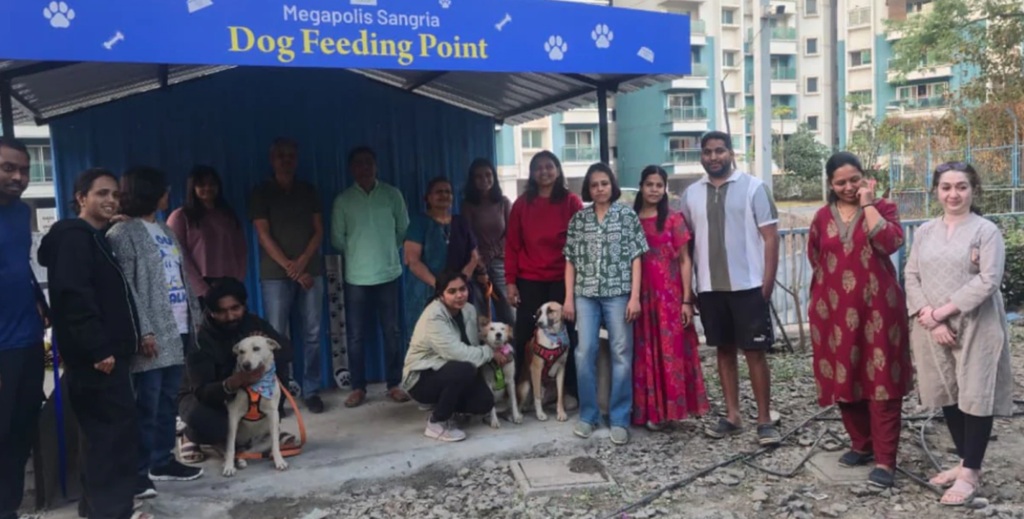
Hinjawadi, 24th December 2025: Residents of Megapolis Sangria Society in Hinjawadi have introduced a structured dog-feeding arrangement that is helping reduce conflict and improve day-to-day harmony between residents and community dogs. The initiative, which includes a designated feeding area and fixed timings, has brought order to what was earlier an unregulated situation.
According to residents, the presence of community dogs was never the real concern. The problem arose when dogs moved across common areas in search of food, leading to anxiety among some residents, especially children and senior citizens. To address this, the society’s managing committee held discussions and reviewed multiple suggestions before finalising a practical solution acceptable to most residents.
A specific location within the premises was identified for feeding the dogs, ensuring it was well away from play zones, parking areas, and building entrances. Feeding is carried out at fixed times, and volunteers ensure that the area is cleaned regularly to maintain hygiene. The system has brought predictability, reducing complaints and easing concerns among residents who were earlier uncomfortable with dogs gathering in shared spaces.
Residents who regularly feed the dogs say the initiative has removed friction and uncertainty. With a recognised system in place, they no longer face objections while caring for the animals. At the same time, other residents report that common areas are now less crowded and feel safer.
The dogs, too, appear to have adapted well. With assured access to food at a fixed spot, their movement within the society has reduced, and instances of aggressive or anxious behaviour have reportedly declined.
Animal welfare supporters have welcomed the initiative, calling it a balanced and replicable approach for urban housing societies. They say Megapolis Sangria Society’s experience shows that structured planning, rather than confrontation, can help communities manage coexistence with community animals.
What began as a simple organisational step has now emerged as an example of how thoughtful planning can address a sensitive urban issue, making shared residential spaces more peaceful for both people and animals.