Pune: Indian Ocean Cyclones Undergoing Significant Changes, IITM Study Reveals
Reported by Akshata Pawar
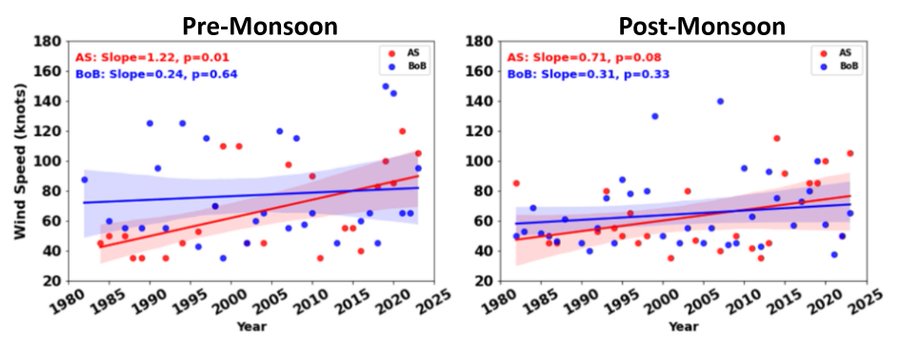
Pune, 14th March 2026: Tropical cyclones forming over the Indian Ocean are showing notable changes in intensity, frequency, and rapid strengthening patterns, according to a detailed study by researchers at the Indian Institute of Tropical Meteorology (IITM), Pune.
The study provides one of the most comprehensive evaluations of cyclones across the Arabian Sea and the Bay of Bengal, offering crucial insights into evolving storm patterns and implications for disaster preparedness and climate research.
Key Findings of the Study
1. Increasing Cyclone Intensity
The research shows that cyclones over the Indian Ocean are increasingly reaching higher intensities. Observations reveal:
Higher wind speeds and stronger storm systems.
Rapid intensification of some cyclones within a short period, making them more dangerous.
2. Rise in Rapid Intensification Events
A notable finding is the growing frequency of rapid intensification events, particularly in the Arabian Sea, where cyclones strengthen dramatically over a few hours or days. In contrast, the Bay of Bengal has not shown major changes in this regard. Such rapid intensification poses challenges for forecasting and evacuation planning along coastal regions.
3. Differences Between the Arabian Sea and Bay of Bengal
The study highlights contrasting cyclone behavior between the two basins:
-Bay of Bengal: Traditionally more cyclone-prone with higher frequency.
-Arabian Sea: Historically less active but now showing significant changes in intensity and activity.
This shift is especially relevant for countries along the Arabian Sea, including India, Oman, and Pakistan.
4. Premonsoon Cyclones Are Growing in Size
The research indicates that premonsoon cyclones have become significantly larger over the past two decades, covering much greater areas than earlier. Additionally, premonsoon cyclones continue to be more intense than postmonsoon cyclones.
Why the Study Matters-
Scientists emphasize that these findings are critical for improving cyclone forecasting, climate research, and disaster preparedness. The study will help:
-Enhance early warning systems.
-Support better cyclone prediction models.
-Assist policymakers in strengthening coastal disaster management.
-Provide insights into how climate variability may influence future cyclones.
With millions living along the Indian Ocean coastline, understanding these evolving patterns is essential for risk reduction and preparedness.
According to the researchers, this comprehensive assessment will serve as a key reference for meteorologists, climate scientists, and disaster management agencies studying tropical cyclones in the Indian Ocean region.