Pune Metro Line 3: 5 Micro-Markets Set to Benefit from the Hinjawadi–Shivajinagar Corridor
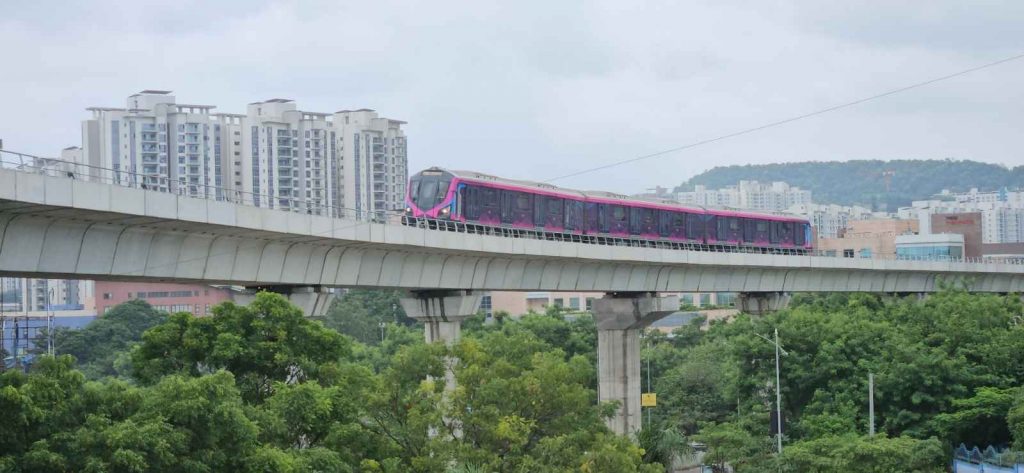
Hinjawadi, 17th August 2026: Pune’s real estate story just added a new chapter. Line 3, running from Hinjewadi to the Civil Court interchange in Shivajinagar, is currently under construction with a phased opening targeted through mid-to-late 2026. The first phase a 13.3-km stretch between Maan and the R.K. Laxman Museum covering 12 stations, is expected to open this year, pending statutory approvals. Once fully operational, the line will cut travel time between Shivajinagar and Hinjawadi from roughly 1.5 hours to about 45 minutes, a reduction of more than 50%.
For homebuyers and investors, that kind of connectivity shift almost always precedes a price re-rating. Here are five corridors along the route worth watching closely and who’s already building there.
1. Hinjawadi (Megapolis / Phase 3)
The line starts at Megapolis Circle in Hinjewadi Phase 3, the doorstep of Pune’s largest IT employment hub. This is where the metro’s real estate impact will likely be most direct thousands of IT professionals who currently lose hours to road congestion get a fast, predictable commute option. Historical trends around metro corridors point to significant price appreciation over time, and Hinjewadi is expected to see exactly this kind of buyer interest and value growth once Line 3 goes live.
VTP Realty has the deepest footprint here, with a cluster of developments across Hinjewadi Phase 1 and the Maan Road belt. Kolte Patil is also active through its Life Republic township nearby, positioning itself as a self-contained, metro-adjacent address.
2. Wakad
The elevated line passes through Wakad on its way from Hinjewadi toward the city. Wakad has long served as a residential overflow zone for IT-corridor employees, but it’s been hampered by the same traffic bottlenecks as Hinjewadi. A metro stop here effectively shortens the psychological and practical distance to both the IT park and central Pune.
Developer activity spans both premium and mid-segment plays Godrej Properties, Kalpataru Group, and Lodha Group all have a presence, alongside a cluster of local builders reflecting Wakad’s broad buyer base.
3. Baner
Baner is one of the key localities where improved metro connectivity between Hinjewadi, Wakad, Baner and Shivajinagar is expected to reshape both daily commute patterns and the property market. Baner’s mix of established residential stock and ongoing commercial development means the metro isn’t just a connectivity upgrade it’s a demand driver for retail and office space along the corridor as well.
This is one of the most active developer zones on the list. Kolte Patil runs an entire luxury sub-brand concentrated here, while VTP Realty has a parallel push including a large-format township project. Kalpataru also holds a premium footprint in the belt.
4. Balewadi
Line 3 also runs through Balewadi before continuing toward the city centre. Balewadi has already built a reputation around sporting and lifestyle infrastructure (the Balewadi Sports Complex), and metro access adds a mobility layer that strengthens its case as a premium residential address — particularly for buyers who work in Hinjewadi but want a more “city-adjacent” lifestyle.
Notable developer presence includes Rohan Builders, Majestique Landmarks, and Kunal Group, alongside several boutique luxury projects positioning around the Baner-Balewadi Road stretch.
5. Aundh
Aundh, along with Hinjewadi and Balewadi, is flagged as one of the areas expected to see higher buyer interest and price growth once Line 3 becomes operational. As one of Pune’s more mature, amenity-rich residential markets close to Shivajinagar, Aundh stands to benefit from being positioned near the terminal end of the corridor.
Unlike the other four belts, Aundh is largely built out, so new supply here skews toward redevelopment and boutique projects rather than large townships. Established local names like Paranjape Schemes and Naiknavare Developers anchor the locality, with limited new inventory overall. That scarcity of fresh land itself is a factor likely to support price resilience as metro access improves.