Pune Riverfront Sizzles at 55.8°C, Study Raises Alarm Over Urban Heat
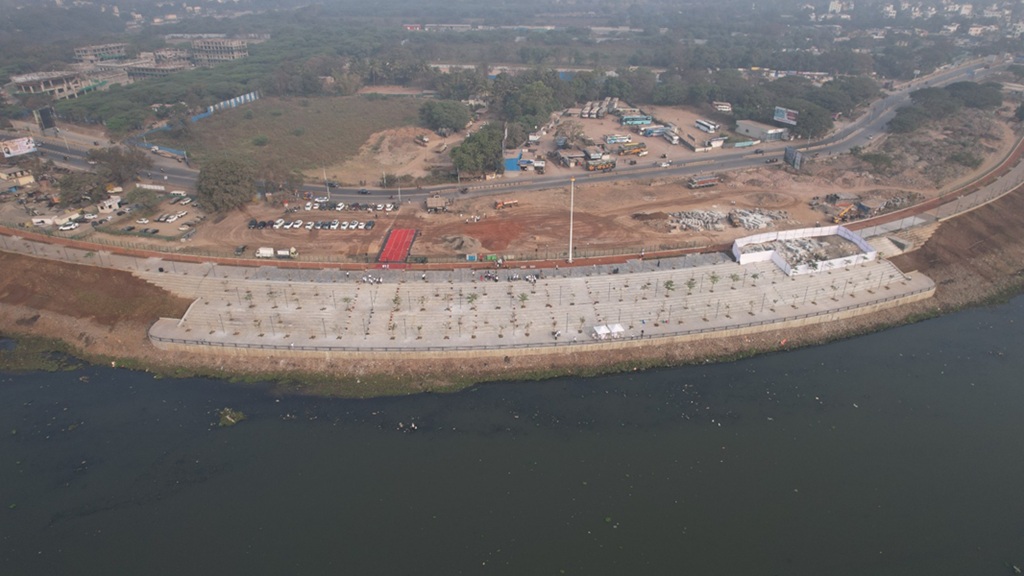
Pune, 15th June 2026: A study by Pune-based citizen group Jeevitnadi has revealed that the city’s riverfront developments may be intensifying heat rather than providing relief from soaring summer temperatures.
Presented at the Bhandarkar Oriental Research Institute, the study found that the highest afternoon temperatures were recorded at the Bund Garden Riverfront Development (RFD), with ground temperatures touching 55.8°C on May 21 and remaining above 50°C for several consecutive days.
Researchers measured both ground and air temperatures at four locations along the river—Vittalwadi, Aundh, Pimple Gurav and Bund Garden. The findings showed stark contrasts between built-up areas and natural spaces. At Bund Garden, temperatures reached around 53°C at the riverfront development, compared to 45°C on nearby roads, while areas shaded by trees remained significantly cooler at 33°C.
The study also highlighted the Urban Heat Island effect, noting that concrete and asphalt surfaces absorb and retain heat for longer periods, keeping temperatures elevated even as surrounding air begins to cool.

Researchers observed that shaded and damp areas consistently recorded lower temperatures, while exposed surfaces such as roads, bridges, rocks and concrete structures registered the highest readings. The study further warned that high temperatures combined with elevated humidity levels increase the Heat Index, posing serious health risks by interfering with the body’s natural cooling mechanisms.
Calling the findings a reminder to rethink urban planning approaches, Jaideep Baphna of CFA Environment said, “The Jeevitnadi study sends a powerful message: nature cools, while riverfront construction heats. The findings speak for themselves—33°C under tree cover, 45°C on the road, and 53°C at the Riverfront Development site. At the Ram-Mula Confluence in Baner, the coolest ‘technology’ was simply the natural riverfront. As our cities confront rising temperatures, protecting and restoring these natural systems is not just an environmental choice; it is a public health necessity.”
The researchers recommended measures such as planting shade trees, preserving natural vegetation, adopting cool and green roofs, using permeable pavements and integrating water bodies into urban planning to mitigate rising urban temperatures.

The study raises important questions about the ecological impact of heavily engineered riverfront projects and underscores the need to place nature-based solutions at the centre of climate-resilient urban development.