Pune Traffic Police Issue Comprehensive Public Advisory for Monday Commute; Evening Peak Speeds Plummet to 15.7 Kmph Amid Monsoon Delays
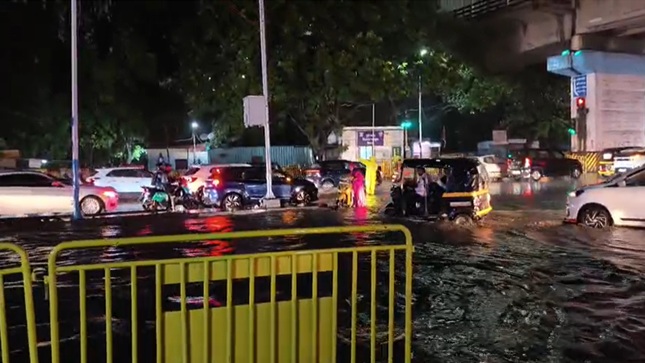
Pune, 5th July 2026: Following days of relentless monsoon rains that have waterlogged roads and severely choked the city’s transport network , the Pune City Traffic Police have issued an urgent public advisory for Monday, July 6, 2026. Citing real-time traffic data, the authorities have warned of widespread congestion across several critical travel corridors and advised citizens to avoid non-essential travel during peak hours to prevent massive gridlocks.
Sunday Traffic Speeds Reveal Severe Congestion
The scale of the traffic slowdown was underscored by telemetry recorded on Sunday, July 5, 2026, which revealed a dramatic drop in vehicular speeds across the metropolitan area. The overall average speed across the city crawled at just 20.0 kmph.
Commuters faced even harsher conditions during peak hours. The morning peak speed was clocked at 18.5 kmph, while the evening peak speed plummeted to an alarming 15.7 kmph as residents struggled to navigate flooded streets and slow-moving traffic in the damp, low-visibility conditions.
Major Corridors Expecting Slow Movement
The traffic police have flagged nine major transit corridors where motorists should expect significant delays and slow vehicle movement:
- Tilak Road: Heavy congestion is expected on the stretch from Alka Chowk to Swargate.
- Shastri Road: Delays are anticipated from Alka Chowk to Dandekar Bridge.
- Shivaji Road: Slow-moving traffic is projected from the AISSMS junction to Swargate.
- Jawaharlal Nehru (JM) Road: Commuters should brace for bottlenecks from Modern College to Khandoji Baba Chowk.
- Fergusson College (FC) Road: Sluggish traffic is forecast from Goodluck Chowk to Dnyaneshwar Paduka Chowk.
- Karve Road / Paud Road: Heavy snarls are expected around the Paud Phata and Khandoji Baba Chowk areas.
- Senapati Bapat (SB) Road: Slowdowns are predicted around Athavale Chowk and the Shivaji Housing Society area.
- Solapur Road: Delays are anticipated on the Sopan Baug, St. Mary’s School, and Swargate-bound sides.
- Satara Road: Motorists should expect long queues from Market Yard to Katraj Naka.
High-Risk Areas and Transit Hubs
In addition to the main corridors, five major areas and commercial hubs are expected to experience extreme delays:
- Pune Station Area: Heavy pedestrian and vehicular cross-movements will likely stall traffic.
- Alankar Chowk: Expected to face gridlock due to converging feeder lanes.
- Council Hall Chowk: Government and administrative transit will be slow.
- Wadia College Chowk: Student and commuter traffic will cause peak-hour backlogs.
- Bund Garden Area: Low-lying stretches here are highly vulnerable to waterlogging.
To minimize exposure, the traffic police have strongly advised citizens to avoid unnecessary travel during heavy rainfall, specifically emphasizing the window between the morning and evening peak hours.
Safety Guidelines and Enforcement Protocols
To streamline traffic flow and prevent complete blockages, the Pune City Traffic Police have listed several critical guidelines for motorists, transport operators, and pedestrians:
- Parking Restrictions: Vehicles must not be parked or stopped near junctions, bus stops, flyovers, pedestrian crossings, or waterlogged stretches.
- Two-Wheeler Safety: Two-wheeler riders are strictly prohibited from taking shelter in active traffic lanes, underneath flyovers, or near traffic signals, as this creates hazardous bottlenecks.
- Driving Discipline: Motorists are urged to avoid wrong-side driving, dangerous lane cutting, and sudden braking on slick roads.
- Public Transit and Carpooling: Citizens are encouraged to use public transport or carpool. Commuters should only use designated pick-up and drop-off points.
- Commercial and Delivery Vehicles: Large goods and delivery vehicles have been requested to avoid halting on major corridors during peak hours.
- Pedestrian Care: Pedestrians must stick to designated crossings. In turn, motorists must slow down near crossings, schools, markets, hospitals, and bus stops.
- Public Transport Operators: Auto-rickshaws, cabs, and bus operators have been ordered not to halt at signal stop lines or junction corners.
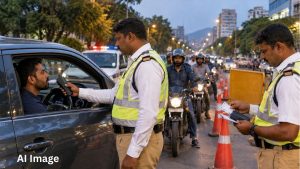
The traffic police have warned that any vehicles found causing obstructions on key routes will be immediately towed and heavily penalized. Commuters have been encouraged to plan their journeys in advance, keep extra travel time, and use the TraffiCure App or the Advanced Traffic Management System (ATMS) for live, real-time traffic updates.