Rare Heart Condition in Newborn Treated with ECMO at AICTS Pune, Doctors Call It a Milestone
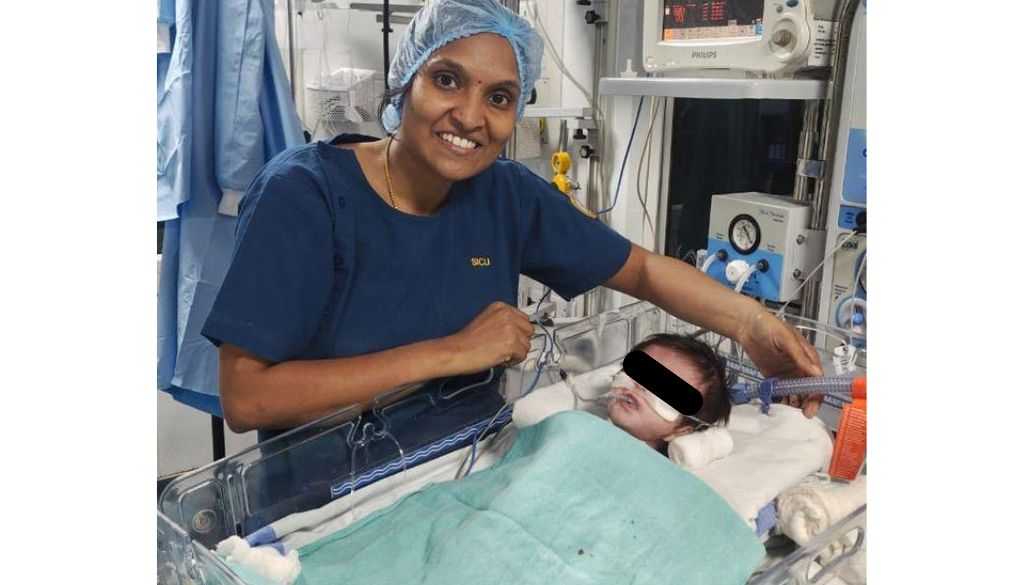
Pune, 24th December 2025: In a major milestone for military medicine, the Army Institute of Cardio-Thoracic Sciences (AICTS), Pune, has successfully performed its first neonatal Extra-Corporeal Membrane Oxygenation (ECMO), saving the life of a newborn suffering from an exceptionally rare and life-threatening congenital heart disease.
The infant, Baby Arpit, was born at Command Hospital, Kolkata, to a serving Army personnel following a high-risk pregnancy marked by multiple miscarriages. Within hours of birth, the newborn developed severe complications as his heart was unable to pump adequate blood due to complex congenital cardiac anomalies. Doctors at Command Hospital carried out a timely life-saving intervention that stabilised the baby before he was shifted to AICTS, Pune, for definitive treatment involving open-heart surgery.
AICTS, a pioneering institute of the Armed Forces with a legacy of several medical firsts in cardiothoracic surgery, cardiology and respiratory medicine, faced a major clinical challenge upon the baby’s arrival. Arpit developed a severe lung infection and impaired kidney function, delaying immediate surgery. A multidisciplinary team at AICTS stabilised him using advanced neonatal intensive care, including high-frequency ventilatory support and peritoneal dialysis, before proceeding with corrective cardiac surgery.
Due to his critical cardiac condition and compromised lungs, the infant could not be weaned off ventilatory support even after surgery. Doctors then decided to initiate ECMO, a highly complex life-support system that temporarily functions as an artificial heart and lung, allowing the organs time to recover. Implementing ECMO in a neonate weighing less than three kilograms required exceptional precision, continuous monitoring and seamless coordination among paediatricians, cardiac surgeons,
anaesthesiologists, nursing staff and paediatric cardiologists.
After nearly 90 hours on ECMO support, the baby’s heart and lung functions showed significant recovery. He was successfully weaned off life support and began breathing independently, marking a turning point in his recovery.