Rare Turkistan Millet Cultivated in Pune, Farmer’s Initiative Highlights Traditional Seed Conservation
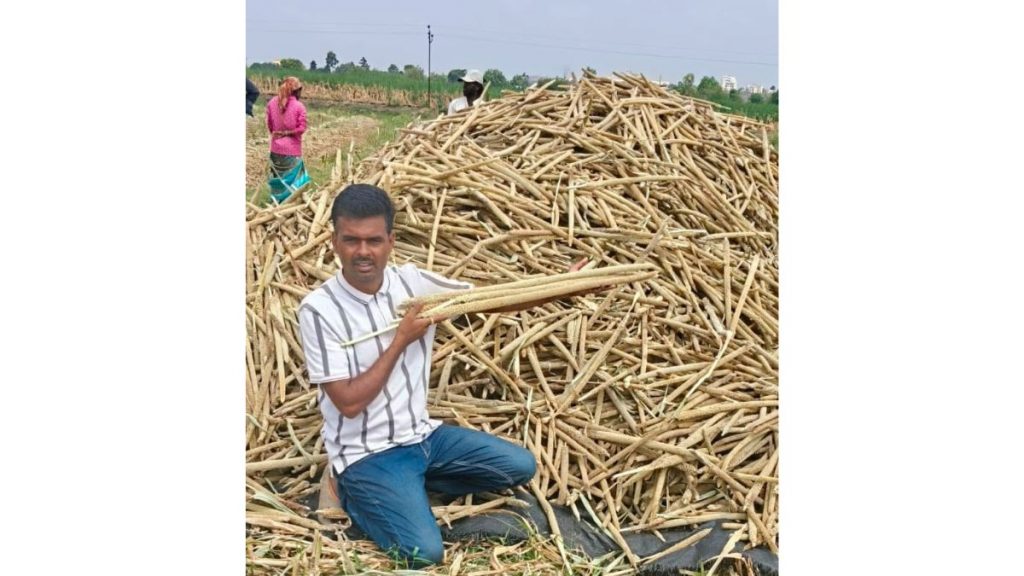
Khurd, 4th July 2026 : In a remarkable initiative aimed at preserving traditional crop diversity, progressive farmer Sanjeev Ganpatrao Indore from Chandoli Khurd in Pune district has successfully cultivated the rare Turkistan millet variety, attracting attention of farmers, agricultural experts, and researchers.
The crop, which has grown to nearly four feet in height with its distinctive earheads, was cultivated on an experimental basis. Through meticulous crop management, continuous observation, and dedicated research, Indore successfully nurtured the rare millet variety, demonstrating its adaptability under local farming conditions.
Speaking about his initiative, Indore said, “I cultivated the Turkistan millet variety as an experiment with the aim of preserving its original genetic characteristics for future generations. Traditional seed varieties are an invaluable part of our agricultural heritage, and conserving them is essential for sustainable farming. I hope this initiative encourages more farmers and researchers to study and protect such rare indigenous crops.”
Turkistan, a historic region in Central Asia, has long been recognised for its rich agricultural traditions and its role in the ancient Silk Road trade network, which facilitated the exchange of crops and grain varieties across continents. Millet is among the world’s oldest cultivated cereal crops and has sustained farming communities for thousands of years due to its drought tolerance and suitability for dryland agriculture.
Local claims suggest that this particular millet variety may have a history of nearly 1,500 years. However, experts emphasise that these claims require scientific verification through research in plant genetics, archaeology, and agricultural science before its historical origins can be conclusively established.
With climate change, erratic rainfall, and increasing water scarcity posing significant challenges to agriculture, drought-resistant and low-input crops like millets are gaining renewed importance. Indore’s initiative is being viewed not merely as an individual achievement but as a meaningful contribution towards conserving traditional seeds, protecting agricultural biodiversity, and promoting sustainable farming practices.
Agricultural experts have reinforced the need for comprehensive studies by agricultural universities and research institutions to evaluate the variety’s productivity, nutritional value, climate resilience, disease resistance, and genetic characteristics as well. If scientifically validated, Turkistan millet could emerge as a valuable crop option for farmers seeking climate-resilient and sustainable agricultural alternatives in the future.