SPPU concludes international workshop on AI, education and cross-cultural learning
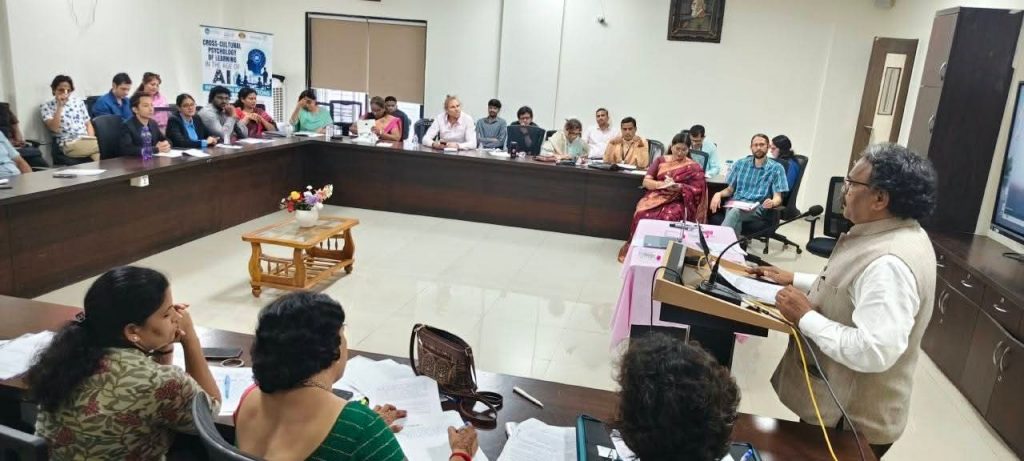
Pune, September 3, 2026: A two-day international workshop on the impact of artificial intelligence (AI) on learning, cognition and curriculum design concluded at Savitribai Phule Pune University (SPPU), bringing together researchers, educators and experts from India and abroad for discussions on the future of education in the AI era.
The workshop, titled “Cross-Cultural Psychology of Learning in the Age of AI: Research Innovations Bridging Cognition and Computational Curriculum Design,” was organised by the Department of Education and Extension (DDE) of SPPU in collaboration with the German Centre for Research and Innovation (DWIH), New Delhi, the Max Planck Society and the University of Cologne, Germany. Harvard Business Publishing was the knowledge partner.
The two-day programme featured technical sessions, research paper presentations and brainstorming sessions involving experts from different countries. Discussions focused on emerging intersections between AI, cognitive science, education and cross-cultural learning.
During the valedictory session, Prof. Vilas Adhav, Director, School of Education, SPPU, emphasised the need to ensure that technological advancements in education remain aligned with constitutional and social values.
Adhav highlighted the importance of upholding equality, fraternity, freedom and social justice, as enshrined in the Indian Constitution, while integrating technology and AI into education.
Referring to the educational and social contributions of Mahatma Jyotirao Phule, Savitribai Phule and Dr Babasaheb Ambedkar, he stressed the need for inclusive education and ensuring that technological developments do not compromise the principles of equality and social justice.
He also underlined the importance of international academic initiatives in the rapidly evolving field of AI. According to him, such workshops provide researchers, teachers and students from India and other countries with opportunities to understand emerging concepts, share research and develop academic collaborations.
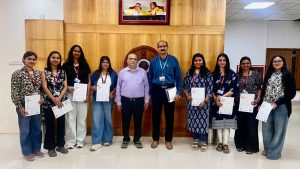
Prof. Geeta Shinde, Head, Department of Education and Extension, delivered the vote of thanks at the conclusion of the workshop.
She expressed gratitude to the university administration, Pro-Vice-Chancellor Dr Parag Kalkar, representatives of the Max Planck Society and the University of Cologne, session chairpersons, speakers, research scholars, and the teaching and non-teaching staff of the department for their contribution to organising the workshop.
Organisers said the workshop is expected to contribute to further academic cooperation and give fresh direction to intercultural research in AI, cognitive science and education.