Pune: PCMC Plans 12 Waste-Processing Sites to Reduce Moshi Depot Dependence, Warns Waste Contractors of FIRs Over Failure in Collection
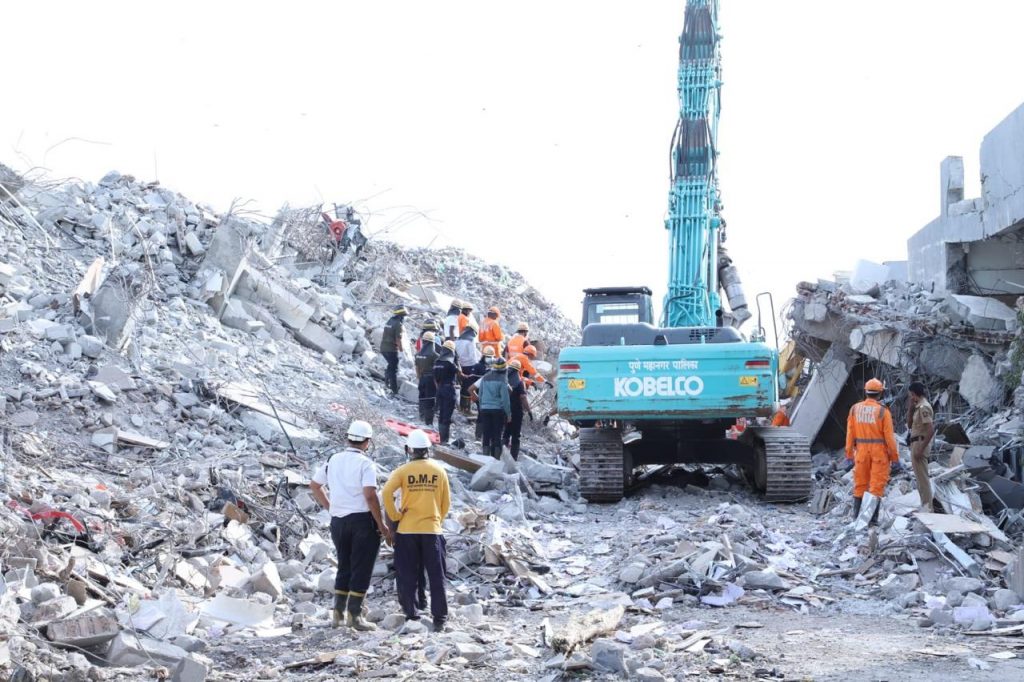
Pimpri Chinchwad, 4th September 2026: The July 8 accident at the Moshi garbage depot has exposed deep-rooted flaws in Pimpri Chinchwad’s waste management system, with the civic administration now racing to decentralise waste processing, improve collection and reduce its dependence on the city’s lone major dumping site.
Municipal Commissioner Dr Vijay Suryawanshi said the crisis had intensified because the entire waste management system was dependent on the Moshi depot. The PMC is now working to establish processing centres or transfer stations in every zone, with waste from some zones already being diverted to facilities in others.
“The garbage issue became serious because everything was dependent on one depot. We are now trying to set up processing centres or transfer stations in every zone. A 40-year-old problem will not be solved in a few days,” Suryawanshi said in the general body meeting of PCMC, appealing to citizens to cooperate with the administration.
The civic body has been working on the crisis since the accident, while efforts are underway to speed up waste processing and identify land for a new Waste-to-Energy (WtE) project. A decision on the proposed sites is expected within seven to eight days. The chimney collapse at the Moshi facility had already halted operations for nearly one-and-a-half months, worsening the backlog.
The PMC plans to complete chimney repairs by the end of September and restart the WtE plant in October. Once operational, the plant is expected to process around 1,000 tonnes of residual waste daily.
Garbage collection has also been hit, with vehicles either breaking down or remaining off the roads in several areas. The two private agencies handling door-to-door collection, whose contracts run until June 2027, have been issued repeated notices. Suryawanshi has warned that FIRs will be registered against contractors if vehicles remain off the roads and negligence continues.
“We have told them to deploy additional vehicles. Action will be taken for negligence,” he said.
Health inspectors have been made responsible for ensuring that garbage heaps do not accumulate in their respective areas. The PMC claimed that no major garbage heaps had been reported in the city for the past eight days.
The scale of the collection gap is evident from the vehicle-to-household ratio. While one garbage truck should ideally serve around 1,000 households, the current ratio in Pimpri-Chinchwad is nearly one truck for every 8,000 households. The presence of 335 narrow access points further complicates collection.
The PCMC is preparing a fresh tender to address the shortage of vehicles and improve collection. Citizens are also being encouraged to use a mobile application to report the number of garbage trucks operating in their areas. Meanwhile, private vehicles allegedly continue to dump waste brought from outside the municipal limits in the city during the night.
To reduce dependence on Moshi, the PMC has identified 12 sites for waste-processing projects and begun preparing detailed plans. Land acquisition for 25 acres from the Khadki Cantonment Board has also been initiated. A Bio-CNG project requiring around 10 acres is being planned, while the civic body is searching for another 15 acres for a second WtE plant. Smaller plots are also being considered for CNG-based projects aimed at eliminating open dumping within the city.
The PMC is also targeting bulk waste generators. A panel of 20 institutions is being formed to survey housing societies and establishments generating more than 100 kg of waste daily and bring them under the new rules. Such establishments will be encouraged to process waste on-site, while around 250 tonnes of residual waste is expected to be transported for further processing under agreements with the societies.
Suryawanshi said the administration was pursuing immediate measures while acknowledging that fixing decades-old structural problems would take time. “We cannot shut Moshi completely in three months after depending on it for decades. But the direction is clear — decentralised processing, stricter contractor accountability and faster project execution,” he said.