From Stage to Soul: The Growing Poetry Movement Among Disabled Soldiers at QMTI
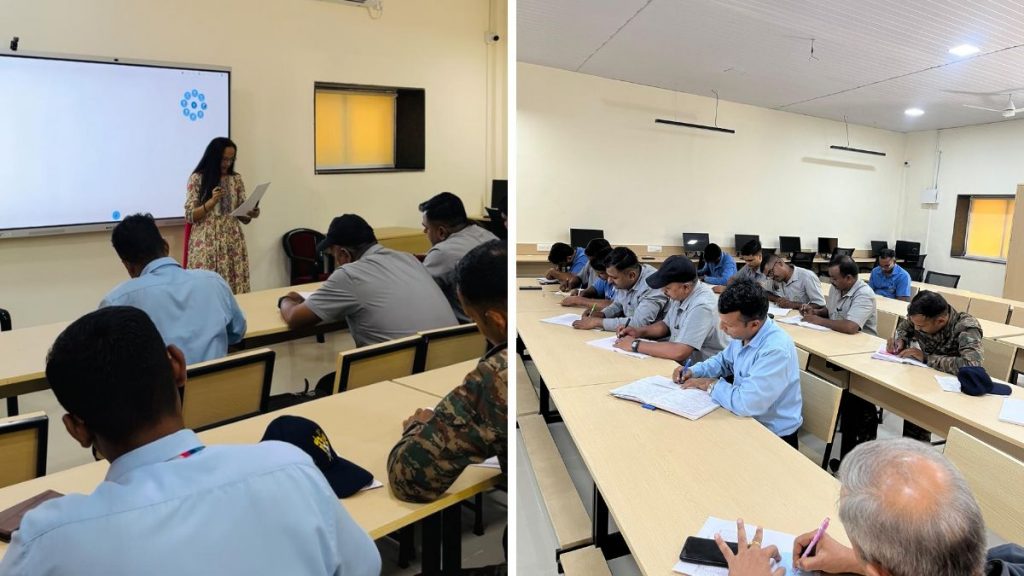
Pune, 26th June 2026: When the Queen Mary’s Technical Institute (QMTI) for Differently Abled Soldiers hosted its first Kavi Sammelan in July 2025, few could have imagined that poetry would one day become such an integral part of the soldiers’ lives. What began as a cultural evening has since grown into something deeper – a space where words, memory, emotion, and self-expression continue to take root. Last month, a poetry workshop for specially-abled soldiers, organised under the initiative of Healing Verses of KavitaKAFE and Saksham Sahitya Kala Manch by QMTI, carried that journey forward with warmth and purpose.
From a Beginning to a Movement
The 90-minute workshop, titled From Page to Stage: The Art of Poetry Recitation, was attended by nearly 15–20 soldiers and was designed to take participants from hesitation to confidence. It opened with warm-up and icebreaker exercises, then moved through the foundations of recitation, voice and delivery techniques, emotional interpretation, guided practice rounds, and final performances. The aim was not perfection, but presence – helping each participant discover how poetry can be felt, shaped, and shared with clarity.
Col Dr Vasant Ballewar (Retd), Dean and Deputy CEO of QMTI, described the workshop as a meaningful first for the institution. “It was the first time we got a glimpse into the art of poetry recitation and writing. The soldiers found the session very useful and it will definitely improve their poetry writing and presentation skills,” he said. His words reflected the significance of the occasion: poetry had now moved from being an event to becoming a practice.
A Home for Words
For Garima Mishra, founder of KavitaKAFE and Healing Verses, the workshop was both personal and poetic. Recalling the journey that began with the Kavi Sammelan at QMTI, she said, “Some time last year, KavitaKAFE roped in a few poets and organised a Kavi Sammelan at QMTI. In addition to the poets who perform at KavitaKAFE, some soldiers also presented their self-written poetry. After that, I learned that many more began writing poetry.” She further added, “Infact, later QMTI started an initiative named Saksham Sahitya Kala Manch to encourage soldiers to write and perform. When I was approached by Col Ballewar to organise a poetry workshop, I was more than happy to do my bit. My father too was an army officer and hence, this place has a special place in my heart.”
That sense of continuity gave the workshop its emotional weight. What had started as a performance platform had evolved into a creative community. The soldiers were no longer only listeners; they were writers, readers, and reciters. The session introduced them to the five essential pillars of recitation – clarity, pace, pause, emotion, and connection – and showed how a poem becomes memorable when it is not merely spoken, but lived.
Soldiers as Storytellers
The response from the participants was encouraging. Kishor Pawar called the workshop invigorating and thought-provoking. “All our queries were answered patiently, and we got to learn various facets of poetry presentation skills,” he said. Another participant, Ranjeet Kumar Podar, offered a powerful reflection: “I realised that even a simple poem can reach the heart of the readers and audience if it has depth and essence.”
A major part of the learning came through the PPPEC formula – pace, pause, pronunciation, emotion, and connection. It gave participants a practical framework for recitation, but also a larger lesson: that poetry is as much about silence, timing, and tone as it is about words. A pause can hold meaning. A slower pace can create dignity. Emotion can turn a line into a lived experience.
Beyond the Stage
The workshop also encouraged participants to think more deeply about interpretation. Rather than memorizing lines mechanically, they were asked to consider who is speaking, to whom, and why. That shift made poetry feel less like performance and more like conversation – a shared human act.
By the end of the session, the workshop had become more than training. It had become a reminder that poetry can heal, empower, and connect. For the soldiers at QMTI, it offered a new way to express themselves. For Healing Verses and KavitaKAFE, it affirmed the belief that words, when spoken with sincerity, can become a form of strength. And for everyone present, it showed that poetry, once discovered, can quietly become part of life.