How Women in Maharashtra’s Villages Are Building Incomes With Little or No Investment
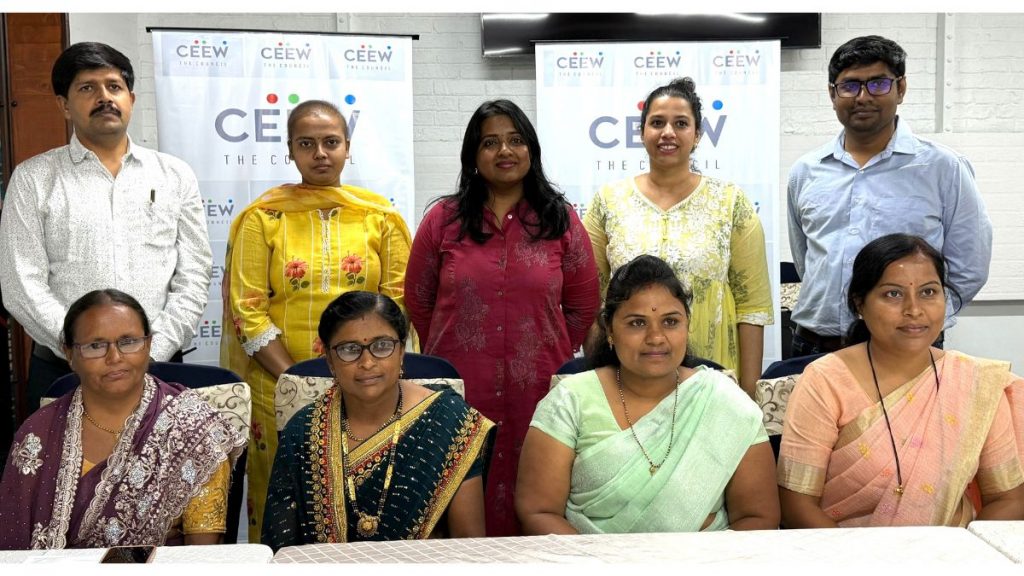
Pune, 9th September 2026: The Council on Energy, Environment and Water (CEEW) — a homegrown institution headquartered in New Delhi and one of the world’s leading climate think tanks — today hosted a knowledge-sharing roundtable in Pune on “How Rural Women are Driving Adoption of Clean–Energy-Powered Livelihood Innovations in Maharashtra.” CEEW researchers highlighted how the Sakhi model can help to increase the adoption of decentralised renewable energy (DRE) solutions and drive progress in rural Maharashtra.
According to CEEW’s 2023 study, despite the potential to enhance the livelihoods of 28 lakh rural households in Maharashtra through 15 lakh clean-energy-powered livelihood technologies such as solar dryers, small horticulture processors, and others, adoption remained limited. The major challenge of limited adoption is majorly due to farmers and microenterprises often lacking awareness of these solutions, limited trust in new technologies, limited accessibility locally of these innovations, and struggle to access affordable financing options.
The Sakhi model: Building a women-led last-mile ecosystem
To address these barriers, Powering Livelihoods, a joint initiative of the Council on Energy, Environment and Water (CEEW) and Villgro Innovations Foundation partnered with Sakhi Unique Resource Enterprise (SURE) to accelerate the adoption of clean-energy-powered livelihood technologies across rural Maharashtra. SURE, a women-first social enterprise enabling last-mile access to climate-smart livelihoods, clean energy, and health and wellness solutions via trained women entrepreneurs known as “Sakhis” within their own communities. SURE trained 350 rural women in the state, called Sakhis (“Friends of Women”), to become entrepreneurs in clean energy.
From technology users to technology champions
These Sakhis organise village-level demonstrations, operate technologies themselves, and leverage trusted community relationships to generate awareness and sales. Additionally, SURE launched Experience Centres in three districts, which serve as demonstration hubs where Sakhis and owners facilitate hands-on training, allowing farmers and entrepreneurs to touch, operate, and understand technologies before making a purchase. This peer-to-peer model transforms awareness-building from abstract promotions into trusted, community-driven adoption. Within just 18 months, the Sakhi network has reached nearly 30,000 potential users through roadshows, village campaigns, trade activation events, demonstrations, and community meetings, facilitating the deployment of over 1,400 clean-energy livelihood technologies across rural Maharashtra.
Climate Champion League: Turning women into Climate Leaders
Climate Champions League (CCL), an incentive-based campaign implemented with SURE to accelerate the adoption of clean-energy-powered livelihood technologies through its network of women Sakhis. Designed as a 50-day deployment challenge inspired by the Indian Premier League (IPL), the campaign engaged 350 VLEs through live leaderboards, peer competition, and performance-based rewards that sustained motivation throughout the campaign. The initiative generated over INR 1.75 cr in sales and supported the creation of 1,500+ livelihoods, championing DRE technology adoption at the last mile while diversifying income sources to build greater resilience. Top-performing Sakhis were recognised publicly and rewarded with electric scooters, reinforcing both achievement and aspiration within the network.
Divya Gaur, Programme Lead, Council on Energy, Environment and Water (CEEW), “this Sakhi model demonstrates that rural women are going beyond adopting clean-energy technologies to creating additional economic opportunities for them. By leveraging trust within their communities, they are bridging information, access, and financing gaps that have long constrained technology adoption. As entrepreneurs, climate advocates, and livelihood advisors, Sakhis are enabling farmers and rural enterprises to transition towards more resilient, low-carbon livelihoods while creating new economic opportunities for themselves. Their leadership shows that empowering women is not just a pathway to greater gender inclusion, it is a powerful strategy for mainstreaming clean energy, strengthening rural livelihoods, and accelerating India’s transition to a climate-resilient rural economy. ”
Stories of Successful Sakhies
1. Farzana Beg is a Sakhi with Sure from Goudgaon village in Dharashiv taluka and district, Maharashtra. She adopted the Solar Dryer D500 in May 2025 and, within two and a half months, earned ₹30,000 by processing over 100 kg of dried mango and 40 kg of dried curry leaves, which she supplies to Raheja Company at premium rates of ₹450 per kg and ₹120 per kg respectively. Beyond her own enterprise, Farzana has created local employment by hiring village women to help with sorting and processing, and her success has inspired others to own solar dryers. She continues to build her solar drying business as a model of rural women’s entrepreneurship.
2. Jayashri Mali is a Sakhi with SURE from Ter village in Dharashiv taluka and district, Maharashtra. Starting her entrepreneurial journey around a year ago, she has built a business around DD Solar, which helps preserve vegetable freshness for her own trade while providing lighting and fan facilities that reduce household electricity costs, generating an additional ₹3,000 in monthly income. Alongside DD Solar, she has promoted a diverse range of products including biogas, hydroponic units and organic fertiliser, helping community members explore new livelihood options. Her journey reflects how grassroots confidence and community engagement can grow into sustainable rural entrepreneurship.
3. Sujata Gorakh Patil is a Block Coordinator and a Sakhi with SURE, based in Shingoli village, Dharashiv, Maharashtra. She joined SURE in 2018, bringing a strong academic background in agriculture and social work, including an Agriculture Diploma, M.A. and Master of Social Work. Before joining SURE, she worked as teaching staff at an agriculture college. Today, she earns approximately ₹30,000 per month and works closely with rural communities to strengthen livelihoods and women’s leadership. Her work spans sustainable agriculture, women’s empowerment, health, water and sanitation, and access to government schemes and finance. Sujata uses practical demonstrations, farmer experiences, digital learning, and both online and offline training to build confidence and encourage adoption of improved practices.
4. Urmila Pravin Kaldate is a Business Correspondent with SURE in Dharashiv, Maharashtra. She joined SURE in February 2026 to create livelihood opportunities and strengthen rural entrepreneurship. Her monthly income has grown from ₹16,000 to ₹20,000 through her work with SURE. Urmila trains and motivates women to explore new livelihood opportunities, start Sakhi-based businesses with minimal or no personal investment, and build confidence to participate in income-generating activities. Her work is creating a ripple effect, inspiring more women in her village to join the Sakhi network.