Is Indian Railways Running ‘Puja Specials’ or ‘Voter Specials’? Bihar’s Tightrope Between Chhath Puja and Poll Dates
Reported by Amit Singh
Pune, 7th October 2025: As Bihar gears up for its 2025 Legislative Assembly elections, the state finds itself at the intersection of faith and democracy. With polling scheduled for November 6 and 11 and Chhath Puja set from October 25 to 28, the timing has triggered debates across social and political circles: Are the thousands of “Puja Special” trains meant to facilitate festive travel or to ensure voters reach polling booths?
The Overlap of Festivals and Polls
The Election Commission of India (ECI) announced Bihar’s two-phase elections on October 06, covering 243 constituencies. The first phase will see voting in 121 seats on November 6 just nine days after the conclusion of Chhath Puja while the remaining constituencies will go to polls on November 11.
This alignment has stirred a crucial question: Will the short gap between the festival and polling day allow migrants enough time to stay back and vote, or will work commitments force them to leave before exercising their franchise?
Chhath Puja, deeply rooted in Bihar’s cultural identity, draws millions of migrants home annually. This year’s celebrations fall right between Diwali (October 20) and the first polling phase, creating a compressed festive and electoral calendar.
Railways’ Massive Rollout of Special Trains
To handle the unprecedented travel rush, Indian Railways has announced over 12,000 special trains from October to December a sharp increase from 7,990 trips last year. These trains are expected to ferry more than 10 million passengers, mostly migrants returning to Bihar for Diwali and Chhath.
Central Railway alone is operating 944 specials, including multiple weekly trains to Muzaffarpur, Danapur and Chapra. Western Railway has added routes like Rajkot–Barauni, while the Round-Trip Package offers 20% fare discounts on return journeys booked between October 13–26 (outbound) and November 17–December 1 (inbound), aimed at staggering travel and avoiding bottlenecks.
Railway Minister Ashwini Vaishnaw, after reviewing the festive travel plans with Bihar leaders in August, assured smooth operations throughout the festival and election period. However, social media posts have highlighted ongoing challenges, overcrowded stations, waitlisted tickets, and limited return options after Chhath.
Strategic Timing or Logistical Gamble?
Political observers note that the festival-election overlap is not coincidental. Parties across the spectrum including the NDA (BJP, JD(U), LJP(RV), HAM(S)) and the Mahagathbandhan (RJD, Congress, Left) had urged the Election Commission to hold polls after Chhath Puja.
The reasoning: returning migrants could significantly boost voter turnout, especially among the state’s 7.42 crore electorate, which includes nearly 10 million migrants. In 2020, Bihar’s overall turnout stood at 57%, with women voting slightly higher at 59.69%.
However, the nine-day gap between the festival’s end and the first voting day raises concerns about feasibility. Many migrants employed in metros like Mumbai, Delhi, and Bengaluru might not be able to extend their stay for polling. The second phase, 14 days after Chhath, could witness slightly better participation.
ECI’s Preparations and Challenges
The Election Commission has deployed more than 8 lakh officials across the state to manage polling at over 100% webcasted booths. Each booth will cater to a maximum of 1,200 voters to reduce crowding, and real-time turnout tracking via ECINET will provide updates every two hours.
Special arrangements include boat services to 197 polling stations, horse patrols for 250 Diara booths, and Aanganwadi workers assisting in voter identification in sensitive areas.
Despite these measures, logistical hurdles remain. Past experiences like Jharkhand’s 2024 elections, where turnout dipped post-Chhath due to delayed return travel highlight the risk of voter absenteeism if train schedules or ticket availability falter.
Balancing Cultural and Civic Commitments
For millions of Biharis, Chhath Puja is not just a festival it’s a deeply emotional journey home. This year, that journey overlaps with another sacred duty: voting. The challenge lies in whether the festive trains will serve both purposes effectively.
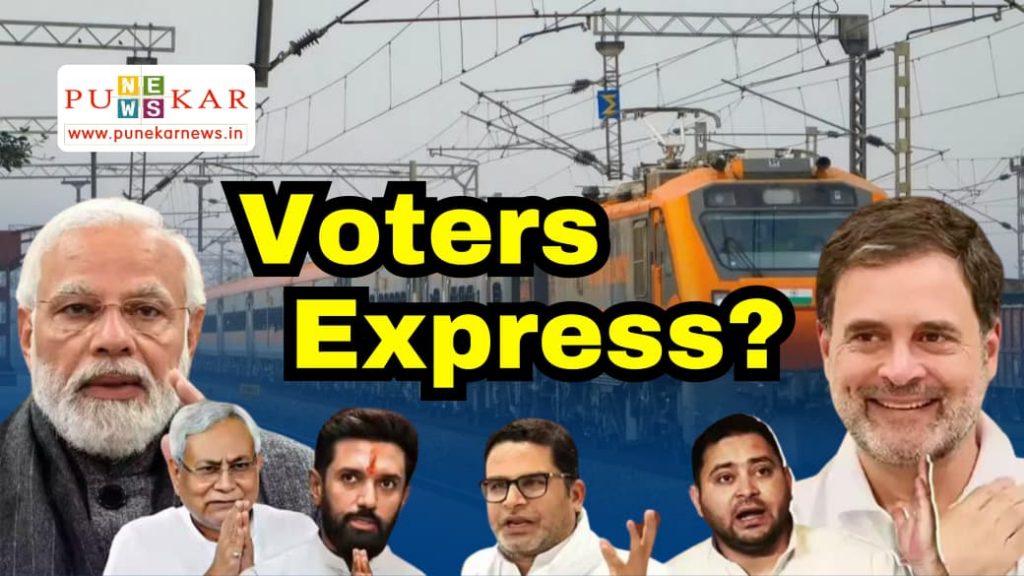
The 12,000 special trains, though launched under the banner of “Puja Specials,” are now being viewed as de facto “Voter Specials.” Their success could determine whether Bihar witnesses record participation or struggles with one of its most avoidable voter turnout dips.
The Road Ahead
With the election machinery and railways working in parallel, Bihar’s democratic festival may well depend on the rhythm of its trains. Whether this convergence of devotion and democracy proves strategic or shortsighted will be tested on November 6 and 11, when the state’s voters, many fresh from Chhath celebrations, decide the direction of Bihar’s political future.