Maharashtra Clears 802-km Nagpur–Goa Shaktipeeth Expressway Linking 12 Districts, 20 Pilgrimage Sites
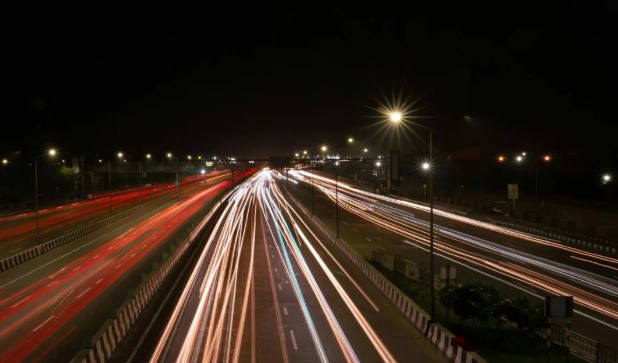
Mumbai, 8th November 2025: In a major infrastructure boost, the Maharashtra government has approved the Nagpur–Goa Shaktipeeth Expressway, an ambitious 802.6-kilometre greenfield corridor that aims to blend connectivity, spirituality, and economic development. Once completed, the six-lane access-controlled expressway will reduce travel time from Nagpur to Goa to just eight hours, connecting 12 districts and over 20 major pilgrimage sites across the state.
Corridor of Faith and Connectivity
Planned as a greenfield project, the expressway will begin at Pawnar in Wardha district and end at Patra Devi in Sindhudurg, passing through 39 talukas and 370 villages across Vidarbha, Marathwada, Western, and Southern Maharashtra.
The route will link prominent temples and Shaktipeeths such as Tuljapur, Kolhapur, and Mahur, along with several other sacred destinations — turning the project into what officials describe as a “spiritual and cultural bridge uniting Maharashtra.”
“The Shaktipeeth Expressway will not only enhance connectivity but also unite faith, culture, and regional economies,” said a senior official from the Maharashtra State Road Development Corporation (MSRDC), which is implementing the project.
Funding and Implementation
The state government has sanctioned ₹20,787 crore for land acquisition, including ₹12,000 crore as the principal amount and ₹8,787 crore as interest, financed through HUDCO. To ensure financial stability, the government will provide gap funding support and guarantee timely repayments to the MSRDC.
Officials said the project will generate thousands of jobs during its construction phase and later stimulate growth in tourism, logistics, and allied sectors, especially in rural areas along the route.
Alignment and Local Opposition
While the alignment from Pawnar to Sangli has received approval, the Kolhapur section — covering Shiroli, Karveer, Hatkanangale, Kagal, Bhudargad, and Ajra — has been scrapped under the Maharashtra Highway Act (1955) following strong objections from local farmers.
The MSRDC has been instructed to draft an alternative alignment, which will be reviewed by the Chief Minister, Deputy Chief Ministers, and local representatives.
The project earlier faced protests in Kolhapur’s sugar belt, where farmers raised concerns about large-scale displacement. Out of the 8,419 hectares required for the expressway, around 8,100 hectares belong to farmers — triggering widespread agitations in 2024 that delayed progress.
Economic and Regional Impact
Beyond its religious and cultural symbolism, the Shaktipeeth Expressway is expected to integrate with key national and state corridors — including the Jalna–Nanded Expressway, Surat–Chennai Expressway, and Pune–Bengaluru Expressway — forming a statewide high-speed transport grid.
Once operational, the expressway is expected to halve travel time between Nagpur and Goa, boost tourism, improve logistics efficiency, and drive balanced regional development across Maharashtra.