Pune: Automatic Train Protection Advances in Pune Division as 295 km Kavach Trials Are Completed
Reported By Amit Singh
Pune, 10th February 2026: Pune Division of Central Railway has recorded significant progress in the implementation of Kavach, India’s indigenous Automatic Train Protection (ATP) system, with trials completed over more than 295 km and onboard installations carried out at the Pune Diesel & Electric Loco Shed (PADX).
According to official data, non-signalling Kavach trials have been successfully conducted over the Pune–Kolhapur and Daund–Manmad (DD–MMR) sections, covering over 295 km of the division’s total route length of about 700 km. These trials form part of preparatory works for wider deployment of the system across the division.
Under Kavach Phase-II, installation has been completed at three stations in Pune Division, Padhegaon, Belapur and Rahuri. Installation work is currently underway on the Daund–Yeola section. In parallel, telecom infrastructure development is progressing, with 53 Kavach towers erected so far against a planned total of 123 towers.
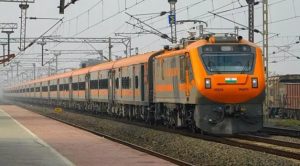
On the rolling stock side, Pune Division has completed installation of Loco Kavach at PADX. The work began on November 12, 2025, and was completed on November 30, 2025. During this period, four WAP-7 locomotives 37345, 39049, 39005 and 3772 were fitted with Kavach equipment, followed by inspection, installation checks and testing, after which the locomotives were cleared for traffic service.
This was the first instance of Loco Kavach installation at the shed, carried out using available resources and inspection windows in coordination with a CLW LOA-accepted firm, Kernex. The work has been recorded as a “Good Work” of Pune Division, and the PADX Kavach installation team has been nominated for a suitable award.
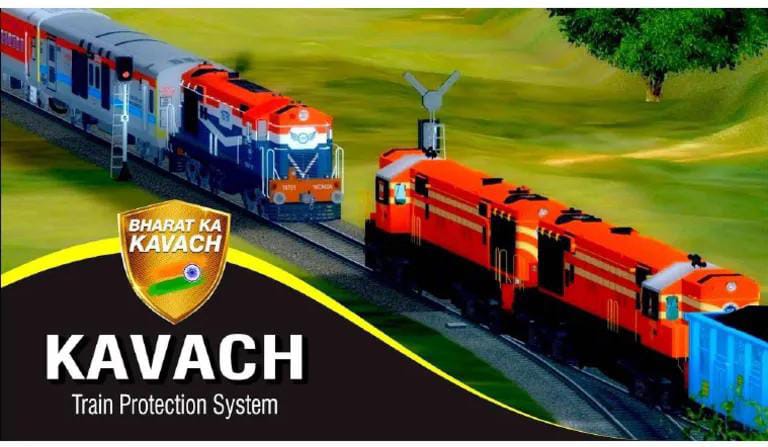
Kavach is designed to enhance train safety through multiple features, including mitigation of Signal Passing at Danger (SPAD) incidents, automatic braking to prevent collisions, overspeed protection, in-cab display of signal aspects and movement authority, automatic horn operation at level crossing gates, multi-vendor interoperability and centralized real-time monitoring through a Network Management System.